
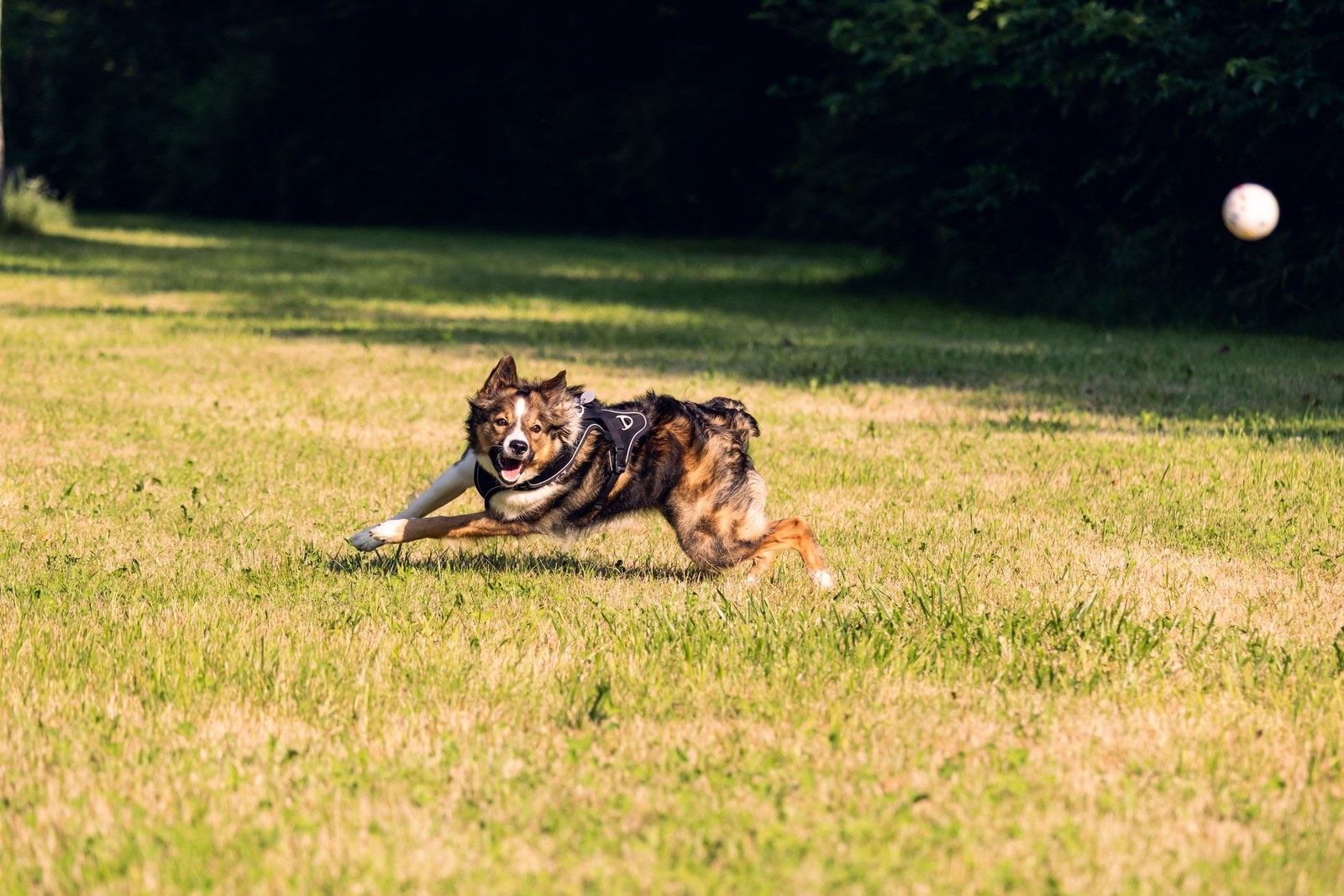
Fetch, tug, swimming, scent games, puzzle feeders, and focused training all count as real exercise for a high-energy dog — often more tiring than another lap around the block. Walks matter for bathroom breaks, sniffing, and routine, but a dog bred to run, herd, retrieve, or hunt, like a Border Collie, Australian Shepherd, or young Labrador, usually needs work for both body and brain to truly settle at home.
Why walks alone often fall short
A leash walk moves at human pace. For many dogs it is pleasant but not challenging, especially if the route is identical every day. Without a chance to sprint, problem-solve, or use their nose, that stored energy leaks out as demand barking, counter surfing, chewing furniture, digging, or herding children and other pets. Mental work is surprisingly physical in its effect: fifteen minutes of searching for hidden treats can leave a dog calmer than a longer, mindless walk.
Activities that actually burn energy
Match the activity to your dog and your space:
- Fetch and flirt poles: Great for retrievers and chasers, in short bursts with breaks, especially in heat.
- Tug with rules: Let your dog win sometimes, pause when teeth touch skin, and trade for a treat to drop it.
- Swimming: Excellent low-impact exercise for water-loving dogs, with a rinse and ear check afterward. Always supervise, even strong swimmers.
- Scent games: Hide treats in boxes, scatter kibble in grass, or use a snuffle mat. Nose work suits rainy days and smaller homes.
- Puzzle feeders and frozen food toys: Turn part of a meal into a job instead of a two-minute bowl emptying.
- Short training sessions: Five to ten minutes practicing recall, place, loose-leash turns, or a new trick builds focus and self-control.
Rotate two or three options across the week rather than doing everything daily. Variety prevents the boredom that comes from predictability.
Building a weekly rhythm that works
Think in totals, not perfection. A high-energy adult might do a morning walk plus training, a midday puzzle, and an evening fetch or scent game, while an adolescent may need more frequent, shorter outlets. Puppies and seniors need a different balance — puppies need sleep and joint-friendly play, seniors need gentler, shorter sessions. Watch the result: a well-exercised dog can relax, nap, and chew an appropriate toy. A dog who is frantic after activity may be overstimulated, in pain, or practicing the wrong kind of arousal, so shorten intense chase games and add calmer sniffing.
End sessions before your dog is exhausted or overheated. Offer water, cool-down time, and a quiet place to rest.
Safety notes for high-energy play
Warm up with a few minutes of walking before sprinting, and avoid hard fetch on slippery floors or in extreme heat. Check paws after running on pavement or trails, use a long line where recall is unreliable, and keep tug and rough play bouncy rather than frantic. If your dog limps, pants heavily and cannot settle, coughs, or suddenly refuses a favorite game, stop and talk to your veterinarian rather than pushing through.
Keeping the whole household in sync with KinsLe Messenger
In a busy house, the fastest way to over- or under-exercise a dog is poor communication — one person assumes another already played fetch, or everyone plays and nobody trains. KinsLe Messenger is the per-pet communications hub, so your family can coordinate in one thread tied to your dog: who walked, who trained recall, who did the puzzle feeder, and how your dog responded. That shared picture helps you adjust the next day instead of guessing. Log each fetch session, scent game, swim, and training win in a KinsLe Messenger thread on KinsLe, so the next person at home sees what already happened today and chooses a complementary activity instead of repeating one.