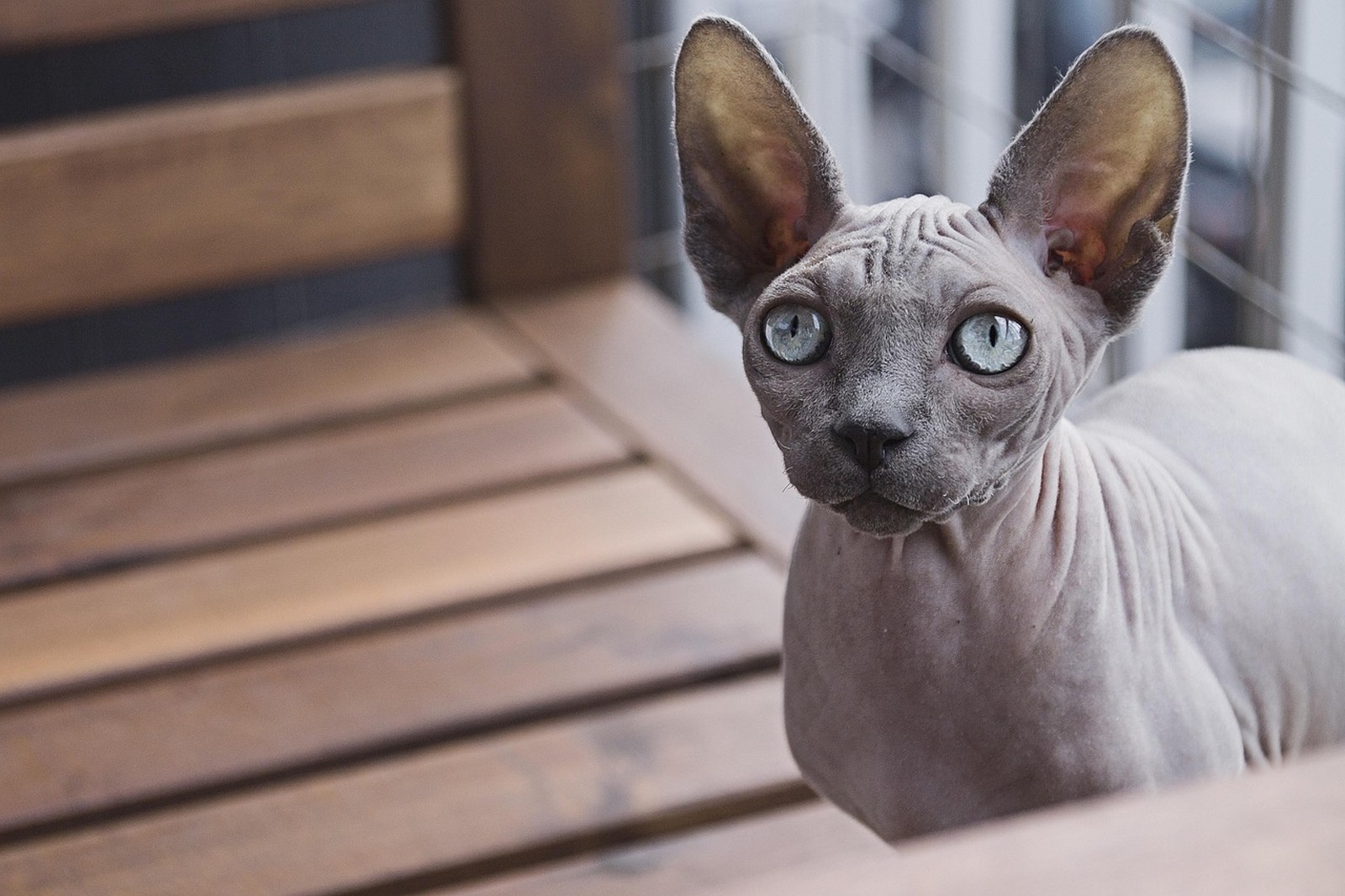
A Sphynx is not a low-maintenance cat with the grooming removed; it is a cat whose grooming has moved from coat to skin. A haired cat's fur absorbs and distributes skin oil, but on a Sphynx that oil stays where it is produced, building up on the body, darkening skin folds, staining bedding, and collecting in ears and around claws. A short, predictable daily routine keeps all of that comfortable, and most Sphynx, raised with it from kittenhood, accept it as part of normal life.
The Daily Wipe-Down and Skin Check
Once a day — or every other day for a less oily individual — wipe the whole body with a soft cloth dampened in warm water, working into the folds at the neck, armpits, belly, and tail base where oil and grime concentrate. This is maintenance between baths, not a substitute for them, and it doubles as your health check: look for blackheads and spots on the chin and tail, dry flaky patches, redness in the folds, scratches, and any new lump or sore, because hairless skin shows changes early and clearly. Wipe the eyes as part of the same pass, since the breed commonly produces a clear to rusty eye discharge that gathers in the corners and is normal to clean away daily; discharge that turns thick, coloured, or makes the eye sore or half-closed is a vet matter instead. Check feet daily too — oil and litter dust pack around the claws and between the toes, and a quick wipe there prevents sore, gunky nail beds.
Weekly Bath, Ears, and Claws
A warm bath roughly once a week clears the oil that wipe-downs only manage. Use warm, shallow water, a gentle cat-safe wash, and thorough rinsing, because residue left on hairless skin irritates it, then pat dry and settle the cat somewhere warm — a wet Sphynx chills quickly. Individual cats vary: some stay clean for a fortnight, others are greasy in days, so let the skin, not the calendar alone, set the rhythm, and avoid over-bathing, which can dry the skin and provoke more oil. Ears need weekly attention because Sphynx ears produce abundant dark wax with no hair to slow it; wipe what you can see in the outer ear with a damp cotton pad and never probe the canal, leaving deeper cleaning or any smell, redness, or head-shaking to your vet. Trim claw tips on the same weekly round and clean around each claw bed as you go.
Warmth, Sun, and Living Conditions
Hairless skin loses heat and burns in sun, and both facts shape daily life. Indoors, expect your Sphynx to seek radiators, sun patches, blankets, and your lap, and provide heated or insulated beds and a jumper in a cold house if your cat enjoys wearing one — many do, and jumpers also slow oil transfer to furniture, though they need regular washing and should come off daily so the skin can be checked and breathe. Time in strong direct sun, including long sessions in a sunny window, should be limited, because this skin sunburns like fair human skin; never apply human sunscreen unless your vet specifically advises a pet-safe option, since cats groom products off and swallow them. Keep the litter area scrupulously clean as well, because a cat with no coat sits its bare skin directly in the tray. All of this is routine work shared easily across a household, and KinsLe's Care Teams let you divide it into named daily wipe-downs, weekly baths, and ear checks assigned to specific people, each marked done with a timestamp.