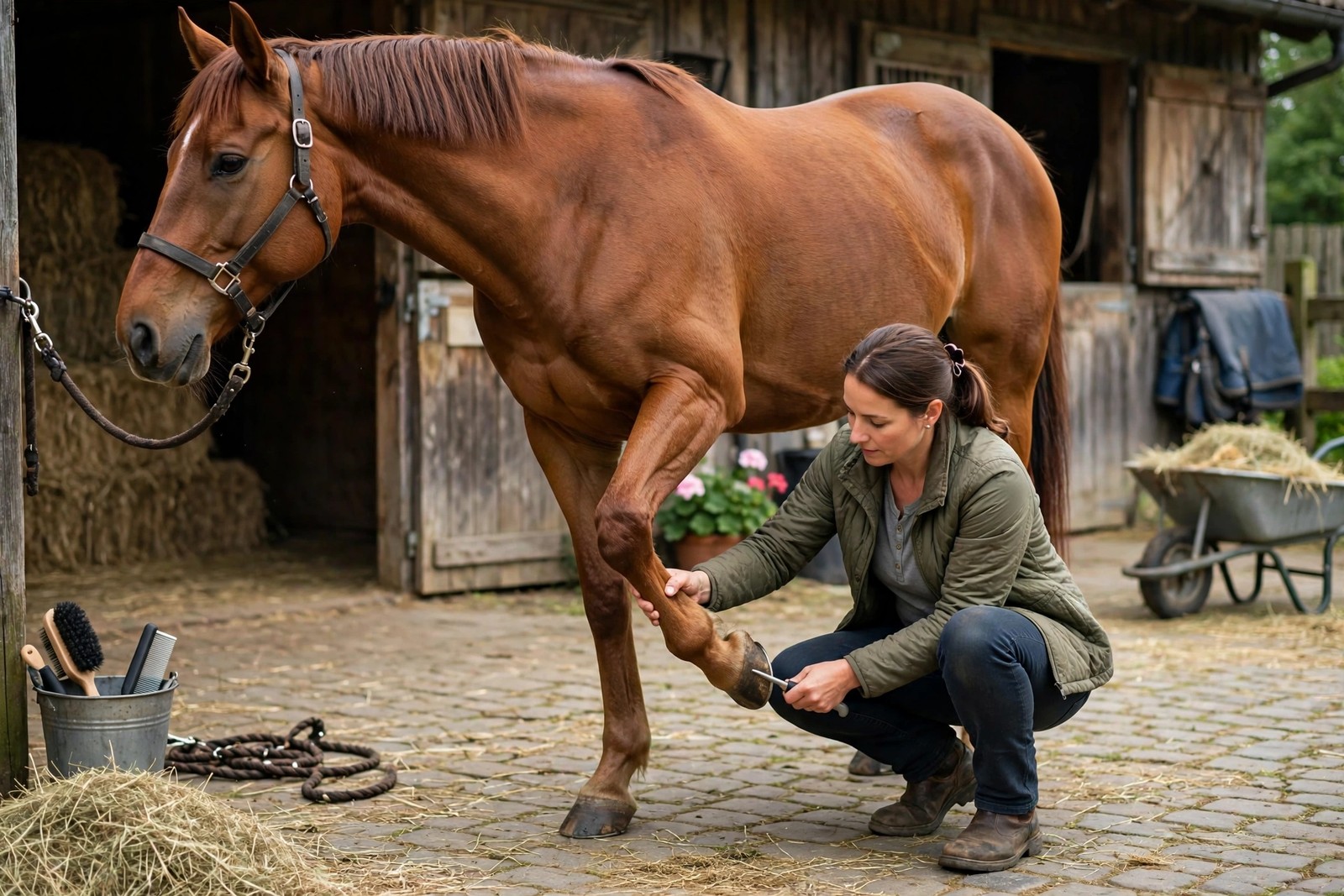
A good daily check runs nose to tail and takes minutes once it is a habit, but it is a genuine examination, not a pat on the way past. Done properly every day, it is how you catch the thorn in the frog on Tuesday instead of the lameness on Friday, and how a yard full of helpers produces one consistent standard of care rather than several hopeful ones.
Head, Body, and Legs
Start at the head. Eyes should be bright, open, and free of discharge; nostrils clean, with breathing quiet and even at rest. Run a hand over the face and jaw for swellings, then work down the neck and body, feeling for cuts, scabs, rain scald patches, rubbed areas under rugs, and any new lump. Note body condition with your hands as much as your eyes, especially under a winter coat or a thick rug, where weight loss hides for weeks.
Legs deserve the slowest hands of all. Run your palm down each leg in turn, comparing left with right, feeling for heat, swelling, filled tendons, and sensitivity, and flex nothing forcefully; you are reading, not testing. Check knees, hocks, and fetlocks for nicks and scabs, and look between the heels for cracked skin that mud and wet bedding aggravate. A leg that is warm and puffy today and normal in every other way is still a leg to re-check at the evening visit and mention if it persists.
Hooves, Every Single Day
Pick out all four hooves daily, without exception, working heel to toe so debris is pushed away from the foot rather than packed in. You are looking for stones, thorns, and packed mud, and smelling as much as seeing: a sour, rotten smell from the frog means thrush is establishing itself in a damp foot. Check each shoe for tightness, risen clenches, and twists; a loose shoe found on the yard is a farrier call today, and a lost shoe in the field means the horse is checked for a nail injury before anything else. Note anything you find, because hoof findings line up with the farrier's visits and the pattern matters.
The Stable Evidence
The stable tells you what the night held. Read it before you muck out. How much hay is left and how much was actually eaten; whether the feed bucket was finished or left half-picked; how far the water level has fallen; and the droppings — roughly how many, and whether they are normal in consistency or loose, dry, or absent. A horse who has eaten nothing, drunk nothing, and passed little overnight has given you a clear early warning, whatever he looks like standing in the doorway.
Finish with the horse himself: appetite at the morning feed, willingness to move off, and general brightness. Dullness, standing apart from field companions, repeated lying down and getting up, pawing, flank-watching, or sweating at rest are behaviour changes that outrank every other check and warrant a vet call the same day rather than observation until tomorrow.
Making It a Yard Habit
Write the check as a short list everyone follows in the same order, and log exceptions only: what was found, which leg, which hoof, what the droppings did. A log of exceptions across a month shows patterns a daily memory cannot. KinsLe Care Teams supports exactly that sharing, because you can assign the morning and evening checks for each horse to named helpers and see every completed check marked with a timestamp.