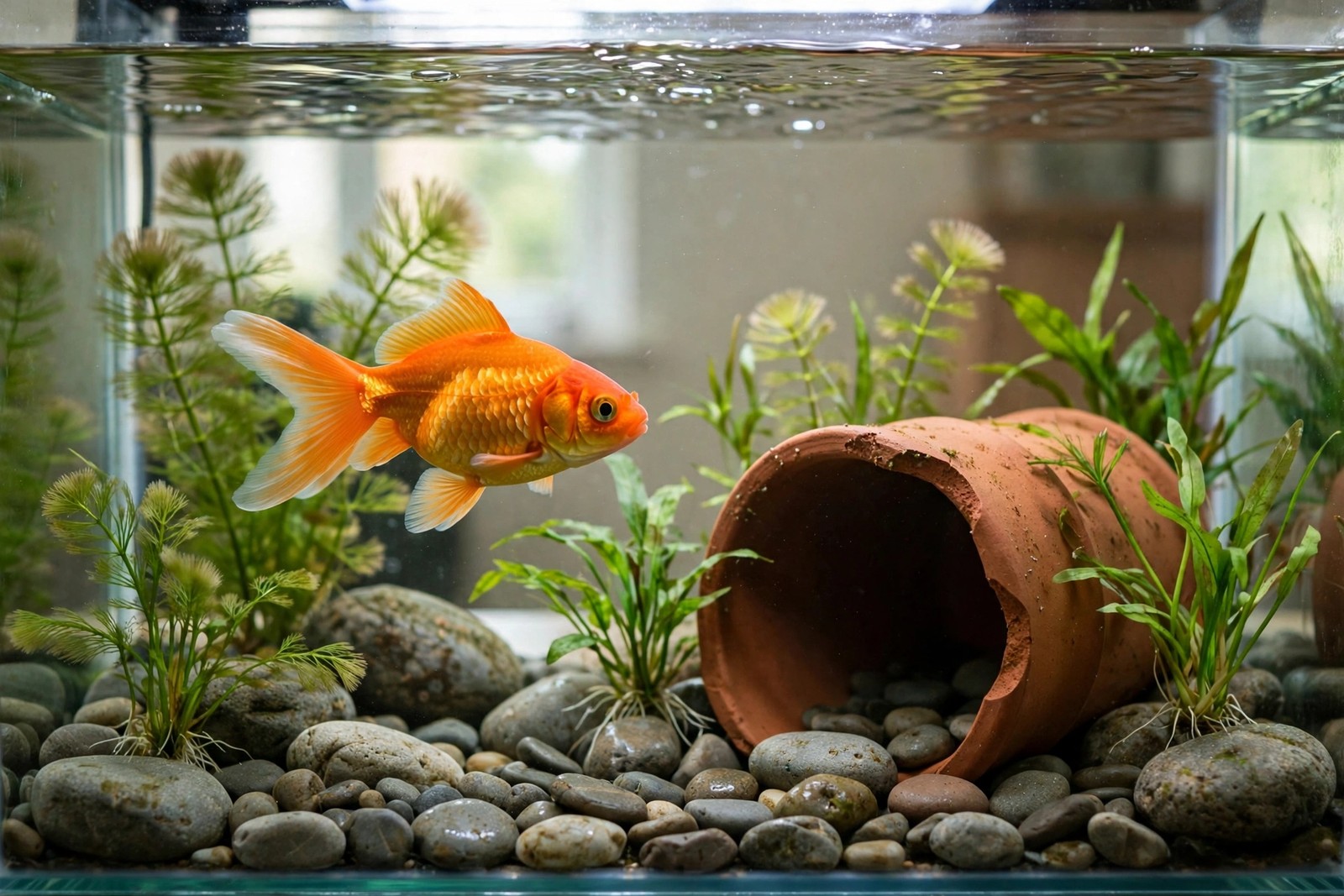
Goldfish are strong, clumsy, inquisitive fish that graze, dig, and blunder into their surroundings all day, so their decorations have to survive contact rather than just look pretty in the shop. The safe list is generous once you apply the goldfish rules: everything smooth, everything solid or too large to trap a fish, and plenty of open water left over for swimming.
Decorations That Work Well
Rounded river rocks and smooth pebbles, chosen too large to fit in a goldfish's mouth, make natural-looking ground cover and foraging texture, and a large feature stone gives the tank a focal point the fish will patrol around. Smooth bogwood adds shelter and gentle structure; buy it prepared for aquariums and soak or boil it first so it sinks and releases most of its tint before it goes in. Plain terracotta plant pots, laid on their sides with any drainage hole too small to tempt a fish or blocked off, are a long-standing goldfish favourite — cheap, smooth, heavy enough not to be pushed around, and easily scrubbed. Artificial plants should be silk rather than stiff plastic, because silk moves softly against fins and bodies. For live planting, the realistic choices are the tough, bitter, slow plants goldfish mostly leave alone: anubias and java fern, both of which are tied or glued to wood or rock rather than planted, plus hardy floating plants if the lighting supports them. A printed or plain background on the outside back glass finishes the tank and makes fish feel less exposed, at zero cost in swimming space.
What to Avoid, and Why
Sharpness is the first disqualifier. Rough resin castles, jagged rock, coral-style ornaments, and stiff plastic plants can shred the flowing fins of fancy varieties, scratch common goldfish, and injure the protruding eyes of telescope and bubble-eye types, which bump into the world constantly. Hollow ornaments with small entrances are the second trap: a growing goldfish will force itself into a cave it fitted through last month and wedge fast, so any shelter needs an opening the adult fish clears easily, or none at all. Fine gravel is widely regretted too — goldfish sift substrate mouthful by mouthful, and small stones can be swallowed or stuck, which is why many keepers choose coarse sand or large pebbles instead. Finally, restraint matters: goldfish are long-bodied, active swimmers that produce heavy waste, and a tank crowded with ornaments loses swimming length and water volume while gaining surfaces that trap mulm and are hard to clean.
Setting Up and Maintaining Decor
Rinse every new item in plain, untreated water and scrub with a brush kept only for the tank — never use soap, detergent, or household cleaners, whose residues are toxic to fish even in traces. Arrange decor off-centre, keep the middle and front open as a swimming run, and leave gaps behind large pieces wide enough that no fish can wedge itself out of sight. In the weekly routine, lift one or two pieces at a time for an algae scrub rather than stripping the whole tank at once, check hollow items and pot rims for damage or rough spots, and vacuum exposed substrate where waste collects. That rotating maintenance is simple to share, and KinsLe's Care Teams let you assign the decor scrubbing, glass cleaning, and water-change turns to different household members, with each completed job timestamped so nothing quietly lapses.