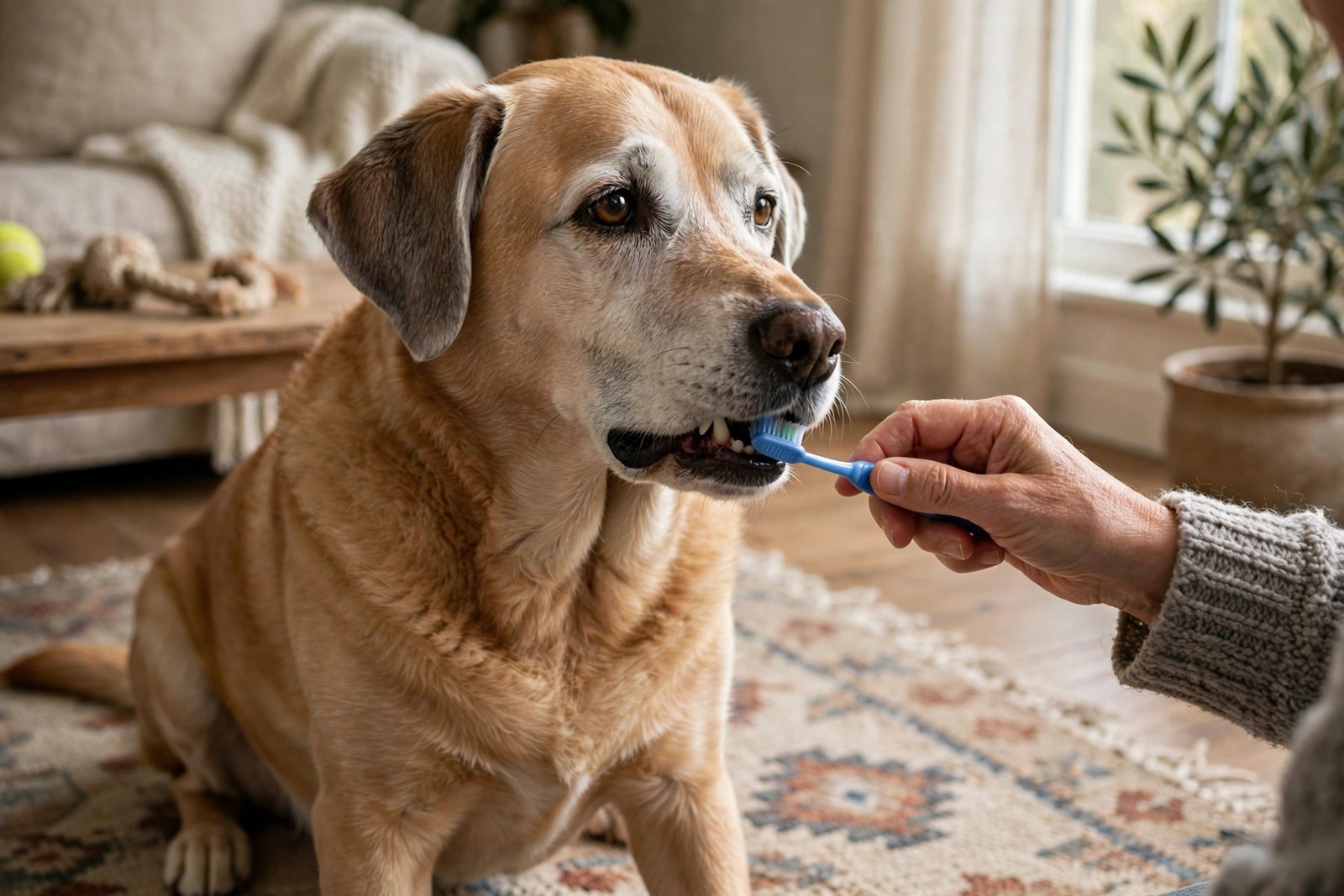
As dogs move into old age, their mouths usually need closer attention rather than less. Keep up daily or near-daily brushing if your dog tolerates it (soft brushes and gentle technique for older mouths), watch for the senior-specific signs — dropping kibble, chewing on one side, pawing at the face, new bad breath, bleeding gums, or going off hard food — and have teeth graded at every senior checkup, which for older dogs means twice a year.
The Anaesthetic Question, Answered Honestly
Owners often worry that an old dog cannot have the anaesthetic a proper dental needs. Age alone is not a disease: vets assess senior patients with examination and usually blood tests first, and modern anaesthesia with monitoring is routinely used in elderly dogs precisely because dental pain and infection are themselves a welfare problem. What a vet will weigh is the whole picture — heart, kidneys, other conditions — against the pain and infection burden in the mouth. Extraction of rotten teeth is not failure; dogs eat comfortably, often better, without painful teeth. Between procedures, vet-approved dental diets, chews, and plaque-control products can slow build-up but cannot remove established tartar.
Working With Your Vet
For a senior mouth, bring specifics rather than a general worry. Write down which side your dog favours when chewing, when the bad breath changed, whether kibble is being dropped or swallowed whole, and whether face-pawing or reluctance to play has appeared. Your veterinarian examines the mouth, grades the teeth and gums, and decides what treatment, if any, this dog needs; reading about senior dental disease beforehand simply helps you describe what you have seen at home and understand the findings on the day.
Raise dental findings at every senior visit rather than waiting for obvious pain — dogs conceal mouth pain impressively well. Book directly for a broken or discoloured tooth, facial swelling (a possible tooth-root abscess), or any senior dog who has gone off food.
A dental log kept for this dog is worth more than a general health diary: jot down brushing tolerance, foods refused, episodes of one-sided chewing, and the date any tooth looked discoloured or loose. Across two senior checkups, those dated entries show whether tartar, gum recession or discomfort is creeping forward, holding steady, or responding to the home routine you have built. Repeat the review after extractions or a scale and polish, because what counts as comfortable eating can change once sore teeth have gone.
That mouth history travels as a portable packet in the Pet Passport inside KinsLe, holding grades, procedure notes and visit dates so the next appointment continues the same conversation.