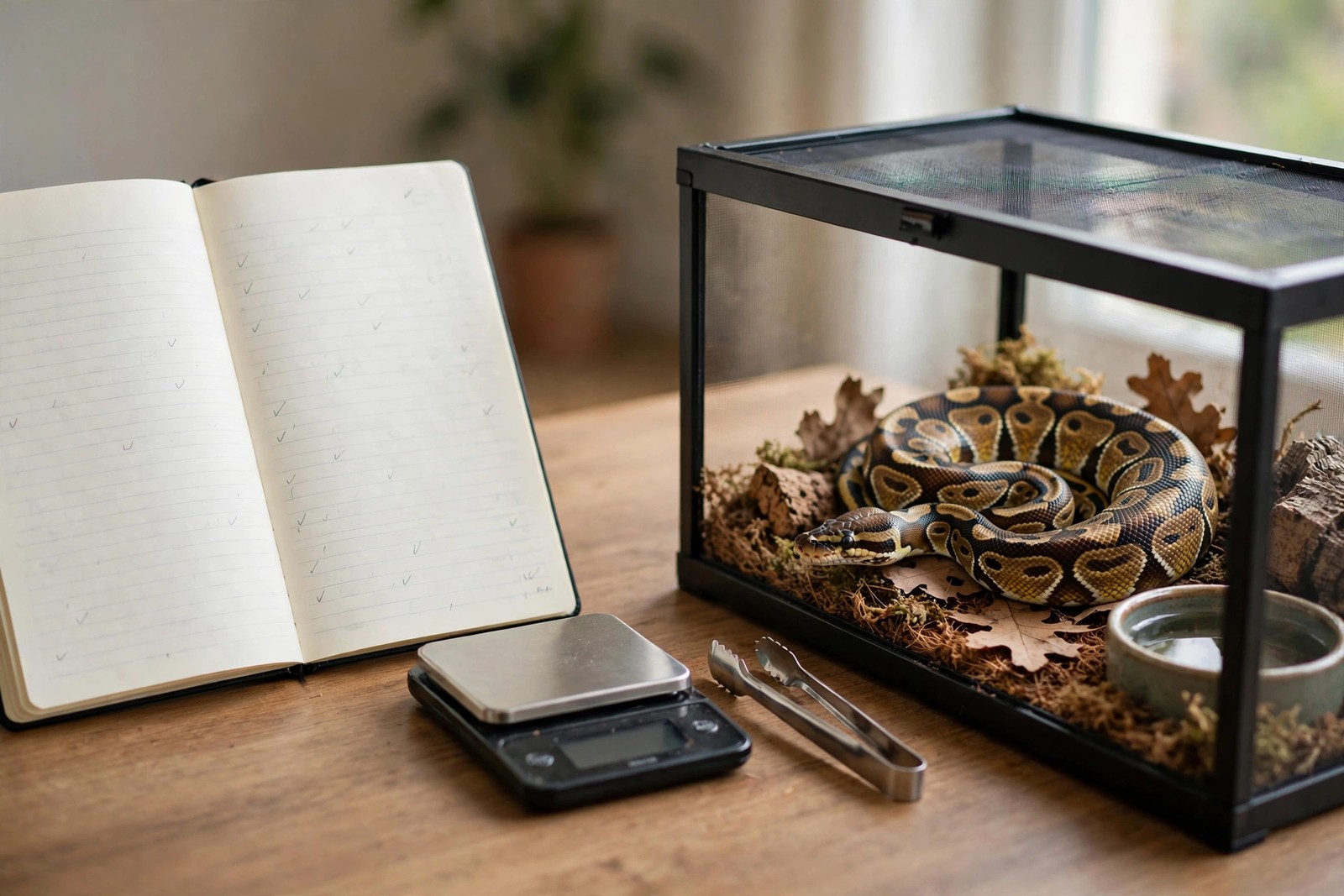
Ball python meals can sit weeks apart, and a refusal can stretch that gap further, so memory is a poor record keeper for this species. A feeding log works when each entry is short, fixed in format, and written at the moment of feeding. Build every line from the same six fields, in the same order, and the log becomes a pattern you can read at a glance rather than a diary you have to interpret.
The Six Fields Every Line Needs
Record the date the prey was offered first, because every judgement about intervals hangs off it. Next, record the prey type, such as rat or mouse, and whether it was offered frozen-thawed or by another method your snake is established on. Third, record the prey's size or weight, using the same measure every time; prey described only as medium tells a future reader nothing once suppliers change.
Fourth, record the outcome honestly: taken quickly, taken after a long investigation, struck but not eaten, or refused outright. A refusal is data, not a failed entry, and a run of refusals is often the first clear sign that something in the enclosure, the season, or the snake has changed. Fifth, record the snake's own weight, taken on the same scales, because weight set beside prey size shows whether the current routine is holding condition, adding fat, or letting the snake slip. Sixth, record what was happening at the time: a shed under way, a recent enclosure change, a house move, breeding-season behaviour, or an unusually cool room.
Add the Background That Explains the Gaps
Between meals, add the entries that make a later refusal readable. Log each shed with its date and whether it came away complete or in pieces. Note warm-end and cool-end temperatures whenever you check them, and record any equipment change, such as a replaced heat source or thermostat, on the day it happens. Note water changes only if you keep the log as a full husbandry record; the feeding pattern itself needs temperatures and sheds more than it needs daily chores.
Keep the format rigid enough that a gap in the log is obvious. One line per offer, one offer per line, and a brief code in the outcome field if you like, as long as the code is written against the log line and explained once at the top. When another keeper feeds the snake while you are away, ask them to complete the same six fields rather than sending you a message saying it ate fine, because fine cannot be compared with last month's entry.
Reading the Log Back
Review the log every few months and before any veterinary visit. Look for the interval the snake is actually keeping rather than the one you intended, prey sizes creeping up, weight drifting in either direction, and refusals that cluster around sheds, cold spells, or enclosure changes. Those clusters usually point to a husbandry explanation first, and they give a veterinarian a timeline instead of a guess if appetite loss continues.
A log also protects a senior or newly rehomed snake. The next keeper, a sitter, or a veterinarian can see exactly what the snake was eating, how often it truly ate, and what its weight did in response, without anyone reconstructing weeks-apart meals from memory. KinsLe's Pet Passport keeps that six-field feeding log alongside the snake's identification and health notes, so the whole feeding history travels with the snake wherever its care is handed over.