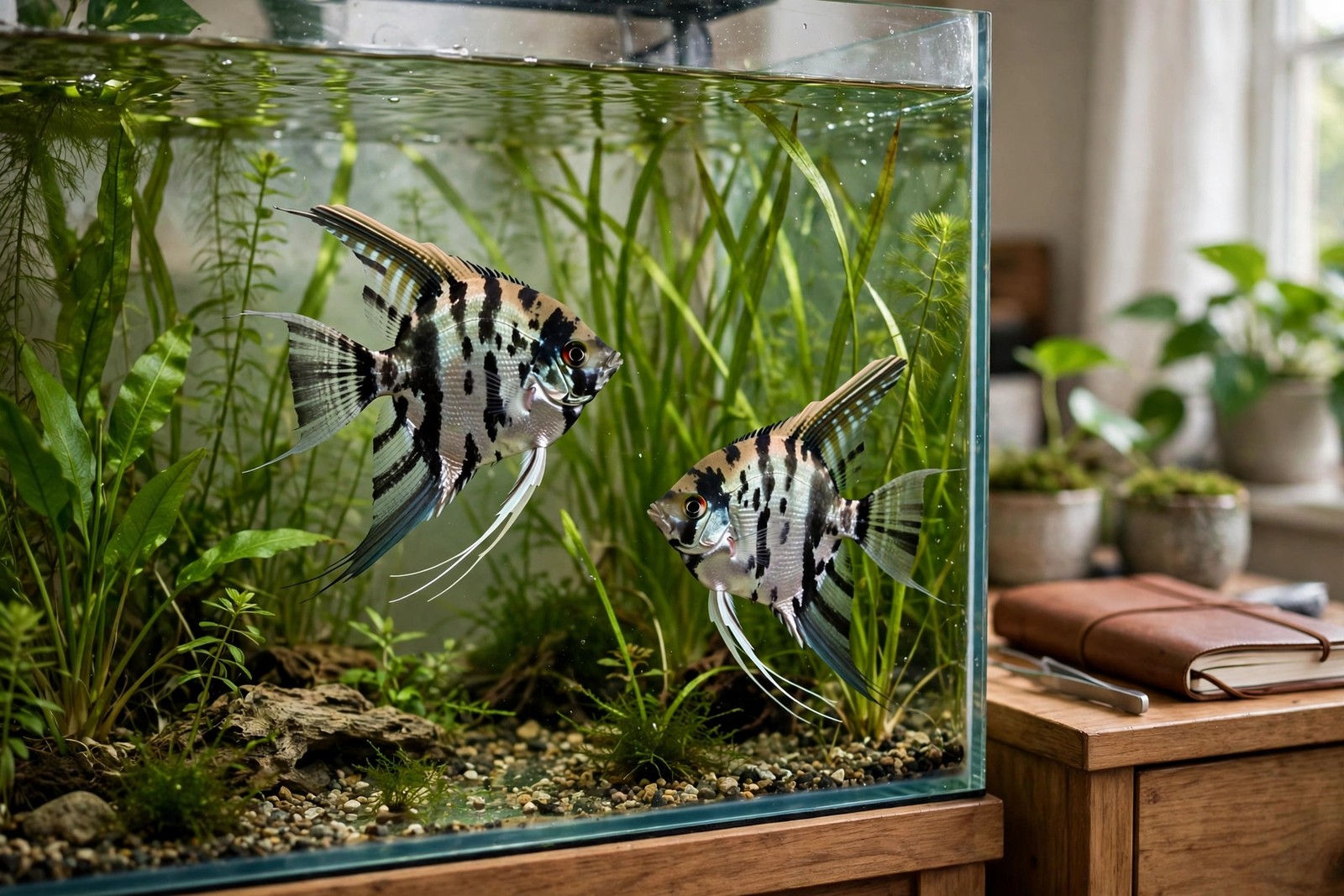
A stocking record earns its keep in an angelfish tank because angelfish are individuals with histories. A fish that arrived from a hard-water shop, a fish that has already paired, and a fish that bullied tank mates in quarantine will each behave differently in your water and your hierarchy. Writing the details down at purchase time, when they are known, turns later decisions about additions, pairing, and rehoming from guesswork into record-checking.
The arrival entry for each fish
Record the variety and colour form, such as silver, marble, or koi, because varieties differ in markings and sometimes in hardiness, and write how many fish were bought together as a group. Add the date the fish was acquired, where it came from, naming the shop or breeder, and the price paid, which matters later for insurance queries, replacement decisions, and honest accounting of what the tank costs. Note the fish's size on arrival, measured approximately against the tank glass, and attach or file a photograph taken in the first days, because angelfish markings shift as they grow and a dated photo is the reliable way to tell similar fish apart. If the sex is known or later becomes clear, add it with the date you confirmed it, since sexing young angelfish is unreliable.
Quarantine and introduction dates
Give each fish a quarantine entry: the date quarantine started, the date it ended, and any observations or treatments discussed with a professional during that period. Then record the date the fish joined the main tank and how the introduction went over the first days, noting chasing, hiding, or refusal to feed. Those dates become crucial if illness appears later, because they let you work out which fish could have brought a problem in and which fish were exposed. A fish that was never quarantined should have that written down too, so the gap in the record is honest rather than forgotten.
Life events that belong in the record
Angelfish records need the events that change tank politics. Note when two fish pair up and claim a territory, when eggs are laid and what became of them, and when aggression forces a separation or a rehoming, with the date and the reason. Record every death with its date and any signs you observed beforehand, without guessing at a diagnosis, because patterns across several entries are what an aquatic vet or experienced shop needs to see. Growth notes help too: a fish that stops growing while its group mates thrive is telling you something about feeding order and stress that a single glance at the tank will not show.
Tank-level details that complete the picture
Alongside the per-fish entries, keep the tank's fixed facts on the same record: tank size, filtration, target temperature and pH range, and the dates of major changes such as a new filter, a rescape, or a change of water source. When behaviour shifts, those dates let you test whether the change or a new fish is the likelier explanation. Keep purchase receipts filed with the record where you can, because a receipt confirms source and date when memory blurs, and it supports any return discussion with the shop if a fish dies very soon after purchase under their terms.
Using the record before you buy
The record's real value shows at the shop counter. Check it before adding fish, and you will know how many angelfish the tank already holds, which fish are paired and territorial, how much growing room young fish still need, and whether recent deaths make any addition unwise until the cause is understood. That pause prevents the classic angelfish mistake of adding a peaceful juvenile to a tank quietly ruled by a bonded pair. Storing the stocking record with your water test history in KinsLe's Pet Passport keeps every angelfish decision grounded in the tank's actual past.