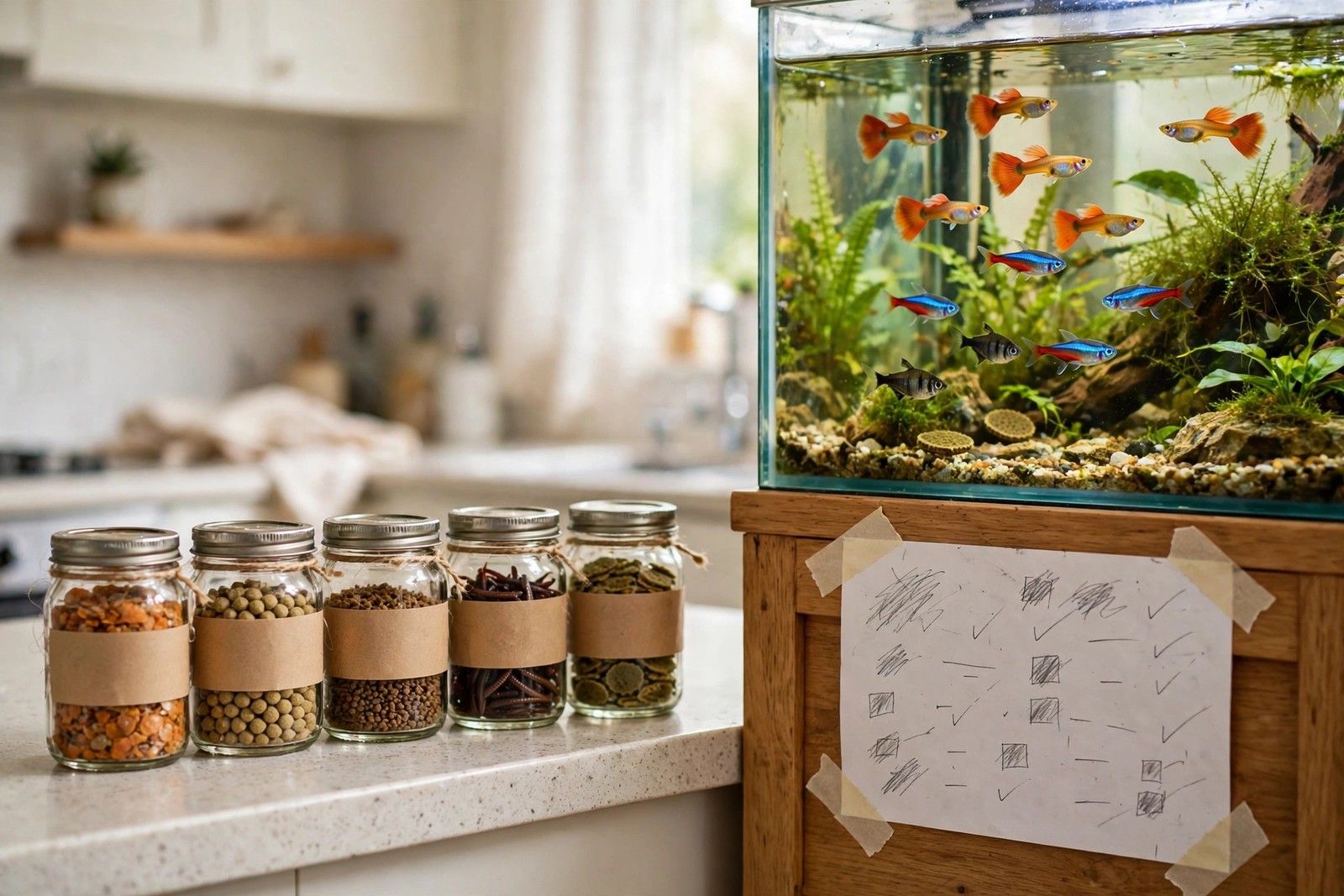
A fish feeder needs precision, not enthusiasm. Fish look hungry at every visit, uneaten food fouls water quickly in a closed system, and a tank left for two weeks can be ruined by kindness in the first three days. Your handover sheet should therefore specify amounts, times, and limits so exactly that a feeder who has never kept fish can follow it perfectly and never has to improvise.
Food: type, amount, and the daily pots
Name the food for each tank and write the exact amount per feed in measures the feeder can repeat: a stated number of pellets, one cube from the freezer, or a pinch defined against a photograph you leave beside the sheet. The reliable method is to pre-portion each day's food into separate labelled pots, one pot per tank per day, so the feeder empties one pot at the stated time and judges nothing. State the feeding times and the days, including any fasting day you normally keep, and say plainly that fish missing a single feed come to no harm, while an extra feed can harm the water. If different fish in one tank eat different foods, write which food goes in first and where in the tank to place it, so shy fish are not outcompeted while you are away.
Lights, equipment, and the two-minute daily check
Write down the light timer setting and tell the feeder to leave the timer alone, because algae and stressed fish follow quickly when lights burn long to make the tank look lively for visitors. List the simple daily check: the temperature reading and the range it should stay within, bubbles or flow showing the filter is running, the water level against a mark you have made on the glass, and all fish present and swimming normally at feeding time. Show the feeder where the plugs and the filter sit before you go, and arrange one demonstration visit if you can, because a thirty-second tour prevents the panic of a silent filter being mistaken for a broken one.
What not to do, written as kindly limits
Give the prohibitions as protection for the feeder, not as nagging. No extra food however hungrily the fish beg, because begging is normal fish behaviour at any approach to the glass. No water changes, filter cleaning, or plant trimming unless you have agreed a specific task in advance, because well-meant maintenance with unfamiliar water or unwashed hands can do more harm than a fortnight of stillness. No new fish, foods, or treatments added to the tank for any reason while you are away. If a fish dies, the instruction is to remove it with a net if the feeder is willing, note the date, and phone you, not to attempt any cure.
Emergencies and contacts
Finish the sheet with your phone number and the best times to reach you, a backup contact who can visit if the feeder cannot, and the name and number of the aquatic shop or vet you use. Add one line for true emergencies, such as a leaking tank or a total power failure, telling the feeder to phone you first and then the backup contact, and to switch nothing off unless water and electricity are meeting. Tape the sheet to the tank stand, leave a copy with the backup contact, and put the food pots, net, and a torch beside it.
After you return
Thank the feeder, check the pots to confirm what was actually fed, test the water before resuming your normal routine, and note anything the feeder reports, however small, in your tank log. A smooth holiday handover is a system you can reuse, improving the sheet each trip with whatever confused your feeder this time. Sending that sheet to your feeder as a KinsLe Care Pass gives them time-limited access to the full routine, contacts included, for exactly the days you are away.