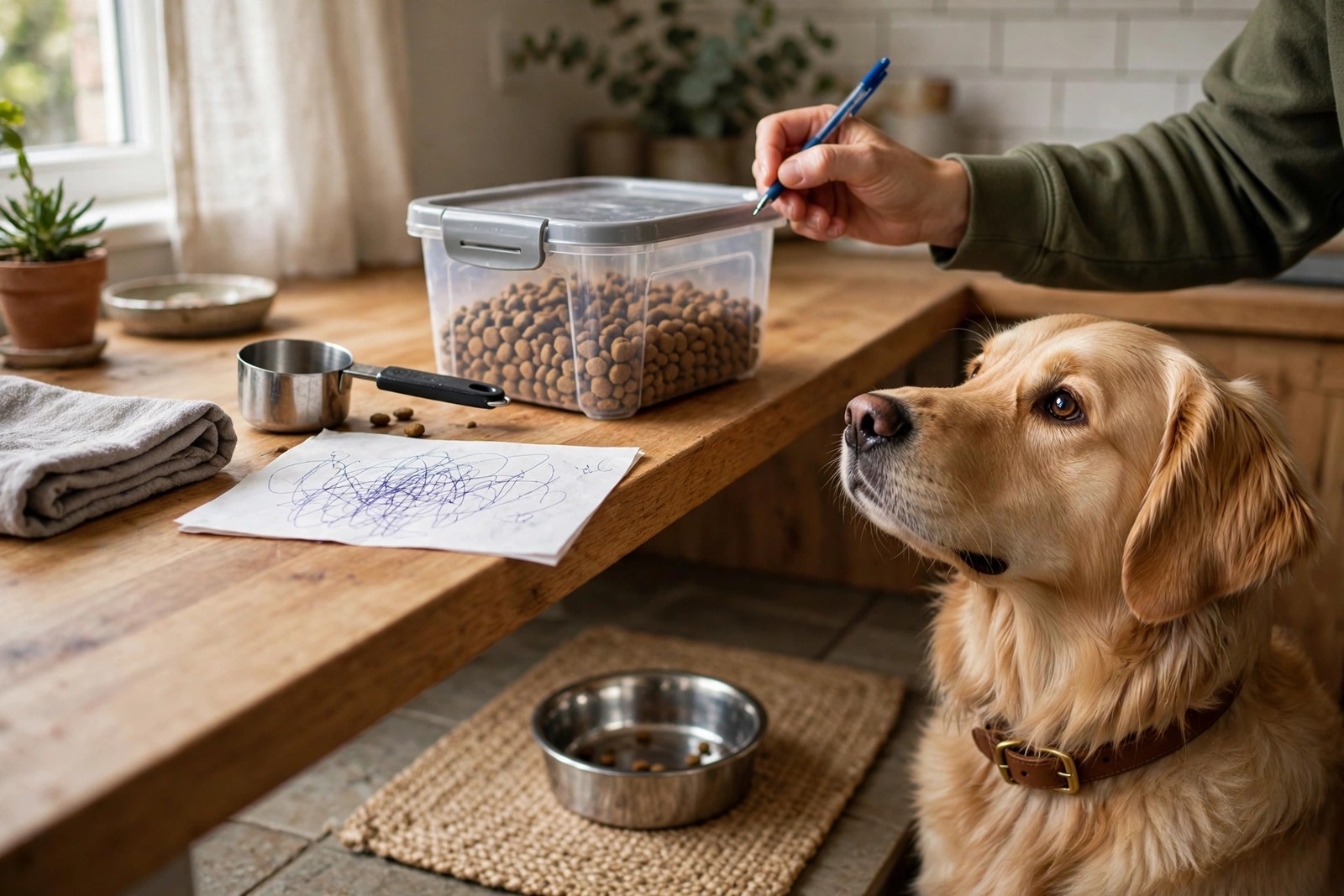
A good feeder's note answers every question at the moment it arises, in your kitchen, without needing to phone you. Most feeding mistakes by kind helpers are not carelessness — they are missing details: the scoop that lives in the bin versus the cup in the drawer, the second meal nobody mentioned, the treats that quietly doubled. Write it once, write it precisely, and update it whenever the routine changes.
The meal itself, with no room to guess
Name the food and say where it is: which bin, bag, shelf, or fridge container, and what the opened portion looks like if that helps. Give the exact amount in the measure you actually use — one level scoop from the blue scoop in the bin, twice a day — and say what to do with leftovers rather than leaving a helper to top up a half-eaten bowl. State the feeding times as clock times or clear anchors such as on arrival in the morning and at about six in the evening, and note anything added to the bowl: warm water, a spoon of wet food from the fridge, or a supplement, with the amount for each.
Treats, water, and the toilet routine
Treats are where well-meaning feeding quietly goes wrong, so name what is allowed, how many per visit, and what is off limits entirely, including anything your dog must never have because of an allergy or a sensitive stomach. Say plainly that table scraps are not part of the deal if that is your rule. Cover water just as clearly: empty, wash, and refill the bowl at every visit rather than topping up, and mention a second bowl or a garden supply if you use one. Then write the toilet routine around the meals — straight into the garden on arrival, a short lead walk after the morning feed, last toilet before your feeder leaves in the evening — plus where bags, towels, and cleaning supplies live for the inevitable muddy or messy moment.
Medication and the dog who will not eat
If any medication goes in food, write it as its own bold section, not buried in the feeding paragraph: what it is for in plain words, when it is given, how you disguise it, and what to do if you find the tablet spat out in the bowl. Add a short if-he-will-not-eat plan, because a dog who skips one meal in a strange, quiet house is common and usually settles: leave the food down for a set time, do not substitute tastier extras, offer the next meal as normal, and phone you if he refuses two meals in a row, seems unwell, vomits repeatedly, or has diarrhoea — with your vet's number right there for anything that looks urgent.
One page, in the right place
Keep the note to a single page a tired helper can follow at a glance, walk a first-time feeder through it in person once, and leave a printed copy where the food is kept. Store the master version in KinsLe's Pet Passport with your dog's vet details and emergency contacts, so the note you hand over is always the current one rather than last year's version still pinned inside a cupboard door.