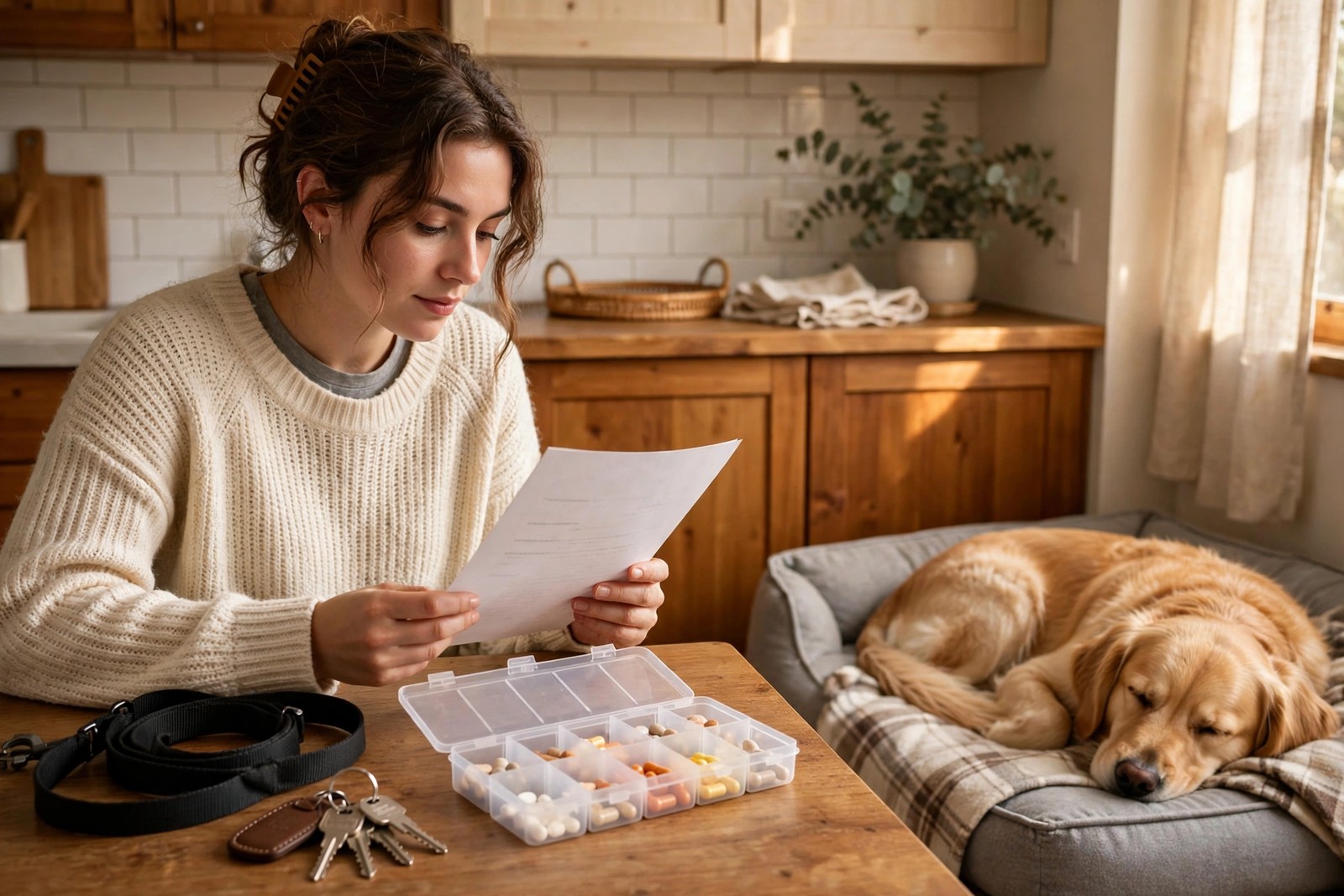
A pet sitter file is the document that lets another person run your dog's life, in your house, the way you run it — for a weekend or for two weeks. It is broader than a feeding note: feeding matters, but so do the walk she expects, the medication she must not miss, the neighbour's dog she cannot greet, and the alarm code the sitter needs at midnight. Build it as sections, keep it current, and hand over the same file every time.
Food, water, walks, and toilet routine
Open with the daily rhythm in time order. State each meal's food, exact measure, location of the food, and time, plus allowed treats and their daily limit, and fresh water refilled at every visit. Describe the walks honestly: how many, roughly how long, the usual route if she has one, whether she walks on a lead always or has reliable recall in a specific enclosed field, and what to avoid — a reactive stretch past a particular garden, livestock fields, or deep water if she swims and should not. Finish with the toilet pattern: first thing, after meals, last thing at night, and the cue word she knows, so the sitter is not guessing why she is waiting by the door.
Medication, vet, and emergency contacts
Give medication its own section: what each item is, when it is due, how you give it successfully, and what a missed or refused dose should trigger — usually a call to you or the vet, written right there. Follow with contacts in calling order: your mobile and where you will be, a local backup person who holds a spare key and can step in, your regular vet with address and hours, and the emergency out-of-hours clinic, which may be a different practice at a different address. Add your dog's microchip number, insurance details if she is covered, and a line authorising the sitter to seek emergency treatment, so no clinic conversation stalls over permission while you are on a plane.
Behaviour, quirks, and comfort
This is the section sitters thank you for. Note fears and triggers — thunder, fireworks, the vacuum cleaner, men in hats — and what actually helps her settle. Note how she is with other dogs, cats, and children, whether she guards food or toys, whether she is an escape artist who tests gates, and which doors and rooms are hers or off limits. Cover sleep: where her bed is, whether she expects a last biscuit, a night light, or a worn item of your clothing, and the small rituals that tell her the day is done. A dog whose file explains her is a dog a sitter can keep calm.
The house, and the boundaries of the job
Add the practical house layer: how keys, locks, and the alarm work, where the fuse box, stopcock, and first aid supplies live, bin day, and anything temperamental such as a boiler setting or a gate that must be latched twice. Close with clear boundaries: your return date and time, what the sitter may decide alone, what needs a quick text, and what needs a call whatever the hour. Hand the file over through KinsLe's Care Pass, the temporary link made for sitters and other helpers, and your sitter opens the current file on their own phone with no KinsLe account of their own and no access beyond the care window you set.