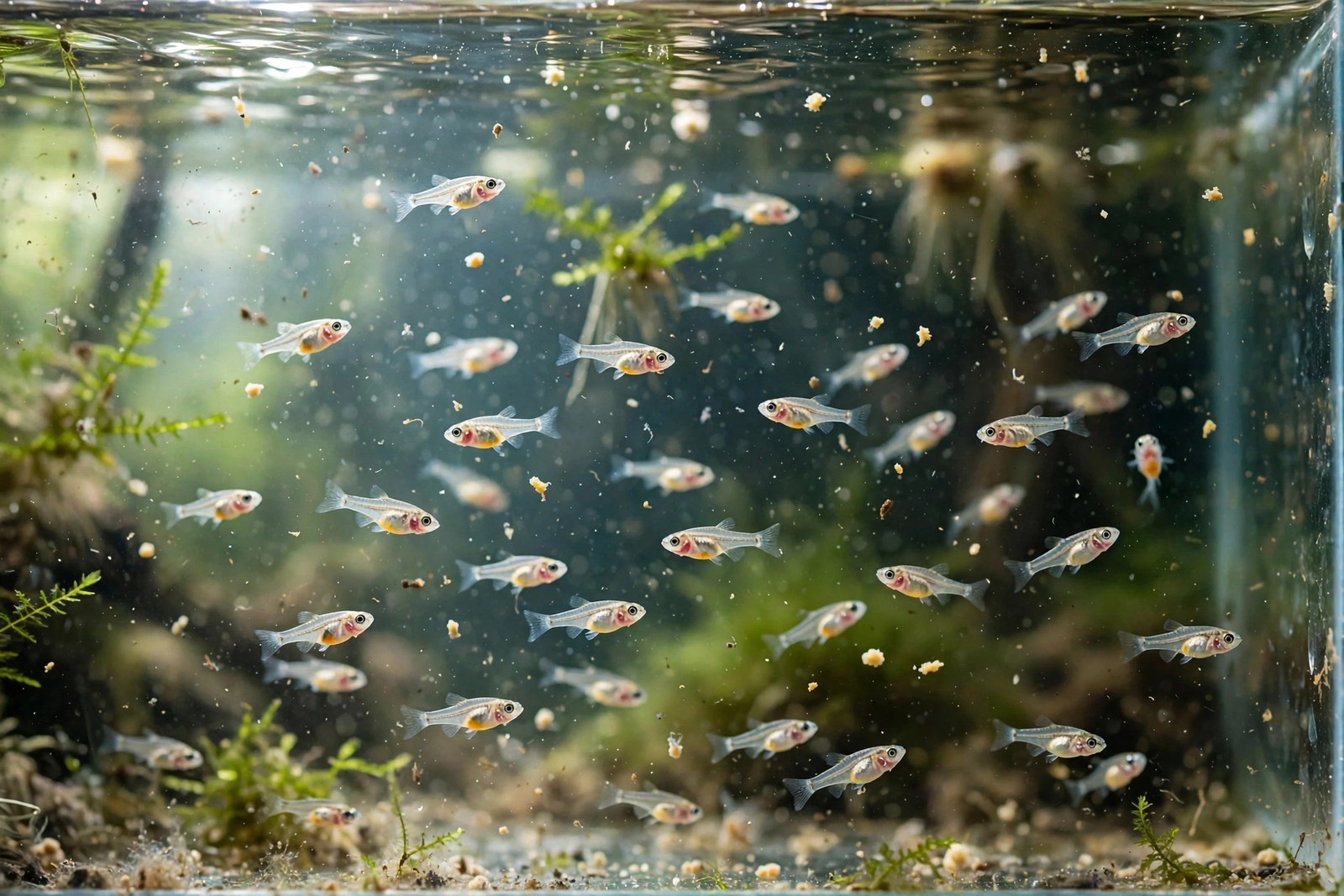
Fry food is a size problem before it is a nutrition problem. A newborn fish can only eat what fits into a very small mouth, so the right food changes week by week as the fry grow. Feed the stage in front of you, feed little and often, and watch bellies rather than the clock alone: a well-fed fry shows a gently rounded belly, while a fry that found nothing small enough to eat stays thin even in water full of food meant for adults.
Stage One: Microscopic First Foods
Many fry live off their yolk sac for the first days after hatching and do not need feeding until they are free-swimming, which is the moment first food must already be ready. At that point the staple choices are infusoria, the microscopic organisms that develop in well-aged, plant-rich water, and green water, which is water carrying free-floating algae of a size tiny fry can take. A densely planted rearing tank, or a separate supply of infusoria started ahead of the spawn, bridges these first days. Egg-laying species with very small fry depend heavily on this stage; larger livebearer fry are often big enough to skip ahead sooner.
Stage Two: Baby Brine Shrimp and Microworms
Once fry can chase moving food, baby brine shrimp become the growth engine of the rearing tank. Freshly hatched brine shrimp are small, visibly wriggling, and rich enough to produce noticeable growth, and fry hunt them eagerly, which makes feeding easy to judge: orange-tinted, rounded bellies show the meal landed. Microworms serve the same stage well for fry that feed lower in the water, sinking slowly where bottom-oriented youngsters pick them off. Offer one or both of these live foods as the main ration through this stage, in portions the fry clear within a short feeding period.
Stage Three: Crushed Flake and Powdered Foods
As mouths grow, begin mixing in finely crushed flake or powdered fry food, ground between your fingers to a dust for the smallest fry and to small crumbs as they grow. Introduce it alongside the live food rather than swapping overnight, because fry keyed to movement may ignore still food at first, and a mixed ration covers both the hunters and the grazers. From here the progression is gradual: larger crumbs, then small pellets matched to the species, then the adult diet in miniature, with each step following mouth size rather than a date on a calendar.
Feeding Rhythm and Water Discipline
Feed small amounts several times a day throughout the fry stages, because tiny stomachs hold little and growing fry burn through it quickly. Several small feeds beat one large one at every stage, and the rhythm must not slip on busy days, because a missed day at this size is a visible setback. Uneaten food is the price of that generosity, and it fouls a small rearing tank fast, so siphon debris from the bottom gently, keep up small regular water changes with matched water, and use a gentle sponge filter that cleans without sucking fry in. Judge each week by growth and evenness: a batch growing together is being fed well, while a batch splitting into a few large fry and many tiny ones usually needs food spread more widely through the tank and offered more often. KinsLe's Care Teams helps hold that rhythm by assigning the several daily fry feeds to different helpers, each marked complete with a timestamp so no small meal is doubled or missed.