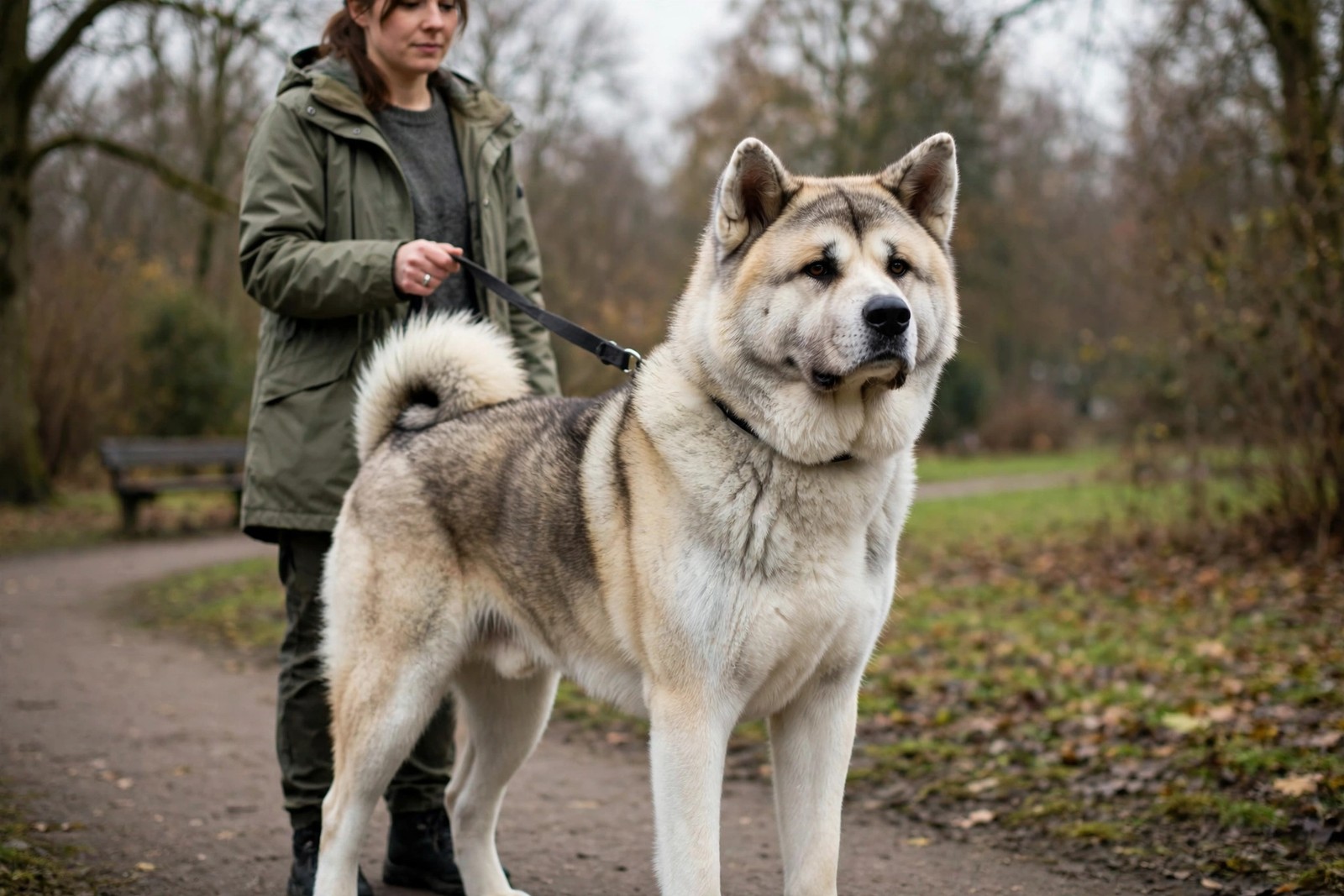
When experienced owners call the Akita a breed for experienced handlers only, they are describing a combination, not a single fault. Power alone is manageable, independence alone is manageable, and reserve alone is manageable. An Akita brings all three in one large dog, along with a long memory for how it has been treated, and that combination leaves a novice handler very little margin for the ordinary mistakes of a first year.
Power that arrives before judgment does
An Akita puppy grows into a heavy, muscular adult with a broad head and considerable pulling strength, and it reaches most of that size while still mentally immature. Lead manners, door manners, and a reliable response to being called away from interest therefore have to be installed early, while the dog is still small enough to manage easily. A handler who waits until the dog is fully grown to begin serious training is trying to teach a powerful adult habits it has never been asked for, in situations where it can simply choose otherwise. Experienced handlers front-load the work: short, frequent lessons, food rewards placed in the dog's mouth one at a time, and rules that never change between household members.
Reserve, intolerance, and possession
Aloofness with strangers is a breed characteristic, not a training failure. Many Akitas accept their own people completely and have no interest in visitors, which means greetings must be managed: the dog is given space, visitors are told to let the dog approach or not, and nobody corners the dog for a stroke. Intolerance of unfamiliar dogs, particularly dogs of the same sex, can emerge at maturity even in a puppy that played happily at classes, so experienced owners plan dog-free walking routes and never rely on dog parks. Possessiveness about food, chews, toys, and beds is the third trait to manage as routine: feed in a quiet place, trade rather than snatch, with the swap item offered before the guarded item is taken, and keep high-value chews for settled, undisturbed times.
What experience actually looks like in practice
It looks unglamorous. The experienced handler socialises the puppy widely but briefly, letting it watch the world from a distance it can cope with, and leaves before the puppy is overwhelmed. They practise handling, grooming, and vet-style examination at home in small doses, so the adult dog finds professional handling familiar. They use secure fencing and a lead without embarrassment, insure the dog properly, and choose walking times and places that suit the dog they have rather than the dog they imagined. They also recognise escalation early: a hardening stare, a closed mouth, and stillness from an Akita are information, and the correct response is distance and calm, never a confrontation the dog will remember.
The household this breed needs
An Akita suits a calm, consistent household with older children or adults only, clear routines, and the confidence to say no to visitors who want to treat the dog like a teddy bear. It is a poor match for a busy social house with constant unfamiliar guests, a home with small pets it could view as prey, or an owner who wants a dog that adores everyone it meets. The thick double coat also brings heavy seasonal shedding and a weekly grooming commitment that rises sharply when the coat blows, in spring and autumn.
The honest summary
Experienced handlers are not a different species of owner; they are owners whose timing, consistency, and risk management were learned on earlier dogs. If the Akita is the breed you want, borrow that experience deliberately: work with a trainer who knows primitive and spitz types, join breed-owner groups to hear the unvarnished version, and consider an adult rescue whose temperament is already known. Searching KinsLe's Pet Services Directory for trainers and groomers with Akita experience puts that borrowed expertise on your team before problems set in.