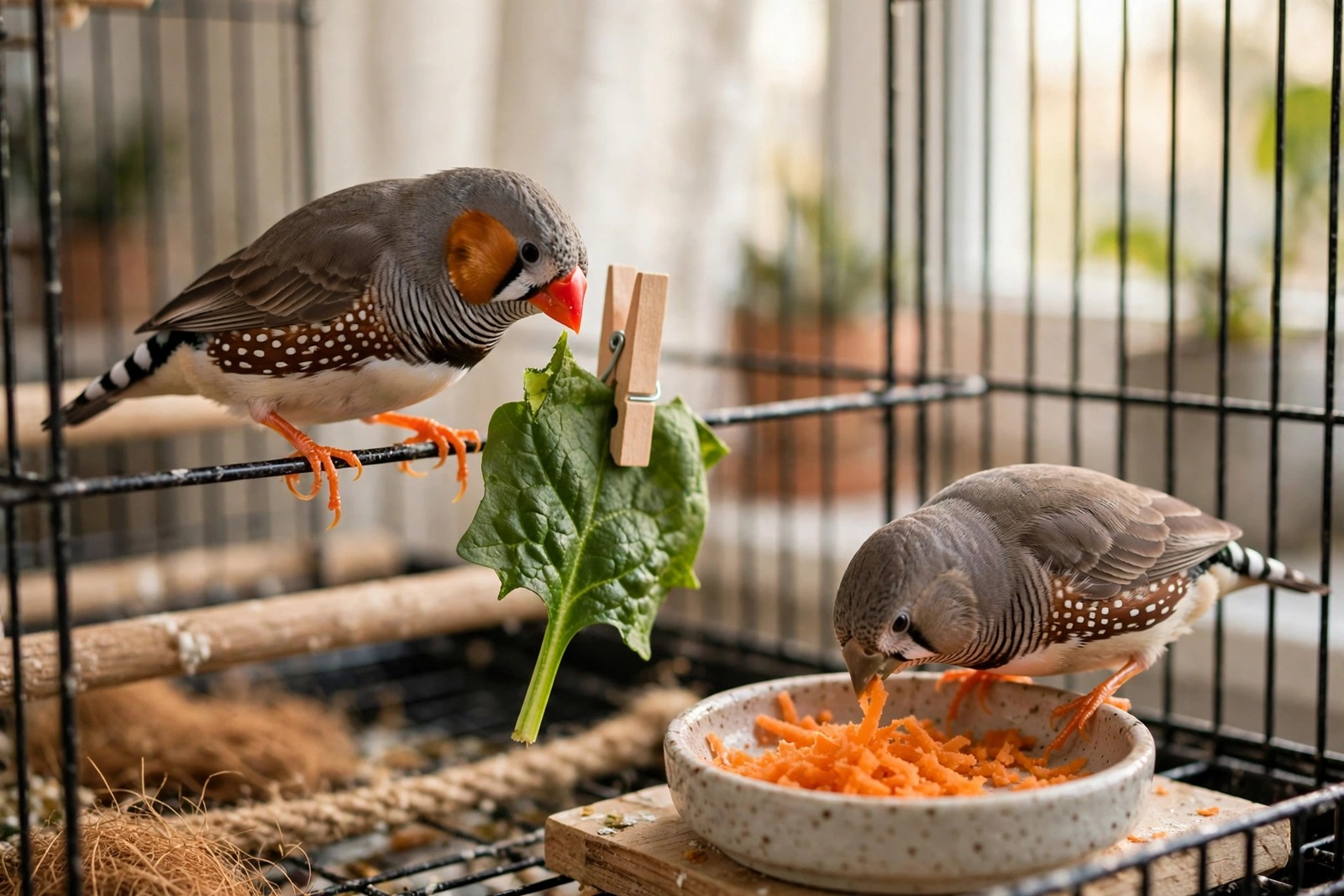
Seed alone keeps a finch alive but not in top condition. A dry seed mix is heavy in fat and carbohydrate and short on vitamin A, calcium, and quality protein, and cage finches fed nothing else commonly drift into poor feathering, low breeding success, and shortened lives. The good news is that finches — zebra finches, society finches, Gouldians, and their relatives — will accept a wide range of fresh and prepared foods once each item is introduced patiently and presented in finch-sized pieces.
Fresh Greens and Vegetables
Leafy greens are the everyday addition: spinach, kale, romaine lettuce, chard, and dandelion leaves from a pesticide-free source, washed, dried, and clipped to the cage bars or chopped into a small dish. Finches pick at leaves hung up more readily than at a pile on the cage floor, and a wet leaf also invites bathing. Grated or finely chopped carrot, broccoli florets broken down small, cooked or raw sweetcorn kernels, defrosted peas, and cucumber slices all suit small beaks; broccoli and dark greens are particularly valued for their calcium and vitamin content. Fruit is a smaller, occasional part — a little apple without seeds, melon, or berries — because sugary fruit fed heavily crowds out better food. Present everything in teaspoon-scale amounts for a pair of finches, and remove fresh food after a few hours before it wilts, soils, or attracts flies, especially in warm weather.
Egg Food, Sprouted Seed, and Pellets
Protein is the gap seed leaves widest, and it matters most when finches are breeding, feeding chicks, or moulting. Egg food — hard-boiled egg, shell included and finely mashed, offered plain or mixed with a little grated vegetable — is the traditional breeder's answer, given in small fresh portions several times a week in the breeding season and once or twice a week otherwise. Sprouted seed bridges the gap between dry seed and fresh food: seed soaked and rinsed until the first tiny roots show is more digestible and richer in several nutrients than the same seed dry, and finches take to it eagerly, though it must be rinsed carefully, smelled for sourness, and discarded at the first hint of mould. Formulated finch pellets offer a measured balance of vitamins and minerals and can be mixed gradually into the seed for reluctant birds rather than swapped in overnight, since finches are suspicious feeders who can starve beside food they do not recognise. A cuttlebone fixed in the cage, plus access to a mineral grit source, covers calcium for laying hens and growing youngsters.
Safety and Introducing New Foods
Never offer avocado, onion, garlic, chocolate, caffeine, alcohol, or salty and fatty human snacks — several of these are acutely toxic to small birds, and a finch's tiny body leaves no margin. Wash all produce, avoid anything sprayed or gathered from roadsides, and introduce one new food at a time in the morning, when finches feed most actively, repeating it for days before deciding it is refused; many finches need repeated sight of a food before the first bird dares it, after which the whole group usually follows. Keep a simple note of what your birds actually eat, and KinsLe's Family Sharing makes that easy to keep consistent, letting everyone in the household see the same feeding list, favourites, and foods to avoid in your finches' shared profile.