Finding a loose dog puts you in a kind role with real risks, so work in order: your safety, the dog's safety, identification, then reporting. Most lost dogs are frightened rather than dangerous, and a calm approach in the first five minutes decides whether the dog is secured in your garden or bolting across a junction.
Secure the dog without a chase
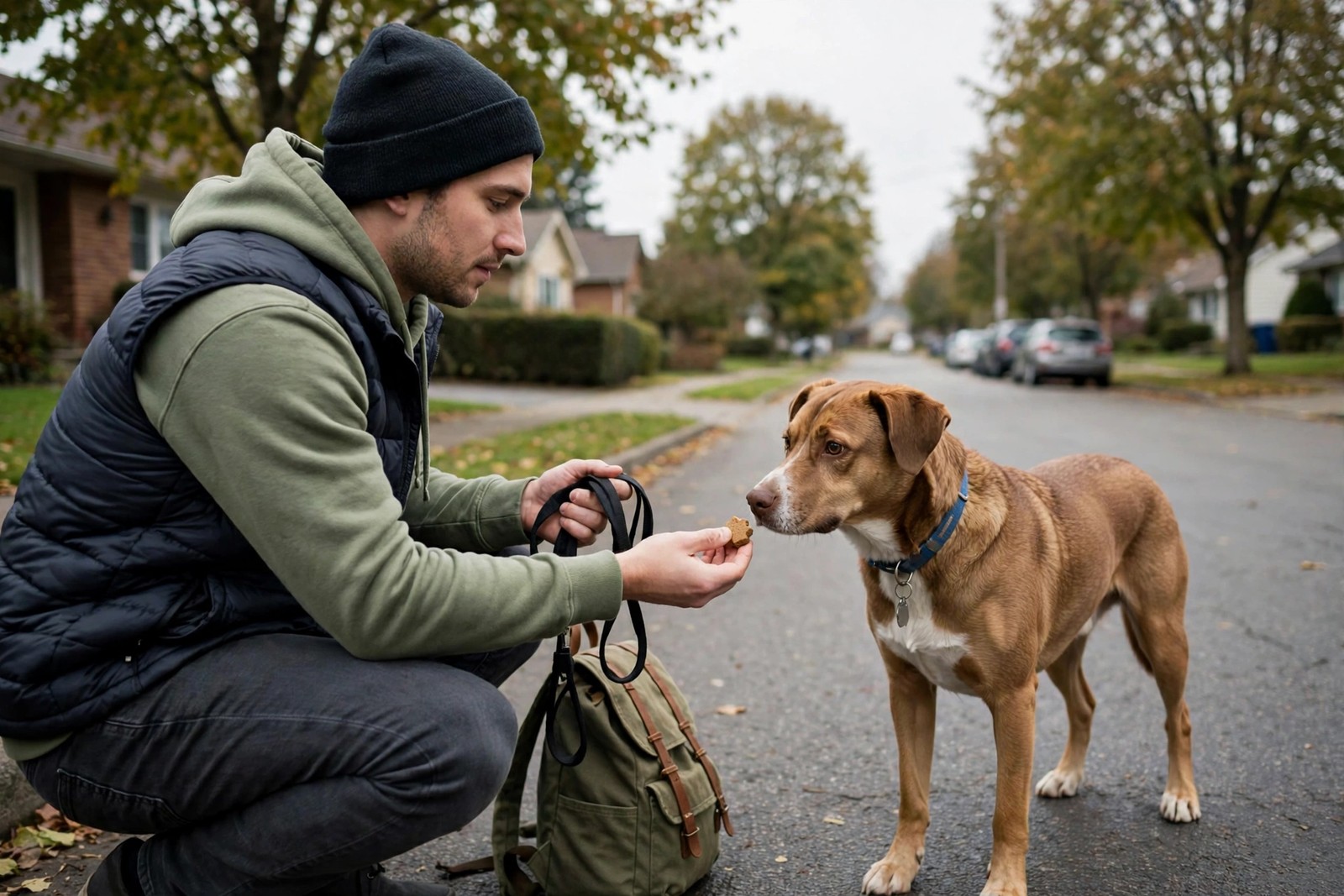
Stop, crouch or sit sideways, and avert your gaze rather than walking straight at the dog with arms out. Toss small pieces of food nearby if you have any, let the dog close the distance, and speak quietly. Never chase: a pursued dog runs blind, and traffic is one of the biggest risks to a loose dog. When the dog is close, slip a lead, a belt, or a loop of rope gently over the head, or lure the dog through a gate into an enclosed garden or car and close it in. If the dog growls, lunges, is injured and snapping, or is loose on a fast road, do not grab — keep eyes on it from a distance and call animal control or the local police non-emergency line to take the capture.
First checks once the dog is safe
Offer water and a quiet corner away from your own pets, and resist a big fuss or a houseful of visitors. Read any collar tag first — many lost dogs are home within the hour with one phone call. If the collar carries a QR ID tag, scan it with your phone, because that opens the dog's profile and a way to contact the owner without waiting for an office to open. Photograph the dog clearly, noting sex, approximate size, colour, collar, and any injury or distinctive mark, and keep one identifying detail out of anything you post publicly, so a claimant can prove the match by describing it.
The chip scan and the reports that matter
Take the dog to any veterinary practice, shelter, or animal control office and ask for a microchip scan — this is routinely done free for found dogs, and the practice contacts the registered keeper from the chip record. Report the find the same day to animal control or the local dog warden service, because owners searching properly will call there first, and in many areas reporting a found dog is a legal duty. Add the dog to local lost-and-found listings and neighbourhood groups with your photograph, the area found, and the time, and check the lost listings as well as posting in the found ones — the owner's alert may already be waiting.
Proof of ownership and letting go properly
Expect to verify anyone who claims the dog. Ask for their own photographs of the dog, the microchip number or vet details, and the withheld detail from your post, and let animal control or a vet mediate if anything feels off — a genuine owner is relieved by careful checks, not offended. Do not rehome, sell, or simply keep a found dog, however settled it seems; ownership follows the chip record and local rules, not possession. If you can, checking KinsLe's Lost Pet Alert System for a matching alert from the owner lets you message them directly through the system, which is often the fastest route from a dog in your kitchen to a dog back in its own.