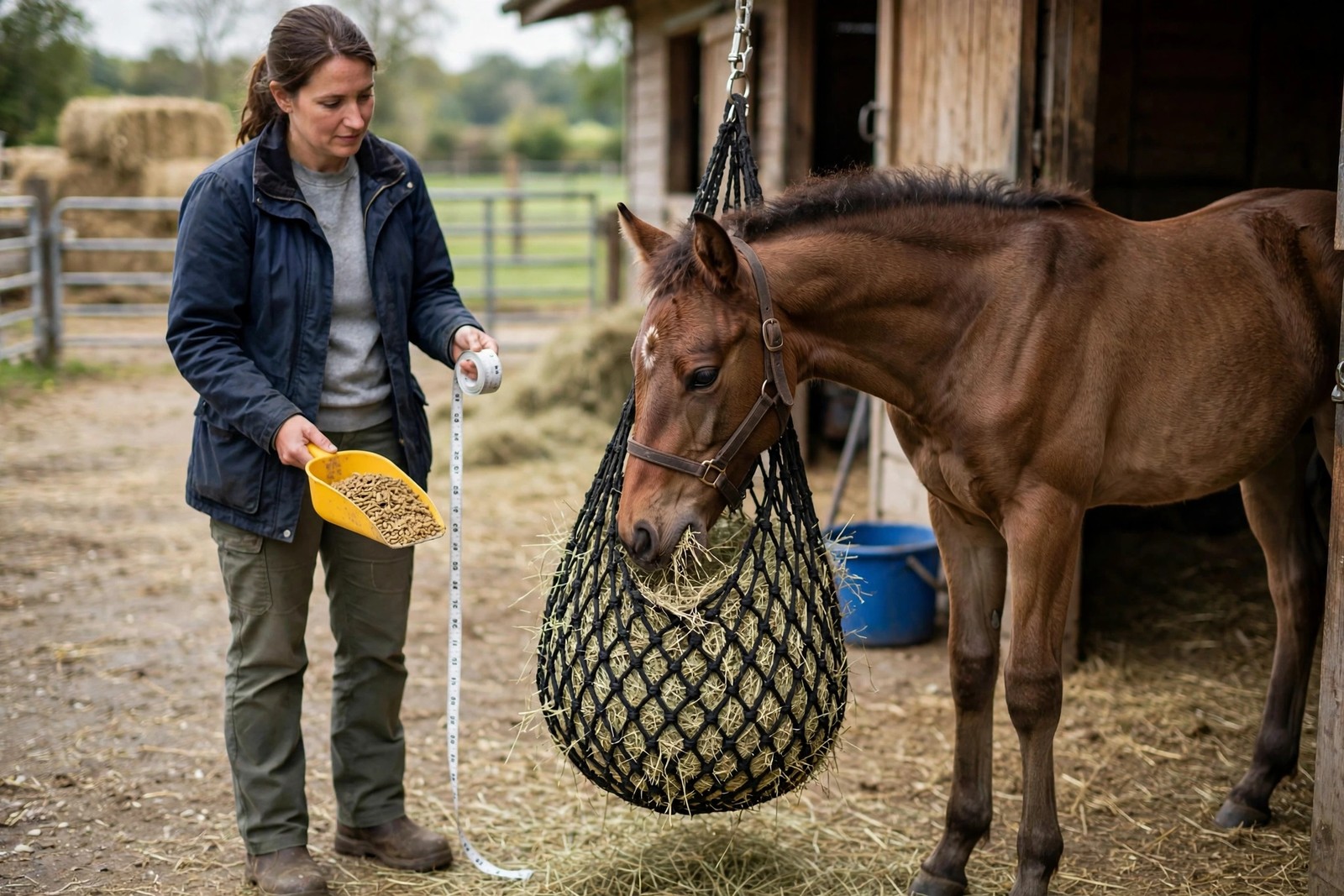
Steady is the goal. A weanling or yearling needs enough nutrition to build bone, muscle and tendon in the right proportions, but a ration that piles on condition quickly can outpace the skeleton underneath it. Developmental orthopedic problems, including physitis and osteochondrosis, are linked in part to excess energy and mineral imbalance during fast growth, so the feeding plan that looks modest on paper often produces the sounder adult.
Start With Forage, Then Fill the Gaps
Forage — pasture, hay, or a mix of both — should remain the foundation of the ration, offered generously through the day rather than in two large concentrate meals. Grass hay and pasture vary widely in protein and mineral content, and legume hay such as alfalfa runs richer in protein and calcium than plain grass hay, which changes what the rest of the ration must supply. A forage analysis, arranged through your vet or a feed adviser, turns guesswork into a ration you can actually balance.
On top of forage, a feed formulated for growth — often called a grower feed or a ration balancer for young stock — supplies concentrated protein and minerals in a small daily amount. Ration balancers suit easy-keeping youngsters who gain too readily on full feeds; larger growth feeds suit leaner types. The label matters less than the fit with your forage and your horse's condition.
The Balances That Matter
Protein quality matters more than crude quantity alone. Growing horses need the amino acid lysine in particular to build muscle and bone, and a growth-formulated feed is designed to provide it, whereas simply adding more oats or a general horse feed may add energy without adding the amino acids growth requires.
Calcium and phosphorus must arrive in balance as well as in sufficient total amounts, because an excess of one can interfere with the absorption of the other while bones are mineralising. Zinc, copper and manganese also support cartilage and bone development. This is why stacking several supplements on top of a balanced growth feed can unbalance a ration that was already correct: add one thing at a time, and only for a reason you can name.
Salt should be available at all times, and clean water must never be the limiting factor; a youngster that drinks poorly eats poorly.
Feeding for a Steady Growth Curve
- Weigh with a tape or condition-score on the same day each week, and record the result rather than trusting your eye, because daily familiarity hides gradual change.
- Split concentrate into two or three small meals a day; large single grain meals are harder on the hindgut and deliver nutrients less evenly.
- Change feeds gradually over seven to ten days, mixing increasing amounts of the new feed into the old, so the gut microbes can adjust.
- Watch the ribs and the joints together: you should be able to feel ribs under a light fat cover without seeing them prominently, and any puffiness or heat around knees, hocks or fetlocks deserves a prompt vet conversation.
Weaning itself is a nutritional event as well as an emotional one. Keep the forage familiar across the move, introduce the growth feed before separation where you can, and expect a brief plateau if intake dips for a few days.
When to Get the Ration Checked
Ask your vet to review the plan at routine young-stock visits, sooner if growth looks uneven or the topline stays poor despite adequate feed. Bring the forage analysis, the feed label and your weight records; those documents let a professional rebalance the ration in one visit.
Growth feeding is a rota as much as a recipe, because measured meals, weekly weigh-ins and gradual feed changes only work when everyone feeding the yard does them the same way. Recording those jobs in KinsLe Care Teams, with each feeding and weekly weigh-in assigned and time-stamped, keeps a growing youngster on the steady ration you planned rather than the one a busy week improvised.