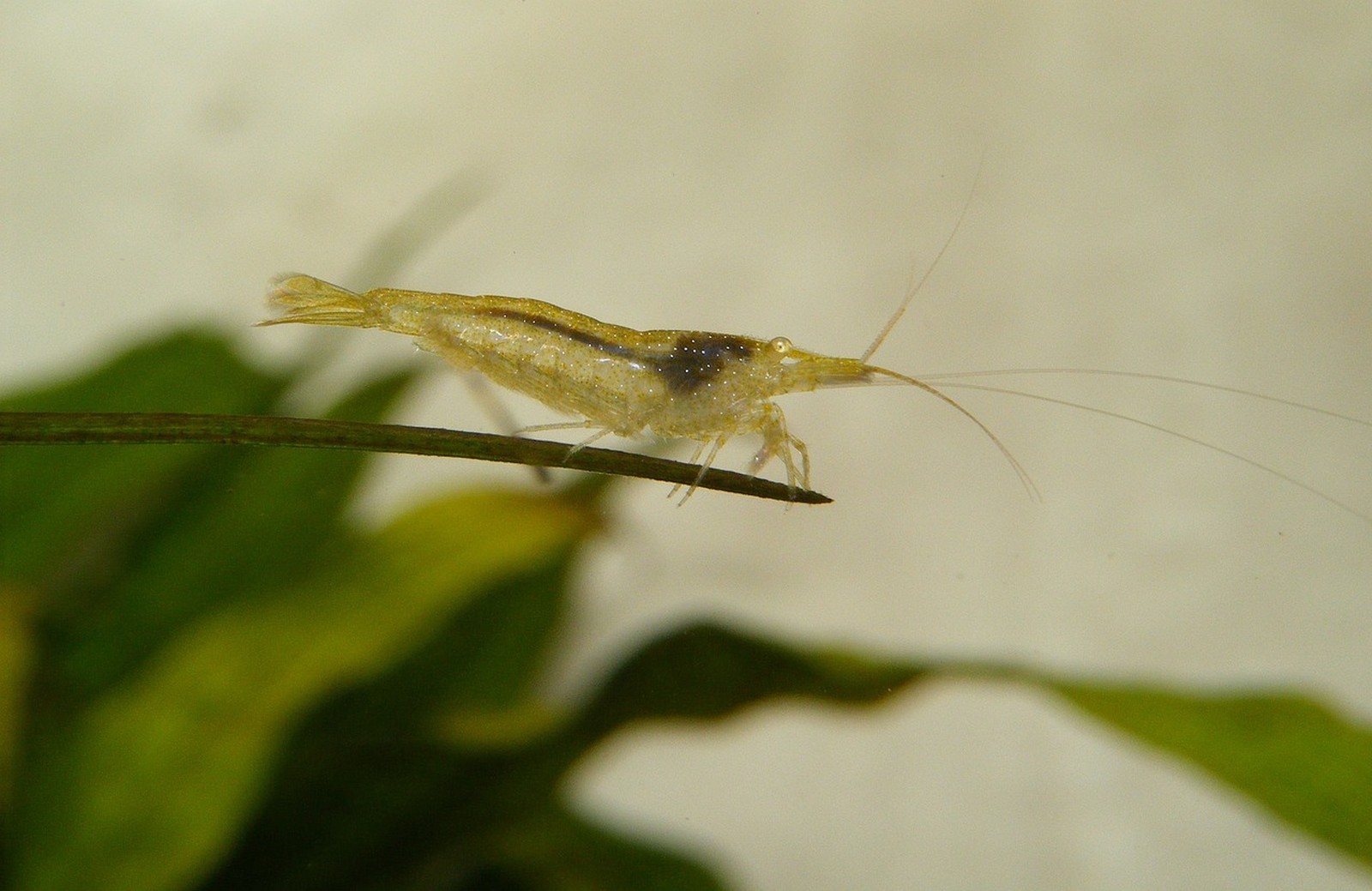
Baby shrimp — the near-transparent shrimplets of species such as cherry shrimp — do not eat meals the way fish do. They graze almost continuously, picking microscopic food from surfaces with tiny claws, which means the real answer to feeding them is partly what you add and mostly what your tank has already grown.
The Tank Itself Is the Main Course
A mature tank feeds baby shrimp around the clock. Biofilm — the invisible layer of microorganisms coating glass, plants, driftwood, and leaf litter — plus soft algae and decaying plant matter are what wild shrimplets raise themselves on, and a tank that has been running for some months provides them free. This is why babies survive far better in an established, planted aquarium than in a pristine new one, however carefully the new one is dosed with food.
Help that pantry along with surfaces: live plants, especially fine-leaved and mossy kinds, a piece of driftwood, dried leaves sold for aquarium use, and a gentle sponge filter all grow grazing area while sheltering babies from fish and filter intakes. A sponge filter is close to essential where babies are expected, both as a feeding station and because powered intakes can trap shrimplets.
Supplements: Powdered, Tiny, and Scattered
On top of grazing, offer very small amounts of finely powdered food a few times a week: powdered shrimp or fry food, crushed and powdered dried leaves, or a pinch of powdered green foods, ground fine between your fingers. Scatter it across the tank or mix it into a little tank water and pour it widely, because a baby shrimp will not travel far to a feeding dish the way an adult will — food must land near every cluster of babies.
Quantity is where beginners go wrong. Babies eat almost nothing by weight, and uneaten powder decays fast in the small tanks shrimp often live in, spoiling water quality for animals far more sensitive to it than most fish. Start with an amount smaller than seems sensible, watch whether it disappears within a few hours, and adjust in tiny steps. If powder is still visible the next day, you fed too much.
What Changes as They Grow
Within a few weeks, surviving shrimplets graduate to the adults' menu in miniature: tiny fragments of blanched vegetables such as zucchini or spinach, small pieces of shrimp pellets, and continued grazing. Leave shed skins in the tank at every stage — shrimp of all ages eat them to reclaim minerals, and a white empty shell is a sign of successful growth, not a death.
Adult shrimp in the same tank are not a threat to their own babies for the common freshwater species kept at home, provided cover is plentiful; fish are the real risk, and even small fish will hunt shrimplets that fit in their mouths.
Water Stability Beats Any Menu
More baby shrimp are lost to unstable water than to hunger. Keep parameters steady, change small amounts of water at a time with matched temperature, and avoid sudden large clean-ups that strip the biofilm they depend on. Tracking those little-and-often feeds and water checks as shared tasks in KinsLe's Care Teams, each marked complete with a timestamp, protects baby shrimp from the commonest household accident of all — two people each feeding them on the same day.