
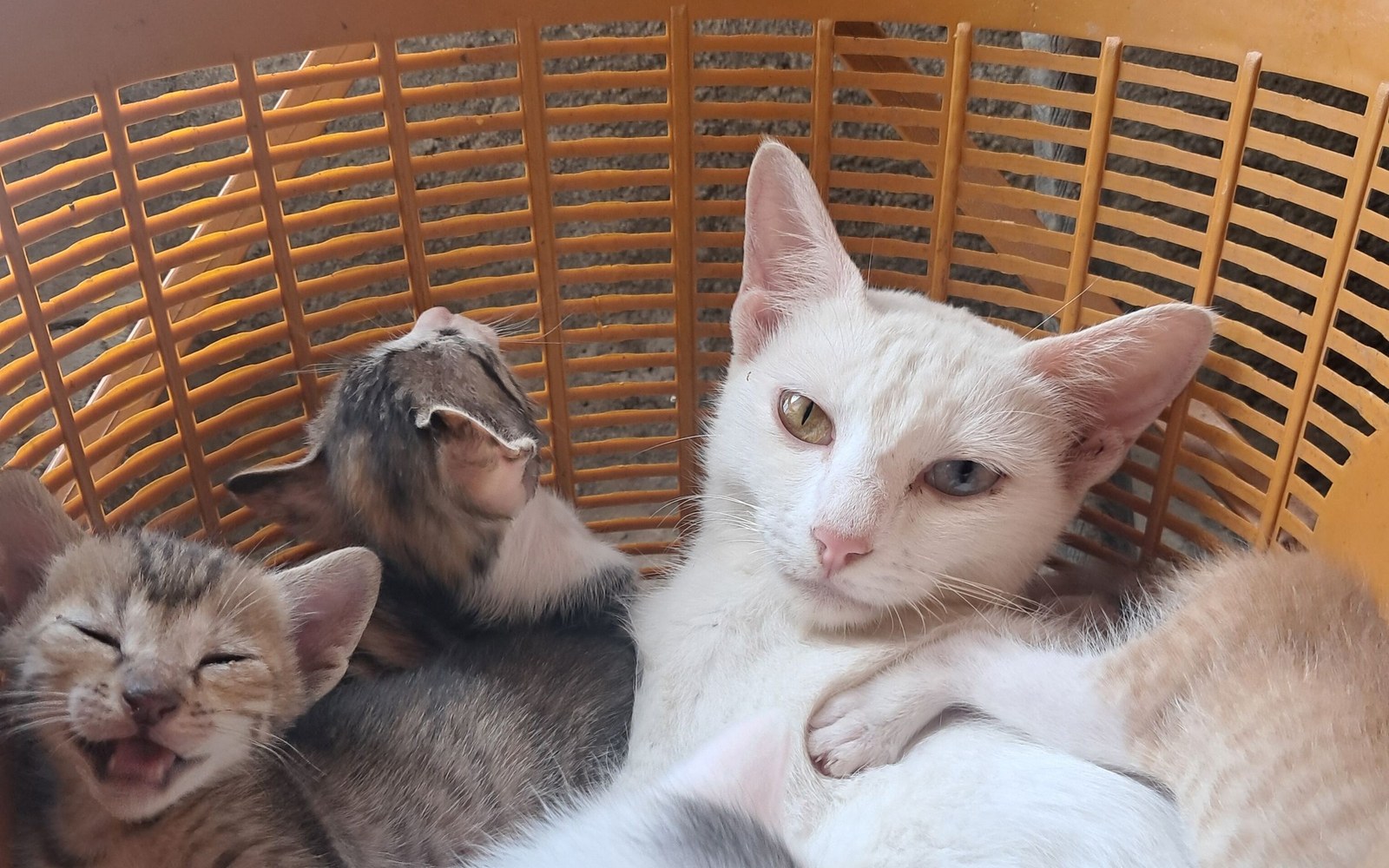
Newborn kittens need four things in their first weeks: their mother's milk (or proper kitten formula if she isn't there), constant warmth, help going to the bathroom, and a quiet, safe nest. They are born blind, deaf, and unable to regulate their own body temperature, so nearly everything a human caregiver does in week one is about standing in for mom until she — or you — can do the job.
Warmth comes before everything else
A newborn kitten cannot shiver effectively and chills dangerously fast. Keep the nesting area warm and draft-free, around the high 80s to low 90s Fahrenheit in the first week, easing down gradually over the following weeks. A heating pad set on low under half of a towel-lined box works well, because kittens who can crawl need a cooler side to move to if they get too warm. Never feed a cold kitten — a chilled baby cannot digest properly. Warm her slowly against your body or with the pad first, and only offer food once she feels warm to the touch and is moving and rooting.
Feeding around the clock
If the mother is present and healthy, she handles feeding, and your job is mostly monitoring: weigh each kitten daily on a kitchen scale and expect steady gains. A kitten who is losing weight, crying constantly, or being pushed away from nursing needs veterinary attention quickly.
Orphaned kittens need commercial kitten milk replacer — never cow's milk, which causes diarrhea that can dehydrate a tiny kitten fast. Bottle-feed with the kitten lying belly-down, as she would nurse, never on her back. Newborns eat small amounts every two to three hours, including overnight, with the interval stretching gradually as they grow. Follow the formula label for amounts, warm the formula to roughly body temperature, and test a drop on your wrist first.
The bathroom help nobody warns you about
For roughly the first three weeks, kittens cannot urinate or defecate on their own. The mother stimulates them by licking; a human caregiver uses a warm, damp cotton ball or soft cloth to gently rub the belly and genital area after every feeding. This step is not optional — skipping it can make a kitten seriously ill. Keep notes on output, because a full day with no stool is worth a call to the vet.
Handling, hygiene, and watching for trouble
Handle newborns briefly and gently, with clean hands, and keep young children supervised — kittens this small are fragile, and too much handling stresses the mother. Watch for warning signs: refusal to eat, persistent crying, diarrhea, sneezing with discharge, a kitten who feels limp or cold, or one separated from the litter and ignored by mom. In babies this small, hours matter, so treat those signs as urgent rather than waiting to see.
Finding hands-on help fast
The first days with newborns — especially orphans — are exactly when having a trusted local professional matters most. KinsLe's Pet Services Directory helps you find local vets, sitters, and other pet professionals near you, so you can line up a veterinarian for weight checks, feeding questions, and those middle-of-the-night worries before an emergency forces the search. Your first pet profile on KinsLe is free, so you can start your kitten's record from day one while you build her care team. Pet Services Directory on KinsLe helps you locate a veterinarian near home for weight checks, bottle-feeding reviews, and urgent advice while newborn kittens are tiny and vulnerable.