
The short answer
Most saltwater fish do best on a varied menu: quality marine pellets or flakes as a base, plus thawed frozen foods like mysis shrimp, brine shrimp, and mixed marine blends. Herbivorous species also need algae-based foods or nori seaweed sheets to graze on.
Flakes alone do not cut it in saltwater
In the ocean, fish eat wildly varied diets — crustaceans, algae, coral polyps, tiny invertebrates — and a can of flakes is a thin imitation of that. Many marine fish, especially wild-caught ones, simply will not accept dry food at all, and even those that do can develop dull coloration and lower energy on a flake-only diet. Variety is not a luxury in a reef tank; it is how you mimic the nutritional range these animals evolved on.
Know your fish's feeding style
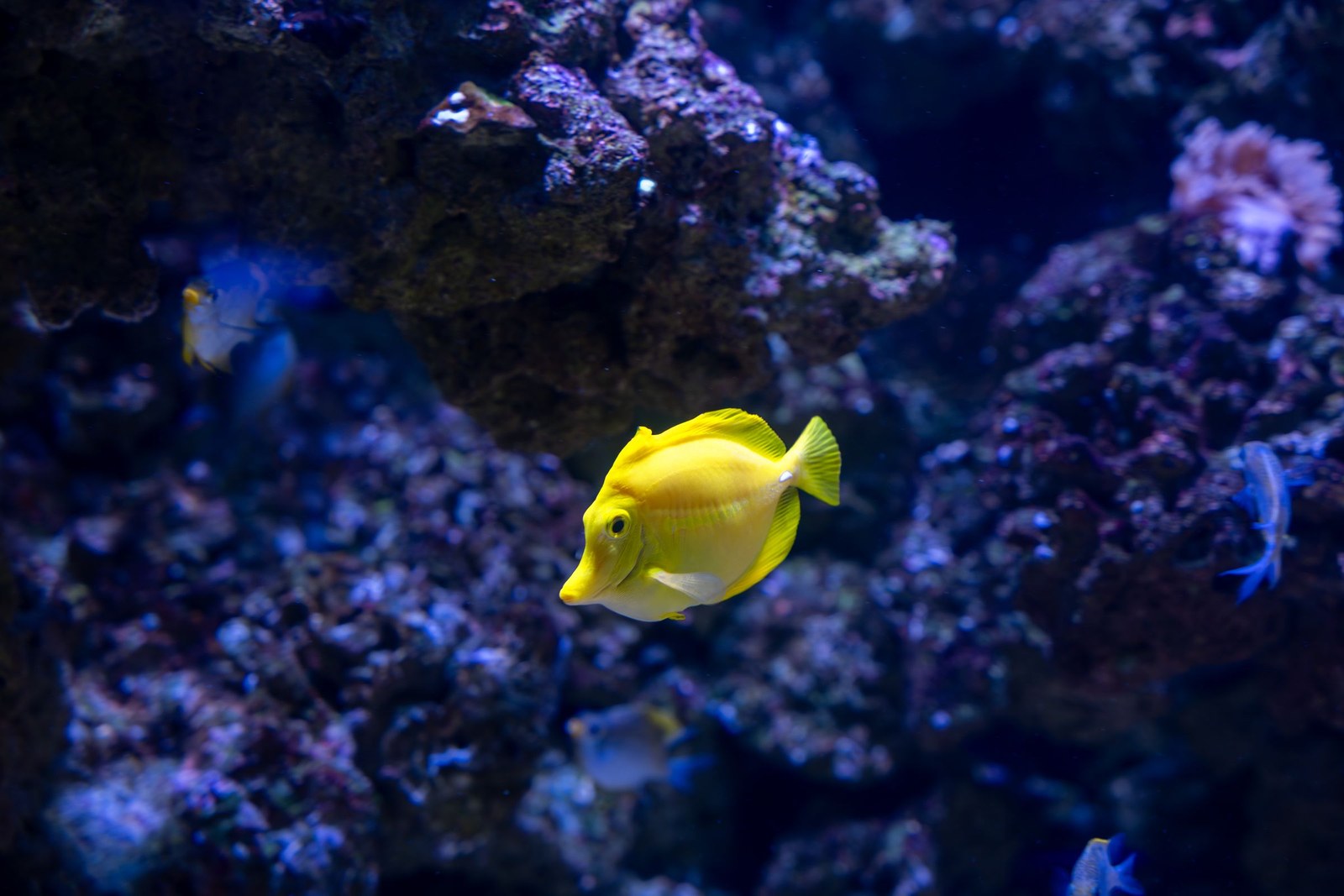
Marine fish fall roughly into three camps, and the menu should match the camp. Carnivores and omnivores — clownfish, dottybacks, wrasses, dwarf angels — thrive on meaty frozen foods: mysis shrimp, enriched brine shrimp, chopped seafood blends, and marine-specific pellets. Herbivores — tangs, rabbitfish, blennies — need greens daily: nori sheets clipped to the glass, spirulina-enriched foods, and algae-based pellets. Planktivores such as anthias do best with several small feedings of tiny foods spread through the day.
Most marine fish also do well on a rotation rather than a fixed menu — mysis one day, a mixed blend the next, pellets on a third — because rotation covers nutritional gaps no single food fills. Keep a simple note of what each species actually eats eagerly, since preferences vary even between two fish of the same kind.
Whatever the style, thaw frozen food in a cup of tank water before feeding and pour off the excess liquid, which is rich in the phosphates that feed nuisance algae. Feed only what disappears in a few minutes, and target-feed shy fish with a turkey baster or feeding stick if bolder tank mates muscle them out at mealtime.
Shopping for marine food the smart way
Frozen and specialty marine foods are perishable, so buy them from a shop that turns over stock quickly and keeps its freezers cold. KinsLe's Pet Services Directory helps you find local marine and reef stores that carry the frozen mysis, mixed blends, and nori your saltwater fish need — and the staff at a dedicated marine shop can tell you exactly which formulas suit the species swimming in your tank. For frozen mysis, mixed blends, and nori, search the Pet Services Directory for nearby reef-focused shops stocking perishable marine fare, and use each shop's KinsLe profile to confirm freezer turnover and stock freshness.