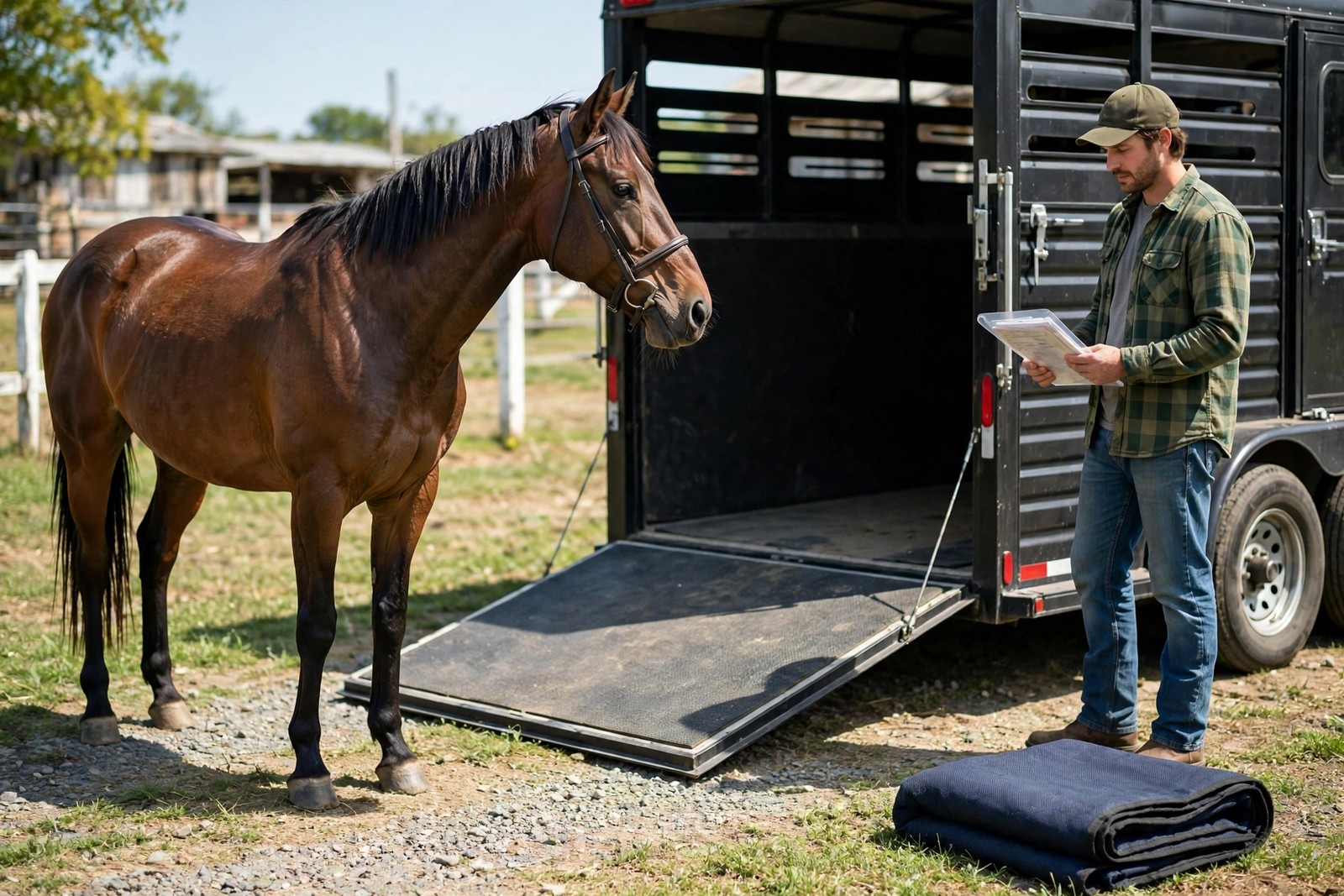
Interstate horse transport runs on paper as much as on diesel. Two documents form the core requirement almost everywhere in the United States, and a handful of trip-specific extras sit on top of them. Getting them in order before the travel date matters, because one of them depends on laboratory timing you cannot rush at the last minute.
The Negative Coggins Test
The Coggins is a blood test for equine infectious anemia, a serious viral disease with no cure, and a negative result is the standard entry requirement for crossing state lines, boarding, shows, and most sales. Your vet draws the blood, an approved laboratory runs the test, and the official result records your horse's markings and description so the paper matches the animal in the trailer. Most states and venues accept a test dated within the previous 12 months, though some events set a shorter window, so check the wording of your result against the requirement of wherever you are headed — and allow several days for the laboratory before a trip rather than drawing blood the same week you travel.
The Certificate of Veterinary Inspection
The second document is the Certificate of Veterinary Inspection, often called a health certificate or CVI. An accredited veterinarian examines the horse, confirms it shows no signs of contagious disease, verifies the Coggins result, and signs the certificate for a specific journey. It is usually valid for 30 days from inspection, which means it must be booked close to the trip — too early and it expires before you return, too late and a busy practice may not fit you in. The certificate names origin and destination, so a multi-state tour or a one-way move to a new barn may need planning with the vet about what each leg requires.
Destination and Trip-Specific Extras
States set their own entry rules on top of the federal baseline, and some require an entry permit number obtained before you cross the line, specific statements on the health certificate, or testing beyond the Coggins for horses from certain areas. Western brand-inspection states can require brand inspection paperwork to move or sell a horse, which catches owners relocating from non-inspection states by surprise. Racetracks, showgrounds, and boarding barns layer on their own conditions — recent vaccination records are a common barn requirement, set by the facility rather than by law — so read the destination's own list, not just the state's. Your horse's registration papers, if it has them, and clear photos of markings are worth carrying as supporting identification, even though they are not legal travel documents themselves.
Travelling With the Packet, Not Around It
Keep originals or official copies in the truck cab, not buried in the tack room of the trailer, photograph every page as a backup, and check expiry dates whenever a trip is first discussed rather than the night before. If a checkpoint, barn manager, or show secretary asks, you want one packet, complete and current. KinsLe's Pet Passport gives that packet a single home — Coggins results, health certificates, vaccination records, and identification details kept together and portable — so the documents for a state-line crossing are ready to present at every stop instead of scattered between the barn office and your email.