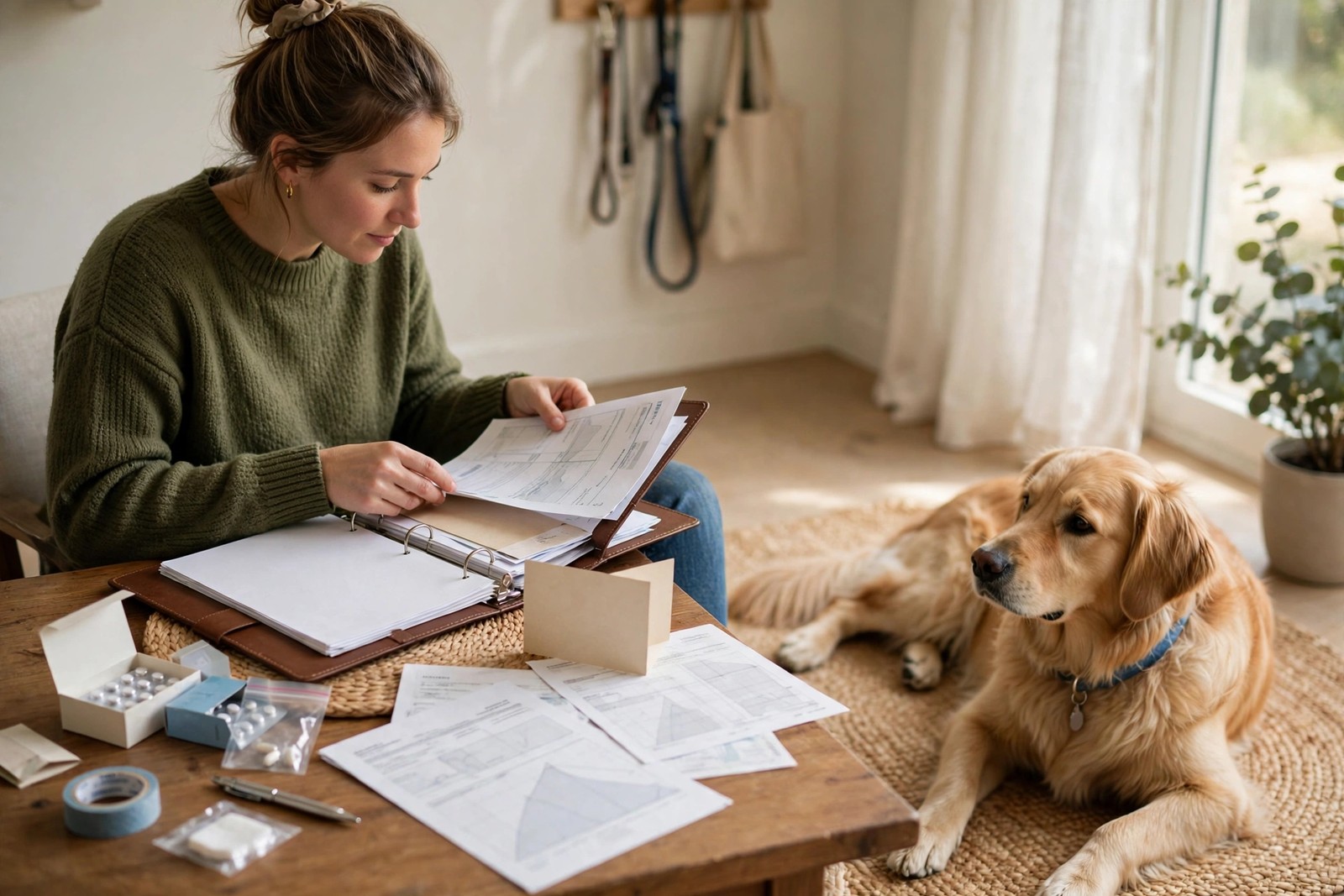
A new vet can only treat the dog whose history they can see. Practices can request records from your old clinic, and you should sign whatever release they need, but gathering your own complete file before the first appointment means nothing important — an allergy noted years ago, a blood result that sets a baseline — waits on someone else's admin queue. Build the file in sections.
Vaccination and prevention record
Start with proof of vaccination: each vaccine given, the date given, and when the next is due, with the rabies certificate itself included where rabies vaccination applies to your dog. Add the prevention history alongside it — which parasite prevention has been used and when it was last given — described in general terms from your receipts and packaging, because a new practice will set its own prevention plan and needs to know what is already on board and when it runs out. If your dog travels, boards, or attends daycare, note any extra vaccinations those settings have required, since the new vet may need to maintain them on schedule.
Medical history, labs, and imaging
Request the clinical history from your old practice, not just an invoice summary: consultation notes, diagnosed conditions, surgeries and dental work with dates, and how your dog recovered. Include recent laboratory results — blood work, urine tests, and any specialist reports — because a new vet comparing today's result against last year's baseline can spot a trend a single result hides. Add imaging reports for any X-rays, ultrasound, or scans, with the images themselves on disc or by transfer if you have them, and note ongoing conditions in plain order: heart, kidneys, joints, skin, ears, weight, and anything monitored rather than treated. Flag allergies and past drug reactions on the front page of this section, in bold, where nobody can miss them.
Medication list and day-to-day picture
Write a current medication list exactly as the labels read: name, strength as printed, how much you give and how often, and what it is for, plus anything you give that was not prescribed, such as joint supplements or skin oils. Bring the actual packaging to the first visit if you are unsure about any entry — never guess at a strength. Round the file out with the practical picture a record rarely captures: what and how much your dog eats, his usual weight range, exercise level, and behaviour at the vet, including whether he needs a muzzle, a quiet waiting area, or a particular handling approach. A new practice that knows a dog is fearful can plan a calmer first visit.
Identity, insurance, and the handover itself
Close the file with identity and admin: microchip number, a clear photo, your contact details and an emergency contact, and insurance policy details if you hold cover, since the new practice's estimates and claim forms will ask. Book a straightforward first appointment — a general check rather than a problem visit if you can — bring the file on paper or ready to share, and ask the practice to confirm they have also received the old clinic's transfer. Keeping the master copy assembled in KinsLe's Pet Passport means that if you move, travel, or need an emergency clinic in between, the same complete file is already in your pocket.