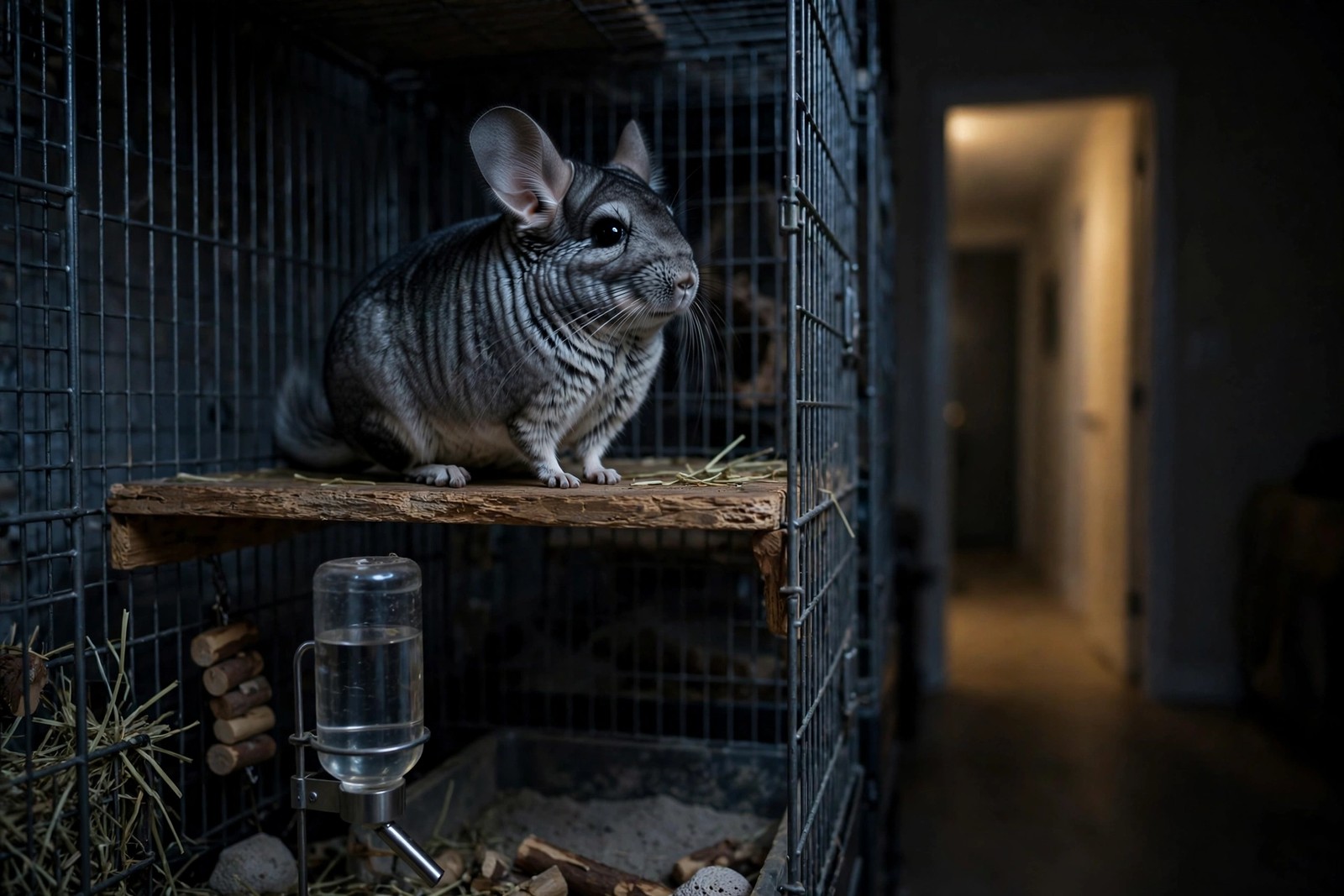
The sound is unmistakable once you have heard it: a sharp, repeated bark from a small animal you expected to be silent. A chinchilla's bark is an alarm and warning call, used to announce that something in the environment has registered as a possible threat. At night the trigger might be a noise from another room, a shadow crossing the wall, an unfamiliar smell, or another pet moving near the door, and sometimes the cause stays unknowable, possibly something heard in sleep. The bark itself is normal communication. Your response decides whether the night settles or escalates.
Go Calmly, Speak Softly, Keep Lights Low
When the bark wakes you, go to the room calmly rather than rushing in. Speak softly as you approach, using the voice the chinchilla already knows from handling and feeding, and keep lights low instead of flooding the room with brightness. Check the room the way the chinchilla experiences it: listen for the appliance hum, the pipe knock, or the pet shifting outside the door, and look for shadows cast by passing headlights or branches moving at a window. Often the barking stops once the trigger passes and a familiar calm presence confirms nothing followed it.
What Never Helps
Never bang the cage, tap the bars, or shout back. A startled response from a large, loud human confirms the chinchilla's judgment that the night is dangerous, and barking answered with noise usually runs longer, not shorter. Do not haul the animal out for a cuddle it has not asked for, and do not offer food as an emergency distraction every time, or the household may accidentally teach that barking produces a midnight buffet.
When the Same Hour Keeps Barking
A bark now and then is weather; a bark at the same hour night after night is a pattern, and patterns have causes that daylight can find. Log the time, what the household was doing, and anything you noticed on the check, then hunt the trigger by day. Timers that click a heater on, a neighbor's routine arriving home, a cat who has learned to patrol the door at that hour, and a branch that taps the window when wind rises are all ordinary culprits. Moving the cage away from a door, covering a sight line to a hallway, or shifting a timer can end a nightly alarm without the chinchilla ever knowing why its world got quieter.
Room conditions belong in that daytime review too. Chinchillas are comfortable in the low 60s °F, with danger above the mid-70s °F, so a room that warms overnight deserves correction for health reasons, not just quiet ones. Check that the cage sits somewhere with steady air and no direct heat source cycling beside it.
The Household Agrees One Response
Night events go wrong when each person improvises: one rushes in with lights blazing, another shouts from bed, a third ignores a bark that was actually worth checking. The night response in the Care Teams plan on KinsLe writes the agreed version down, naming who checks on which nights and what gets logged, so the chinchilla meets the same calm routine whoever hears it first. That consistency also protects the log, since entries written the same way across nights can actually be compared when you are hunting a repeating trigger.
When a Bark Is Not Just a Bark
Most barking is communication about the environment, but a bark arriving alongside other changes belongs in a different category. Barking paired with eating less, smaller or fewer droppings, labored or noisy breathing, or a chinchilla who stays hunched and withdrawn by day should route to a vet, with those possibilities investigated properly rather than guessed at. Bring the log: the times, the pattern, and the accompanying changes are exactly the history that helps a vet judge what might be happening.
The household's written night response lives in the Care Teams plan on KinsLe, assigning the calm check to the adult on duty and the next-day trigger search to someone else.