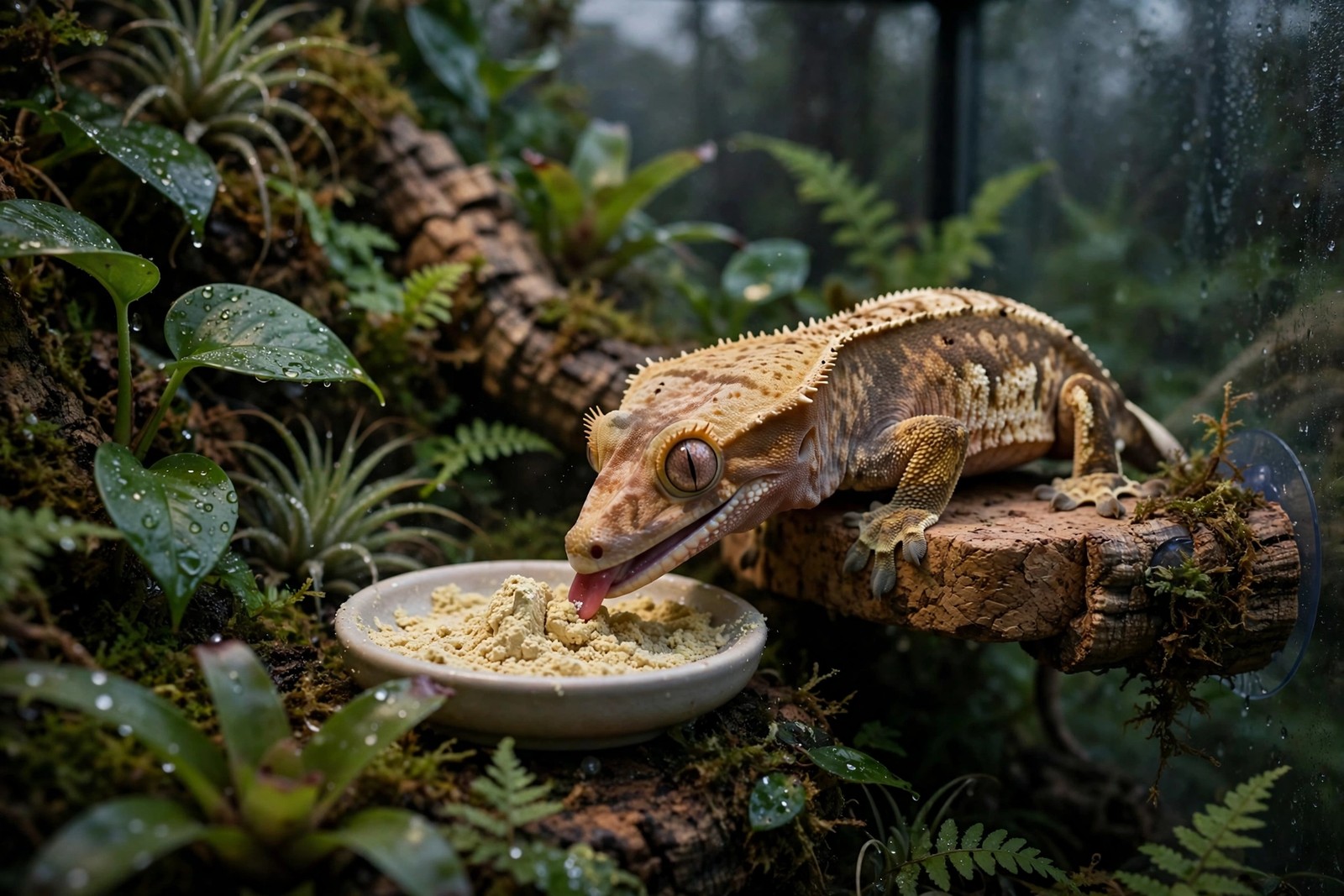
In the wild, crested geckos lap soft ripe fruit, nectar, and insects from the canopy at night, and the captive diet copies that balance in a deliberately simple form. The staple is not live food and not fruit alone; it is a complete powdered diet made for this species, mixed fresh with water. Build the routine around that powder, add insects as hunting enrichment, keep fruit as a rare treat, and the feeding side of this species stays one of the easiest in reptile keeping.
The Staple: Complete Powdered Diet
Mix the powder with water to a smooth, slightly runny paste, about the consistency of a thick smoothie, and serve a small amount in a shallow dish or bottle-cap-sized cup placed on a feeding ledge in the evening. Remove the uneaten portion the next day, wash the dish, and serve fresh at the next feeding. These complete diets are formulated to cover the gecko's protein, fruit, vitamin, and mineral needs in one food, which is why they replaced older home mixtures of baby food and supplements that left geckos short of calcium.
Offer food on a regular evening rhythm rather than keeping a dish standing permanently. A gecko that always has ageing paste available often eats less overall and the food itself dries and spoils; a fresh dish appearing at dusk matches the animal's active hours and makes intake easy to judge. Hatchlings and juveniles are typically offered food more frequently than settled adults, so set the exact rhythm for your gecko's age with the seller or a reptile veterinarian and then hold it steady. A healthy eater leaves visible lick marks and, over time, droppings that confirm food is passing through.
Insects: Enrichment, Not the Foundation
Live insects add hunting behaviour that powder cannot. Small crickets, small roaches, or black soldier fly larvae, each no wider than the space between the gecko's eyes, can be offered occasionally for a gecko that hunts confidently. Dust feeder insects lightly with a plain calcium supplement at the feeding where they are given, following the supplement's directions, because insects alone are a poor mineral source. Release only a few insects at a time, remove any that remain uneaten by morning, and never leave loose crickets with a sleeping gecko through the day.
Not every crested gecko takes insects, and refusal is not a problem to fix. A gecko thriving on its complete powdered diet, holding weight and shedding cleanly, does not need live food added for nutritional reasons. Treat insects as a behavioural bonus for the individuals that enjoy them.
Fruit, Water, and What to Avoid
A small amount of mashed soft fruit, such as mango, papaya, or ripe banana, can be offered rarely as a treat, in a separate tiny portion rather than mixed through the staple dish. Fruit alone is not a diet: it lacks the protein and mineral balance the powdered food supplies, and geckos raised largely on sweet fruit mixes often develop the bone problems that come from long-term calcium shortage. Avoid citrus fruit, avoid wild-caught insects that may carry sprays, and avoid any insect large enough to struggle visibly in the gecko's mouth.
Provide a small water dish even though many crested geckos prefer lapping droplets after misting; both routes should be available every night. Watch body condition across months: a gently rounded belly, a plump tail base, and steady weight tell you the routine is working, while a thinning tail base or retained shed says the feeding or humidity routine needs a second look with a reptile veterinarian. KinsLe's Care Teams keeps that evening routine reliable by assigning feeding and misting duties to named helpers, each task marked complete with a timestamp when the fresh dish goes in.