
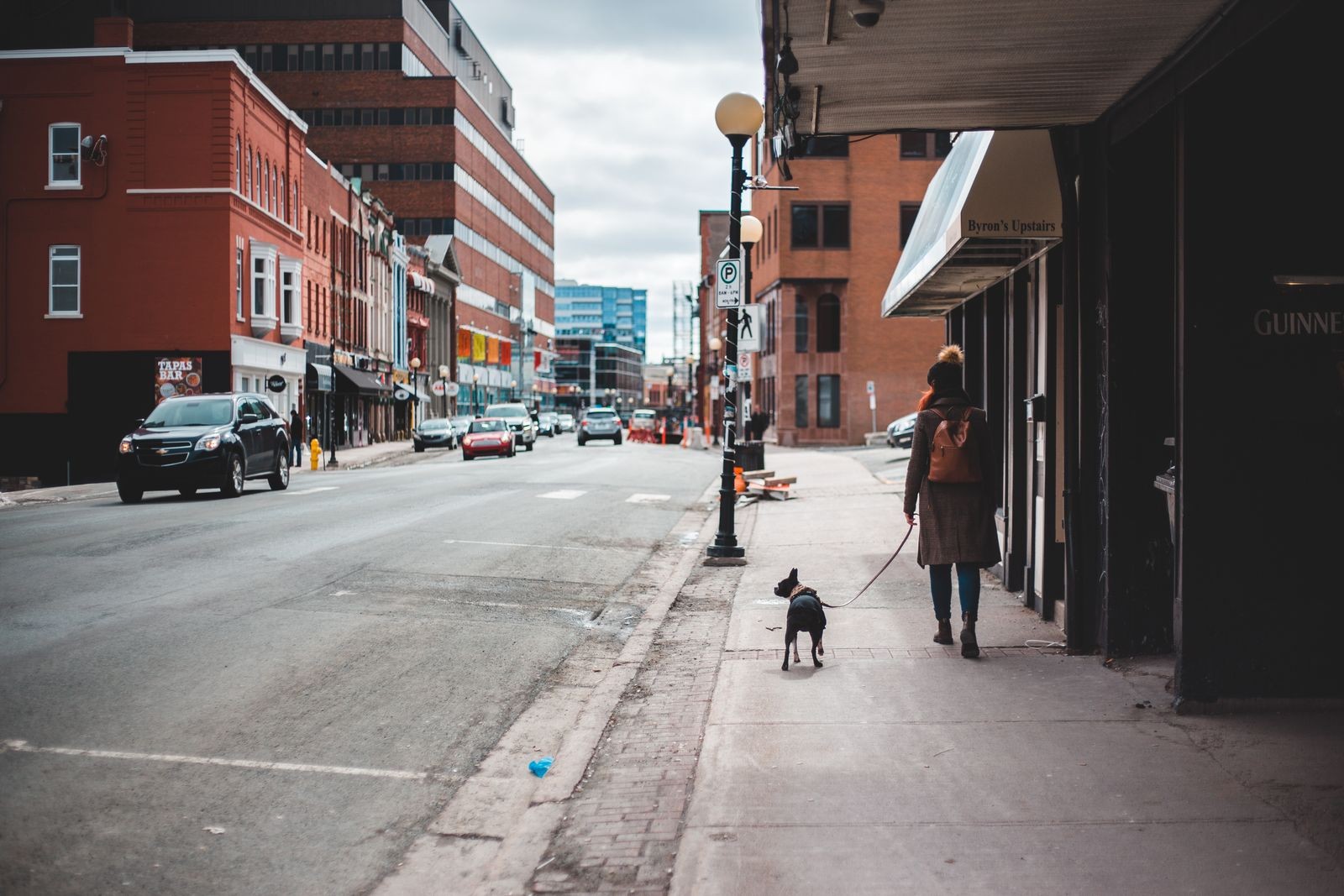
A good daily routine for a dog anchors the day with consistent times for waking, meals, walks, play, and bedtime, with rest and quiet chew time woven between the active parts. The exact clock times matter far less than predictability: dogs relax when they can anticipate what happens next, and most behavior complaints — dawn wake-ups, evening chaos, restless pacing — soften noticeably once the shape of the day stops being a surprise.
The skeleton of a balanced day
Think in blocks rather than a minute-by-minute schedule. A typical adult dog's day might run: wake and first potty trip, breakfast, a real morning walk, a long rest block during work hours with a midday break, an afternoon or evening walk with play or training, dinner, a relaxed evening with a chew, a last potty trip, and bed. Puppies compress this into many more, shorter cycles of eat-play-potty-sleep. Seniors stretch the rest blocks and shorten the outings, but the sequence stays recognizable — and keeping the same sequence on weekends is what makes Monday painless.
Why predictability calms dogs
A dog on a routine doesn't need to monitor the household for clues about whether a walk is coming — he knows, so he can actually sleep between events instead of dozing with one ear up. Anticipation anxiety around meals fades when meals arrive reliably. Even digestion cooperates: regular feeding produces regular potty needs, which makes house-training and scheduling breaks far easier. This is also why routines are the first prescription for a newly adopted dog: a predictable day is the fastest route to feeling at home in a strange place.
Balancing activity, rest, and alone time
Three ingredients get under-weighted. First, sniffing: a slow "sniffari" walk where your dog chooses the route delivers more satisfaction than a brisk march of the same length. Second, sleep: adult dogs need roughly 12 to 14 hours a day, puppies and seniors considerably more, and an overtired dog looks deceptively like an under-exercised one — wired, mouthy, unable to settle. Third, practiced alone time: even in work-from-home households, build short daily separations so your dog's routine includes "nothing happens and that's fine." Enrichment — puzzle feeders, snuffle mats, cardboard shredding boxes — fills the seams between walks without adding chaos.
Adjusting the template to your dog
- High-energy adolescents: add a midday activity block; an unmet one will invent its own
- Brachycephalic and heat-sensitive dogs: shift exercise to early morning and evening in summer
- Multi-dog homes: keep shared blocks shared, but preserve some solo walks and training
- Shift workers: anchor to your wake time, not the clock — sequence matters more than the hour
Give any new routine two weeks before judging it. Dogs take days to trust a pattern, and the calm you're building shows up gradually, then all at once.
Making the routine survive busy weeks
A routine kept only in your head collapses the first time work runs late or the kids have a tournament. KinsLe's Care Teams turn the day into assigned, timestamped duties — feeding, walks, meds, grooming — shared across the people in your dog's care circle, so a partner, teen, or sitter can step in and the rhythm holds even when you can't be the one running it. Write the morning walk, meals, play, rest, and bedtime steps into the Care Teams plan on KinsLe, assigning each duty to a partner, teen, or sitter and marking completions as the day unfolds.