
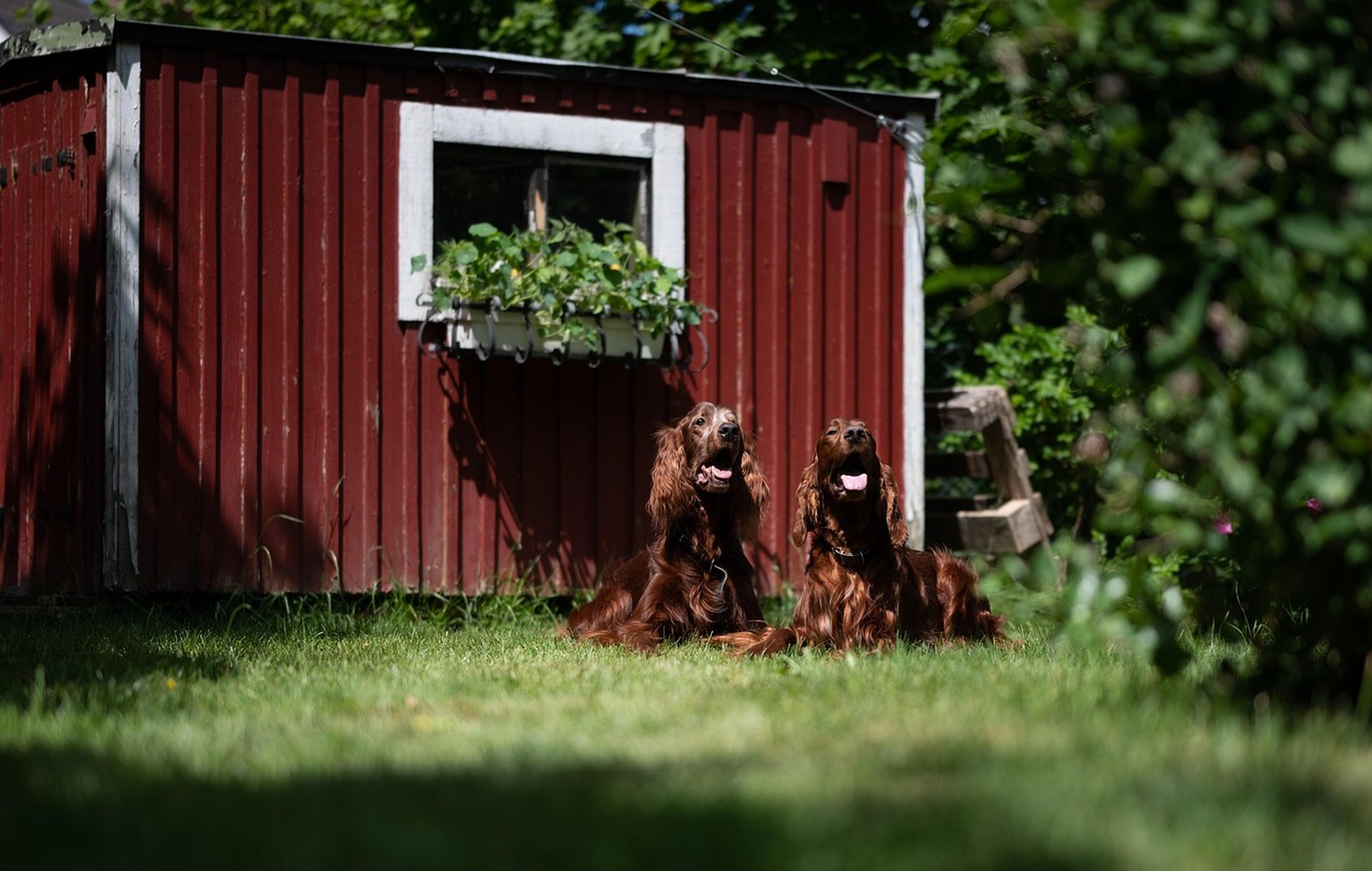
A typical day with an Irish Setter is beautiful and slightly chaotic. This is a tall, fast sporting breed with a puppyhood that stretches far longer than most, a coat that demands daily attention, and an enthusiasm for life that does not switch off at the front door. Owners who love the breed describe the routine as joyful; owners who underestimated it describe the same routine as relentless.
The morning run is non-negotiable
Setters need to gallop, not stroll. The morning outing is the day's anchor: an hour or more somewhere the dog can run off lead or on a long line, burning off the energy that would otherwise be spent bouncing off furniture. Recall training rides inside that exercise daily, because a setter who catches a scent or spots a bird mid-field is a dog travelling at speed away from you. Breakfast waits until the dog has cooled down, and many owners feed this deep-chested breed in a calm corner away from excitement, then keep the following hour quiet rather than launching straight into play.
Training in short, cheerful bursts
Irish Setters are intelligent but famously slow to mature, and a heavy-handed or repetitive session switches them off completely. The working pattern through the day is therefore little and often: a few minutes of lead work on the way back from the park, a short settle exercise while lunch is made, a handful of retrieves in the garden. House rules — not counter-surfing, not greeting guests at chest height — are enforced with the same good humour every single day, because a setter will cheerfully test whether yesterday's rule still applies.
That red coat needs a brush every day
The long, silky coat is the breed's glory and its daily tax. Ten minutes with a brush most days prevents the feathering on the legs, chest, and tail from knotting into mats that then have to be cut out; skipping a week creates real work. Ears are long and heavily feathered, so they are checked and cleaned on a rhythm, especially after wet outings, and feet are inspected for grass seeds worked into the feathering between the toes during summer runs.
A second outing, then a surprisingly devoted evening
Late afternoon brings another substantial walk or run — a setter given only the morning session will often be winding up again by dinner. After that, the breed's softer side takes over: Irish Setters are deeply affectionate, lean against their people, and want to be in the same room, usually on the softest available surface. Evenings still include management — bins latched, worktops cleared — because a tall, food-motivated dog with a long reach treats an unguarded kitchen as an invitation.
What to weigh before choosing this day
Count on close to two hours of exercise, daily grooming, and a dog who behaves like a puppy long after he looks like an adult. A setter who cannot settle at all, whose energy suddenly drops, or who shows a swollen, tight abdomen and unproductive retching after a meal needs a veterinarian immediately — that last combination is an emergency in any deep-chested breed. Dividing the runs, brush-outs, and feeds so the load is shared makes the setter day sustainable, and KinsLe's Care Teams lets each of those jobs sit with a named family member or helper, marked complete with a timestamp once handled.