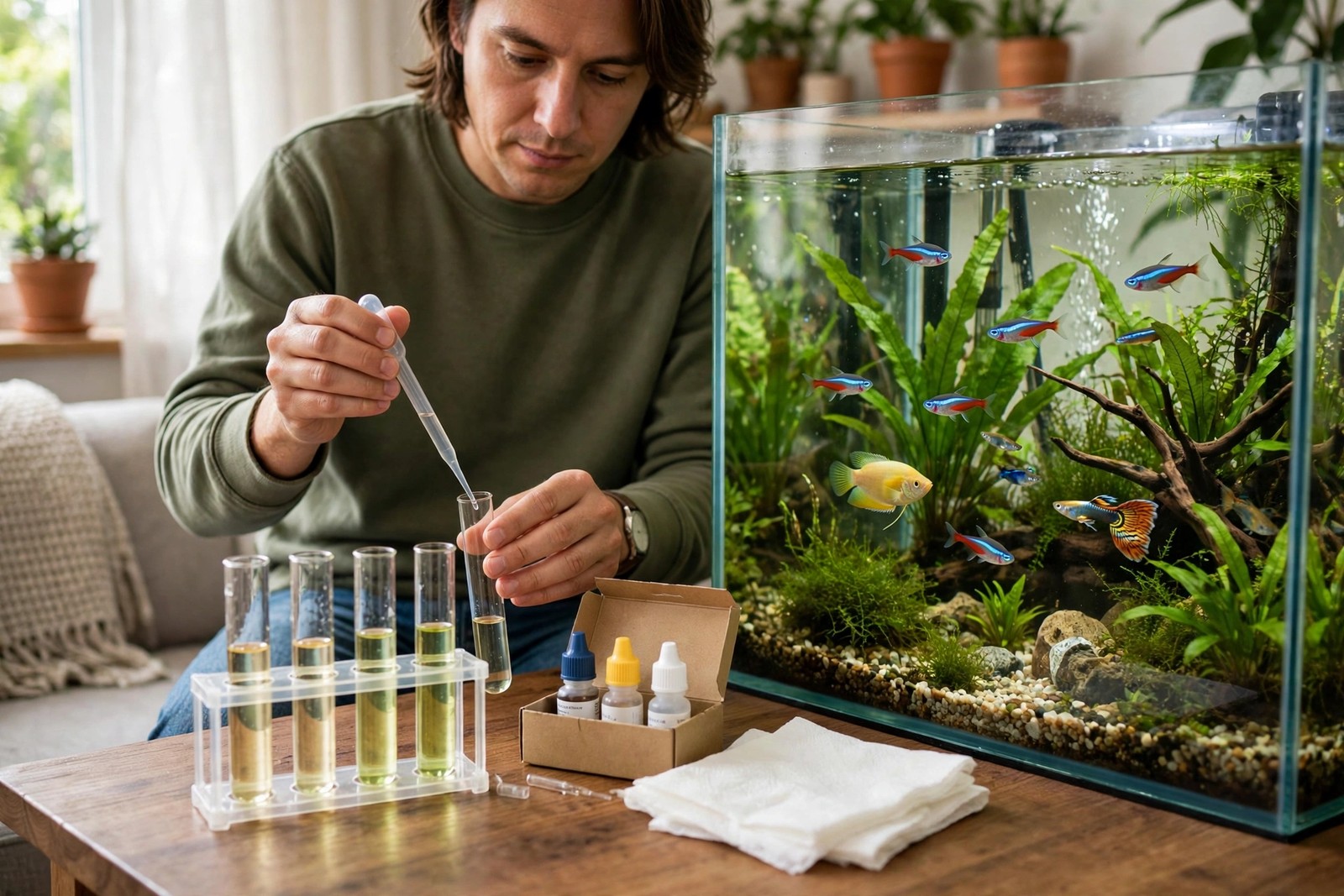
Ammonia is the first waste product in an aquarium and a particularly dangerous one. It comes from fish waste, uneaten food, and decaying plant and animal matter, and in a healthy established filter, beneficial bacteria convert it onward so quickly that a test reads zero. When that conversion cannot keep up, ammonia itself injures the fish breathing the water, and the damage starts at the gills, the organ least able to avoid it.
How Ammonia Harms Fish
Because fish pass water constantly over their gills, a dissolved irritant reaches delicate gill tissue with every breath. Ammonia burns and inflames that tissue, thickening and damaging the fine surfaces that take in oxygen, so a fish in ammonia-rich water can be short of oxygen even when the water itself holds plenty. Owners see the result as gasping at the surface, rapid gill movement, and a fish hanging near the filter outflow where water movement is strongest.
The harm spreads beyond breathing. Ammonia irritates skin and fins, and it suppresses the immune system, so fish become vulnerable to bacterial and fungal infections and to parasites that a healthy fish would normally resist. Appetite usually falls, fins clamp close to the body, colours dull, and gill tissue may look red or inflamed. Young fish, newly added fish, and any fish already unwell suffer first and worst. None of these signs names ammonia on its own, because other water problems overlap, which is why testing the water comes before treating the fish.
The Safe Level, and Why It Is Zero
In an established aquarium, the only safe ammonia reading is 0 ppm, and nitrite, the next product in the chain, should also read 0 ppm. A working filter does not aim for a low ammonia level; it removes ammonia continuously, so any measurable reading in a stocked, mature tank is a signal that something has changed: a filter failure, a dead fish hidden in decor, overfeeding, too many fish added at once, or a filter cleaned so thoroughly that its bacteria were lost. Brief low readings during the initial cycling of a brand-new tank are a separate situation, managed by delaying or limiting stocking until the filter matures.
Any positive reading in an established tank calls for action the same day: test again to confirm, stop feeding for a short period, check the filter is running and not blocked, search for dead fish or trapped food, and make a partial water change with dechlorinated water matched for temperature to dilute what the fish are breathing. Retest after the change and repeat on the following days until readings return to 0 ppm and stay there.
Keeping Ammonia at Zero
Prevention is a rhythm rather than a rescue. Feed only what the fish clear in a short feeding period and remove the excess, because rotting food is ammonia in waiting. Test ammonia and nitrite regularly, and always after adding fish, changing filter media, treating the tank, or finding a fish dead. Keep stocking within what the filter and tank volume handle comfortably, add new fish in small batches, and maintain the filter gently, rinsing media in removed tank water rather than under the tap, so the bacteria doing the conversion survive cleaning day.
Write test results down with the date and the reading, because a sequence of zeros broken by one rising figure tells a clearer story than a single test read in a panic. KinsLe's Care Teams keeps that rhythm shared and visible by assigning water testing and feeding duties to named helpers, each completed task marked complete with a timestamp, so ammonia stays at 0 ppm by routine rather than by luck.