
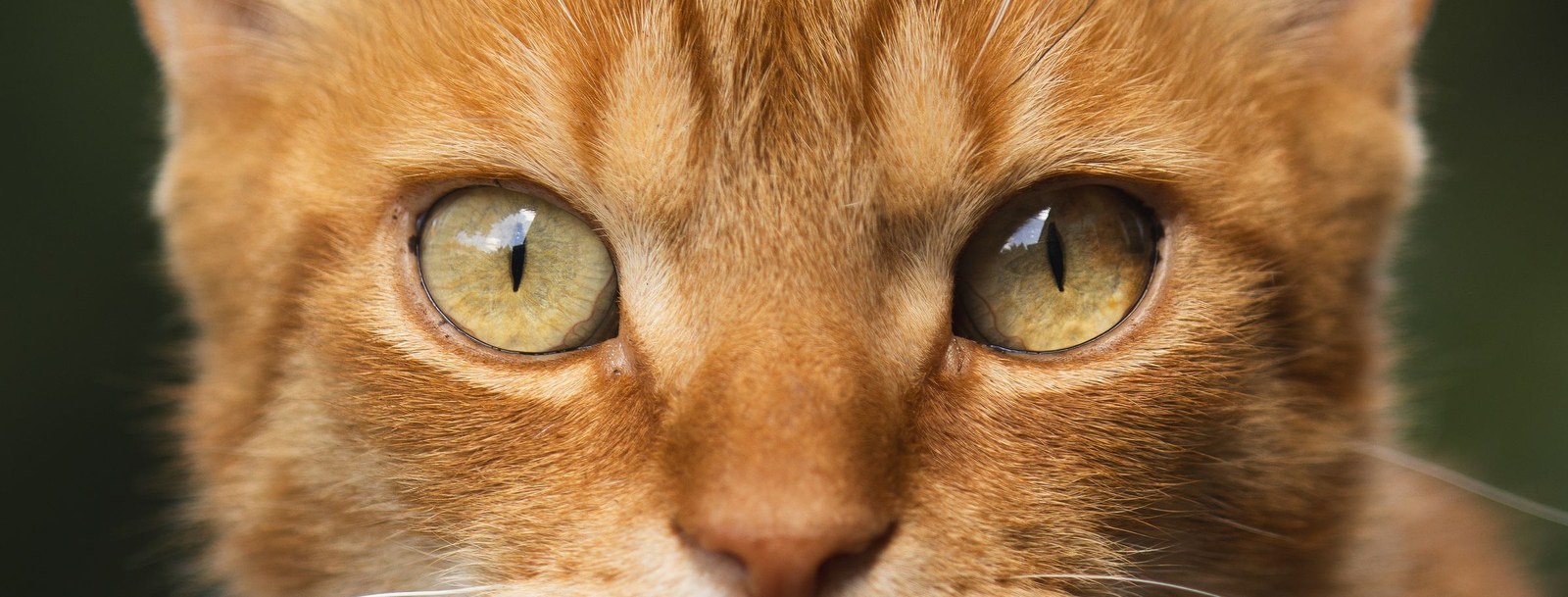
Healthy cat eyes are bright, clear, and open comfortably, and the nose, when healthy, is clean and carries at most a little clear moisture — so day-to-day care is mostly a quick, relaxed glance while you are petting your cat, plus wiping away the occasional small crust with a damp cloth. There is no complicated routine to buy into; the real skill is knowing your own cat's normal well enough to notice when something drifts.
Eyes: your cat's everyday baseline
Both eyes should look the same as each other: clear whites with little or no redness, pupils that match in size, and no more than a tiny crust in the inner corner after sleep. A small amount of clear tearing now and then is unremarkable, especially for flat-faced breeds like Persians, whose tear ducts drain less efficiently and who may need a gentle daily wipe to prevent tear staining on pale fur.
Build the check into affection rather than making it an inspection. When your cat settles on your lap in the evening, look at her face while you stroke her cheeks. If she is blinking comfortably, watching you, and not rubbing at her face, you have done the day's eye check without her ever feeling examined.
The nose: cool, clean, and mostly boring
Forget the old saying that a healthy nose must be cold and wet — a cat's nose can be warm and dry after a nap in a sunny spot and perfectly fine. What matters is the surface and what comes out of it. The nose leather should be smooth, free of sores, scabs, and crusty build-up, and any moisture should be clear and minimal. Sneezing once after investigating a dusty corner is normal; repeated sneezing fits are not.
Persian and other flat-faced cats again deserve a closer look, since their shortened airways can make breathing noisier and noses cruster. Wipe gentle folds around the nose with a damp cloth if debris collects, and dry the area afterwards so moisture does not sit in the creases.
A simple daily rhythm
- Morning: a glance at eyes and nose when you feed her — clear, bright, clean is the goal.
- During cuddles: wipe tiny crusts away with a soft damp cloth, one cloth per area, no scrubbing.
- Evening: notice her breathing at rest — quiet and easy, not wheezy or laboured.
- Weekly: look a little closer in good light, checking for sores, lumps, or one-sided discharge.
Cats who go outdoors may come home with pollen, dust, or the odd grass seed around the face, so an extra wipe after garden time is sensible. Indoor cats are not exempt — scented litters, cleaning sprays, and household dust can all irritate eyes and noses, so if symptoms appear, consider what changed in the home around the same time.
When a small thing stops being small
Contact your veterinarian if you notice coloured (yellow or green) discharge from eyes or nose, discharge from only one side that persists, sneezing fits lasting more than a day or two, nose sores or bleeding, squinting, or any change paired with reduced appetite or hiding. Kittens and senior cats can go downhill faster, so lower your threshold for calling with them. Never put human drops, creams, or leftover medicines on eyes or noses without veterinary advice.
Everyone noticing, not just one person
In many homes one person feeds the cat while someone else gets the long evening cuddle — meaning the person most likely to spot a weepy eye is not always the one managing vet visits. The family members you choose can be given access to her profile through KinsLe Family Sharing.