
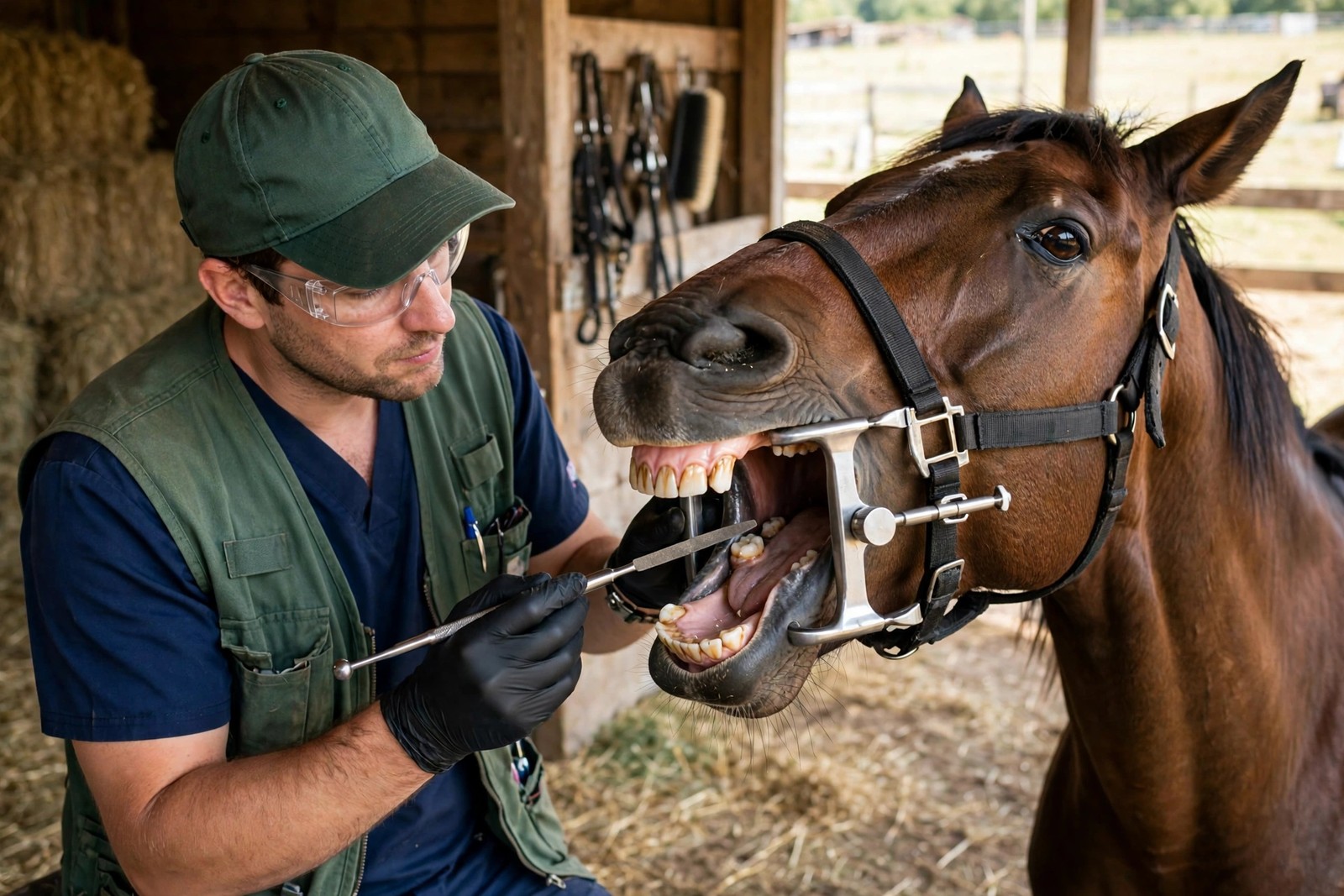
Floating is the routine filing down of the sharp enamel points that naturally develop as your horse's teeth wear against each other while chewing. When a veterinarian or qualified equine dental professional says your horse needs his teeth floated, they mean smoothing those points with a rasp — historically by hand, now often with motorized equipment — so they stop cutting into the cheeks and tongue. It is ordinary preventive maintenance, not a cosmetic extra.
Why Horse Teeth Develop Sharp Points
Horses' teeth erupt continuously through much of their lives to replace what grinding coarse forage wears away — a horse may spend up to eighteen hours a day chewing in a side-to-side motion. The upper jaw is wider than the lower jaw, so the outer edges of the upper molars and the inner edges of the lower molars do not get fully worn. Those unworn edges form sharp enamel points, and in some horses, hooks or ramps at the front and back of the tooth rows. Add wolf teeth, retained caps in youngsters, or a tooth that becomes uneven because its opposite number is missing, and the mouth can become genuinely sore.
Because horses are stoic and keep eating through discomfort, mouth pain often shows up indirectly long before an owner looks inside.
Signs Your Horse May Be Due
- Dropping partially chewed feed ('quidding'), dribbling grain, or eating noticeably more slowly
- Losing condition despite adequate feed and a sound deworming program
- Head-tossing, bit resistance, opening the mouth, or becoming one-sided under saddle
- Cheek or tongue sores, bad breath, or a buildup of packed feed in the cheeks
- Whole grain or long hay stems appearing undigested in the manure
None of these proves a dental problem — they are prompts for an examination, not a diagnosis to act on at home. Only a proper oral exam, usually with a speculum and good light and often with sedation for safety and thoroughness, shows what is actually going on in there.
What Happens at a Floating Appointment
The professional examines the whole mouth first, then files the sharp points smooth, checking balance across the tooth rows. Sedation is commonly used with power equipment so the horse stands still and the work can be precise. The appointment is also a screening visit: loose or fractured teeth, gum disease, diastemata (gaps trapping feed), and — in seniors — worn or expired teeth all get spotted and discussed. Most adult horses are checked once a year; youngsters whose teeth are changing rapidly, and seniors or horses with known issues, may be seen twice a year. Your vet will set the interval for your horse.
After floating, most horses go straight back to normal eating; a horse whose points were severe may be noticeably more comfortable within days.
Who Should Float Your Horse's Teeth
Dental work should be done by a veterinarian or a qualified equine dental technician working within your region's rules — in many places, sedation and certain procedures are legally veterinary-only. Floating is not a DIY job: over-filing or missing pathology can do real harm, and an unqualified float that only rasps the front teeth misses most of the mouth. Ask who will do the work, whether they do a full speculum exam, and what records you will receive.
Finding Equine Dental Help Near You
KinsLe's Pet Services Directory helps you find local veterinarians and equine dental providers near you, alongside groomers, sitters, and trainers for the rest of your animals — so when your horse is due a dental check, you can locate qualified help without relying on word of mouth alone. For the floating itself, search the Pet Services Directory listings on KinsLe for an equine veterinarian or a qualified dental provider in your area.