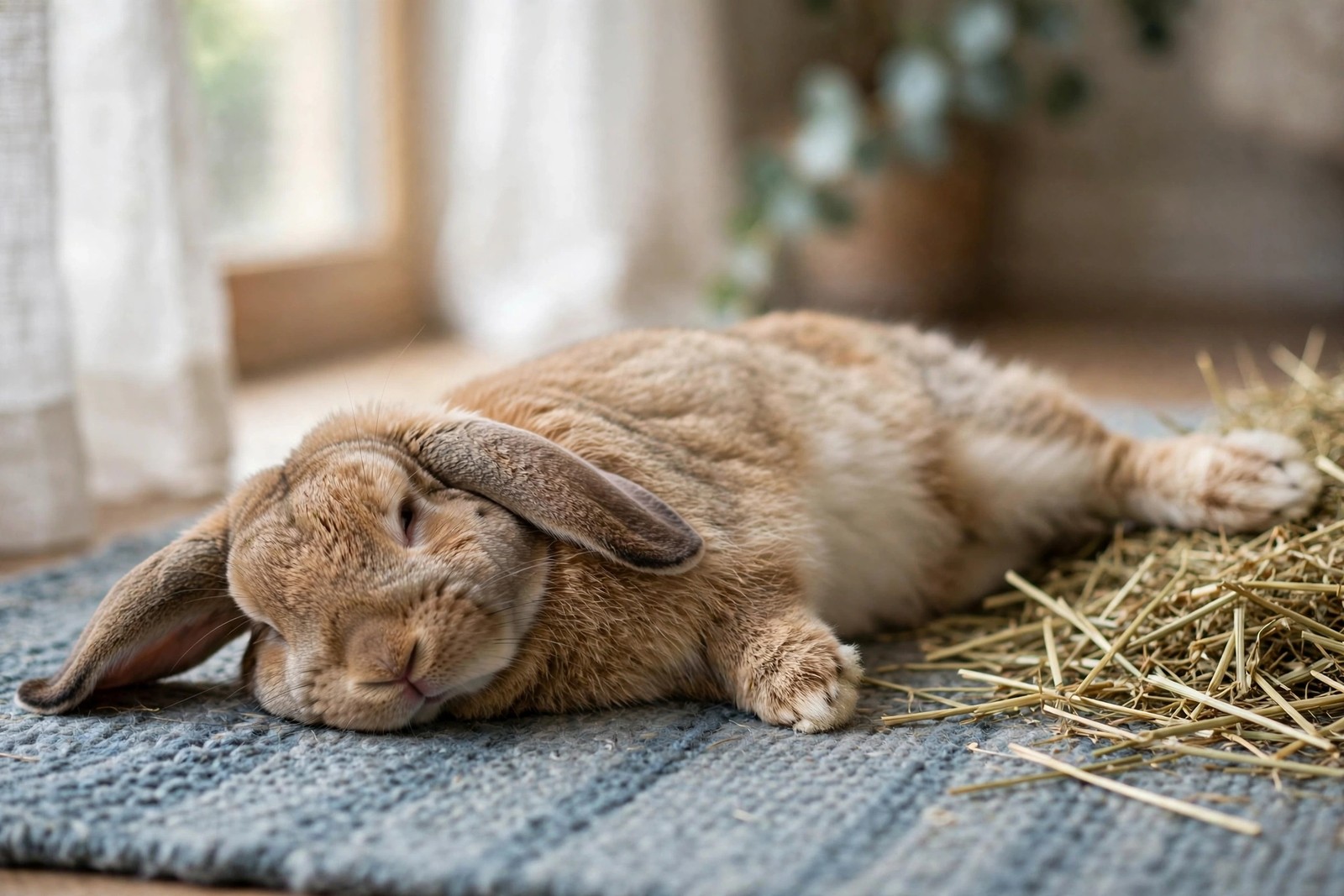
A flop is one of the clearest compliments a rabbit can pay her home. She suddenly tips or throws herself onto her side, sometimes with a little twist, and lies there looking as if she has fainted. In a healthy rabbit who does this in a familiar resting place, it means the opposite of distress: she feels safe, relaxed, and content, and she does not expect anything to startle or chase her.
What a normal flop looks like
Most flops happen after something satisfying — a run around the room, a good feed of hay, grooming, or finding a cool, comfortable patch of floor. Your rabbit may sigh, stretch a hind leg, half-close her eyes, and stay on her side for a few minutes before sitting up, washing her face, or going back to eating.
The details matter. A relaxed flopped rabbit breathes at a steady, easy rate, her ears rest in their normal relaxed position for her breed, and she reacts if you speak to her, move nearby, or open a food container. She may choose not to get up immediately — rabbits are good at ignoring people — but a gentle call or an offered leaf usually brings a clear response. Once she rises, she should move normally, with her usual balance and interest in her surroundings.
Some rabbits flop so theatrically that first-time owners think they have collapsed. Lop breeds can look especially dramatic because their ears and loose skin settle heavily to one side. Young rabbits also flop more extravagantly after play. Frequency alone is not a problem when each episode follows the same relaxed pattern and matches her normal routine.
How a worrying episode differs
A flop is relaxation; unresponsiveness is not. Be concerned if she falls over while moving rather than settling deliberately, cannot right herself, feels limp when you gently support her, or does not react to your voice and touch. Other warning signs are laboured or very rapid breathing, grinding her teeth loudly while hunched, refusing hay and favourite foods, producing far fewer droppings, lying stretched out and pressing her belly to the floor repeatedly, or seeming weak, wobbly, or disoriented when she tries to move.
Heat is another important context. A rabbit sprawled on her side on a hot day, panting, with hot ears and no interest in moving or eating, is not showing a contented flop. Move her somewhere cooler and contact a veterinarian promptly, especially if she is unresponsive or deteriorating. Rabbits tolerate cold far better than heat, and a hot-weather collapse should never be watched and waited out at home.
Do not confuse a flop with being placed on her back. A rabbit rolled over by a person may go still because she is frightened, not because she is relaxed. A true flop is her own choice, made in her own spot, on her own timing.
Reading the pattern over time
Learn her flop style: where she does it, at what times, and what she has usually been doing just before. That baseline makes a real change stand out — a rabbit who normally flops after evening play but today is lying silently, refusing food, and hiding needs help, not reassurance. Note appetite, droppings, energy, and responsiveness alongside the episode, because those details help a veterinarian far more than "she fell over" alone.
KinsLe's Care Teams can turn that baseline into a shared daily check for your rabbit, with an assigned household member recording appetite, droppings, play, and relaxed flops so a subtle change in her usual contented routine is spotted by whoever is on duty.