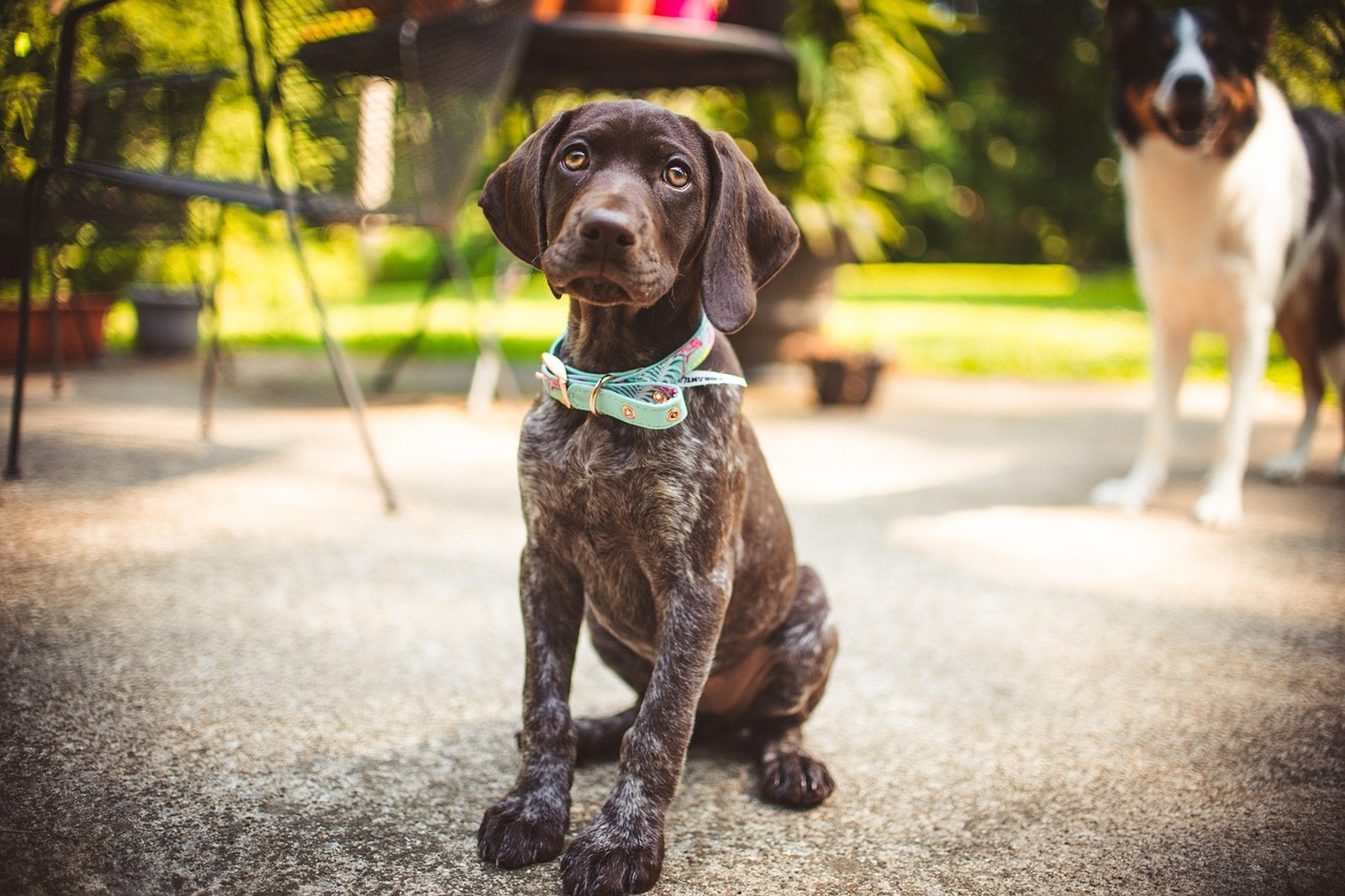
A hunting dog in a family home
The German Shorthaired Pointer was bred as an all-purpose gundog: point game, retrieve on land and from water, and keep going until the day ends. Your puppy arrives with that engine installed. In the first year you will watch the instinct switch on in stages — the sudden freeze and stare at a bird in the garden, the nose glued to scent trails on every walk, the joyful plunge into any water deep enough to splash in.
This is not a breed that fits around a sedentary routine and adapts quietly. It adapts loudly. Owners who love hiking, running, training, and being outdoors in most weathers tend to thrive; owners who hoped a garden would be enough usually spend the year renegotiating.
Exercise is the headline commitment
A young Pointer needs far more activity than the average family puppy, and the need grows through adolescence rather than shrinking. Long, varied walks where your dog can sniff and explore, safe off-lead time in secure areas, swimming, and structured games like retrieving all feature heavily. Even so, young joints are still forming, so the pattern should be frequent and varied rather than single exhausting marathons, and forced running alongside you waits until growth is complete.
Mental work is not optional garnish. Scent games, hidden toys, training sessions, and food scattered in grass burn energy that pure walking leaves untouched. Many first-year owners find the equation simple: a Pointer who has worked nose and body settles beautifully in the evening, while one who has not will pace, whine, raid counters, and excavate the lawn.
Recall against a powerful nose
Recall is the training challenge that defines this year. Your puppy may come back reliably in the garden and then vanish after a pheasant scent the moment freedom expands. Build the skill in layers: a long line in open spaces, rewards that genuinely compete with the environment, whistle training practised daily, and no off-lead freedom near roads, livestock, or game until the response is proven. Each rehearsed chase makes the habit stronger, so management matters as much as teaching.
Pointers are also famously people-oriented and can struggle with being left alone. Build departures gradually from the first weeks, pair alone time with settling chews and tired bodies, and avoid the pattern of total companionship all weekend followed by a long, sudden absence on a workday.
Coat, body, and practical upkeep
The short, dense coat is the easiest part of ownership: a quick brush, mud that mostly dries and falls away, and baths when the swamp wins. Ears that spend time in water need drying and checks, nails wear less on soft ground than owners expect, and this lean, muscular breed feels the cold more than its energy suggests, so a drying coat after wet winter walks is a kindness many Pointers visibly appreciate.
Appetite is usually robust and weight easier to manage than in many breeds, simply because the dog moves so much. Feed for the work your puppy actually does, change foods gradually, and watch ribs and waistline as growth surges. A Pointer who goes off food, loses condition despite eating, or develops a persistent limp after exercise should see a veterinarian rather than being assumed to have overdone one outing.
The payoff at year's end
Owners who survive a Pointer's first year with humour usually describe the same reward: a tireless, cheerful, deeply bonded companion who is ready for every plan you make. The record of that demanding year — training stages, vaccinations, exercise routines — is worth keeping properly, and KinsLe provides Transferrable Profiles so the whole story can pass with your German Shorthaired Pointer's profile if a new owner ever steps in.