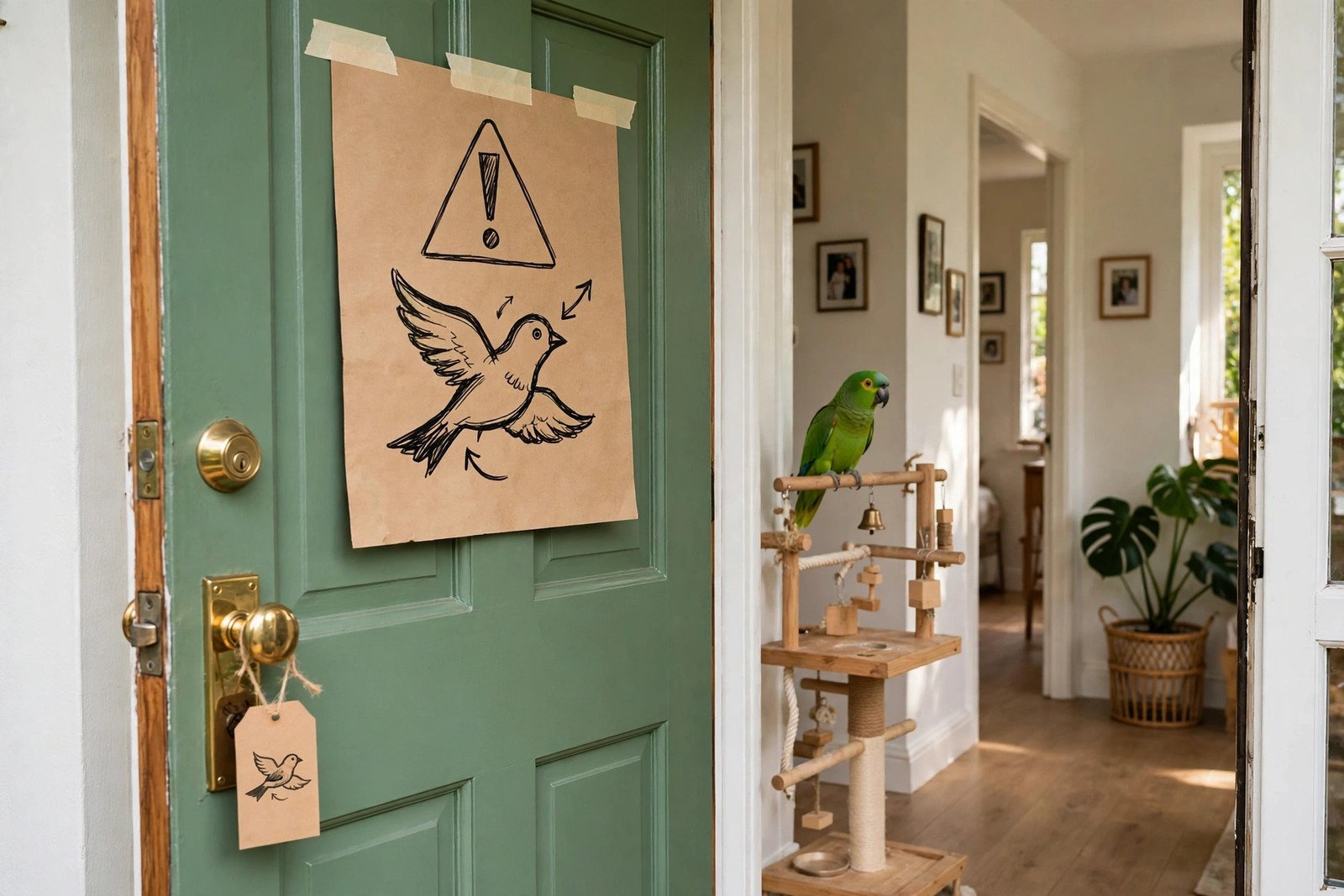
A sign only works if a guest carrying drinks, chatting, and reaching for the handle actually reads it before the door moves. For a flighted bird loose during a party, that means blunt wording, very large letters, and placement in two places the hand and eyes cannot avoid: at eye level on the door, and directly on the handle or latch itself.
The wording that works
Keep each sign to one instruction. On the outside of the front door, and on any back, side, or garage door guests might use, write:
"STOP — FLIGHTED BIRD LOOSE INSIDE" "DO NOT OPEN — KNOCK AND WAIT FOR THE HOST"
On the handle itself, or on a card tied to it, add the shorter line: "OPEN SLOWLY — BIRD CAN FLY OUT." Guests notice a sign their hand has to move or touch far more reliably than a polite notice pinned nearby.
Inside the same door, facing anyone leaving, put the mirror reminder: "CLOSE THIS DOOR BEHIND YOU — BIRD IS OUT OF ITS CAGE." Party escapes often happen on the way out, when a guest holds the door for the next person, a child follows, or someone steps out for air and leaves it ajar. The inside sign catches exactly that moment.
Use plain capital letters at least a few centimetres high for the main line, black or red on a white or yellow card, with no decoration competing for attention. If the sign looks like party décor, guests will treat it as party décor. Tape it flat so it cannot swing face-down, and check it after the first hour — signs get knocked off by coats, bags, and delivery drivers.
Layers beyond the sign
Signage is the reminder, not the barrier. Before guests arrive, decide whether your bird really needs to be loose in the party rooms at all; many birds are safer and calmer in a quiet room away from the main door, with the party signs protecting that room's door instead. If she is out, keep a second closed door between her and the street whenever your layout allows it, turn ceiling fans off, close toilet lids, and keep her away from the kitchen, where hot pans, open ovens, and constant door traffic combine.
Brief people as well as doors. Greet guests yourself where you can, and make the briefing part of the welcome: "Our bird is out tonight, so please knock and let me open up, and never leave an outside door standing open." Tell children directly and kindly, not through their parents, and repeat it to smokers and anyone making repeated trips to a car — they are your highest-risk door users. One named helper on door duty during arrivals and departures removes most of the risk entirely.
Windows matter too. A startled bird flies toward light, so keep unscreened windows shut in the rooms she can reach, and put the same "bird loose" card on any window you might open for air.
If the door opens anyway
Move calmly, note the direction she flew, and search the immediate trees, roofs, and fences before widening the area — a frightened pet bird often lands nearby and goes quiet. Put her cage outside with familiar food where she can see it, and keep calling in your normal voice.
For a fast local alert while you search, KinsLe's Lost Pet Alert System lets you notify nearby Circle of Love members that your flighted bird is missing and lets anyone who spots or secures her message you directly through KinsLe.