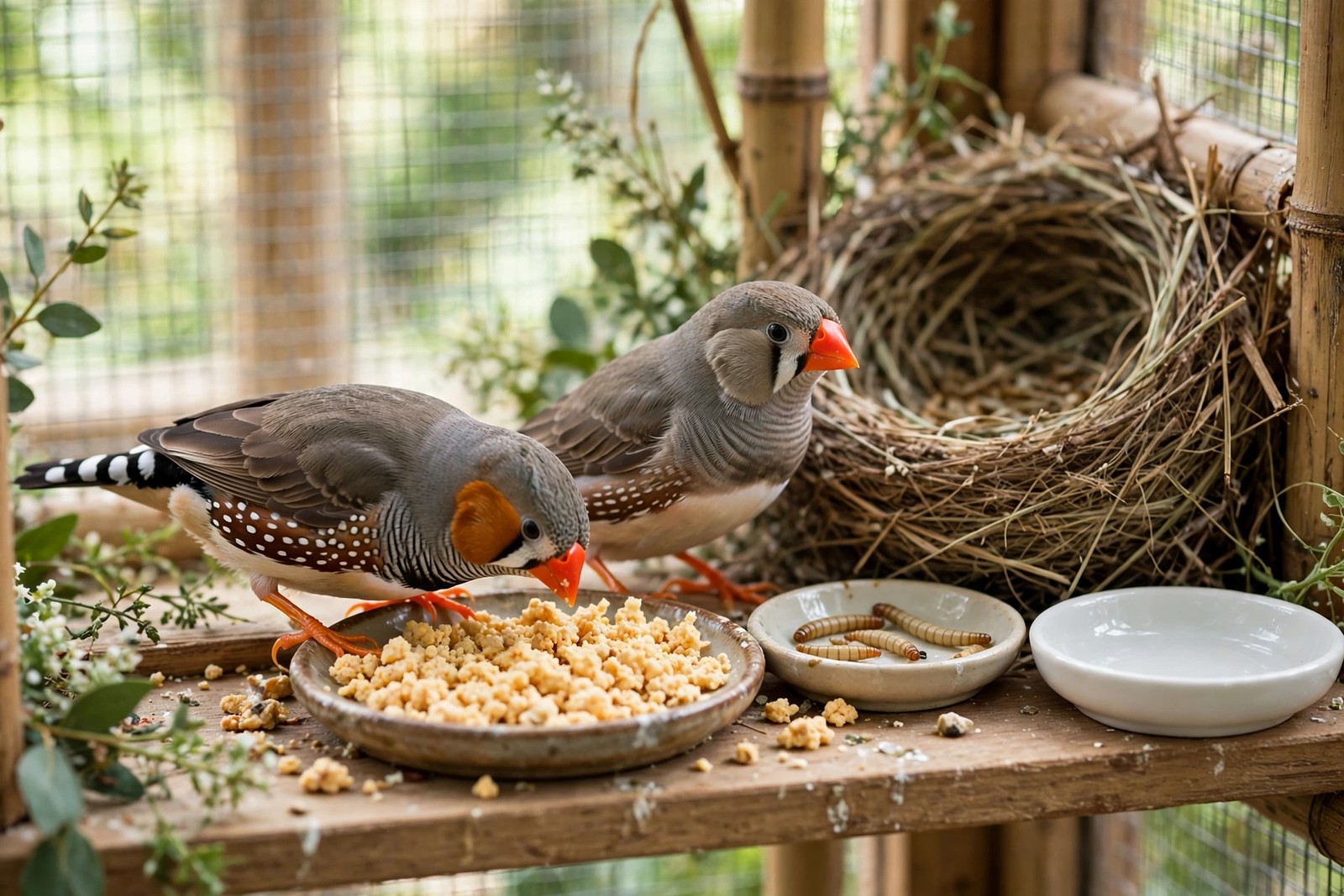
Breeding finches burn protein fast: a hen forming eggs and two parents feeding a nest of gaping chicks need far more than the seed that maintains them the rest of the year. Egg food and small insects are the two traditional ways keepers supply it, and both come with hygiene rules that matter as much as the food itself, because soft, protein-rich food in a warm cage spoils quickly.
The Egg-Food Options
A straightforward option is hard-boiled egg, mashed finely with a fork — yolk and white together — with a little finely crushed, clean eggshell stirred back in for calcium. Many keepers instead use a ready-made dry egg-food mix from an avian supplier, softened with a few drops of water or grated carrot until it is crumbly rather than wet and sticky, which the birds pick through more readily. Some blend the two, using the mix as a base and fresh egg on alternate days. Offer about a teaspoon per bird each morning during conditioning, laying, and chick-rearing, in a separate shallow dish away from droppings and bath water, and scale the amount so the dish is nearly empty — not heaped with leftovers — by the time you remove it.
The Insect Options
Insect-eating finch species, and many waxbills in particular, feed chicks heavily on live food and may fail to rear chicks that hatch without it. Keepers commonly offer mini or small mealworms, tiny crickets, or fruit-fly larvae in small numbers several times a day while chicks are being fed, choosing sizes the parents can carry and the chicks can swallow. Dried insects are a weaker substitute — some pairs accept them soaked, many do not — and wild-caught insects are best avoided because of pesticides and parasites. Introduce live food before laying begins so the pair already recognises it when the first chick hatches and the demand is urgent.
The Hygiene Rules, Without Shortcuts
Remove all uneaten egg food and soft food within two to four hours of serving, sooner on warm days; a dish that smells sour should never have stayed that long. Wash egg-food dishes daily in hot soapy water, rinse well, and dry them fully — rotating two sets of dishes makes this effortless — and wash your hands before preparing food and after handling the cage. Store dry egg-food mix sealed, cool, and dry, check its date, and discard any mix that smells stale or has been open far beyond its recommended period; refrigerate a home-made egg mixture only for the same day, and throw away whatever is left at night rather than serving it again. Keep serving utensils for the birds only, and never top up an old dish with fresh food on top of yesterday's residue.
Watching the Birds, Not Just the Dish
Increase portions as chicks grow and cut back gradually once youngsters are weaned and eating seed confidently, rather than stopping egg food abruptly the day they fledge. Hens that gorge on egg food while sitting but ignore it for chicks, or pairs that scatter insects without feeding them, are telling you to adjust amounts and timing. KinsLe's Care Teams keeps the daily discipline reliable — serving, the two-to-four-hour removal check, and dish washing can be assigned to whoever is home during the breeding weeks, each step timestamped, so no portion of soft food is left spoiling in the cage overnight by mistake.