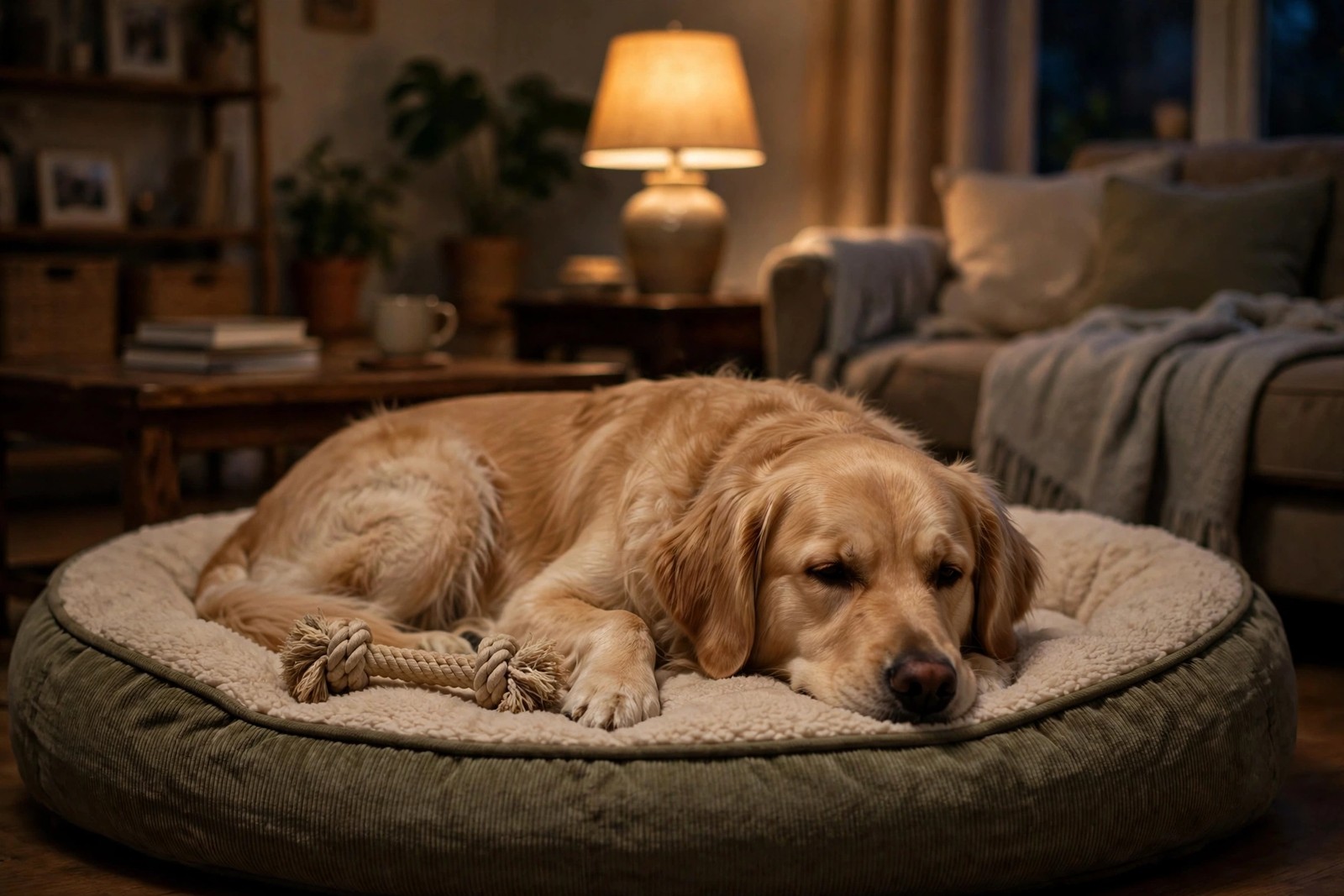
Dogs do not switch off at bedtime like a lamp. A dog that has been playing, training, or patrolling the house at full energy needs a runway down to sleep, and the households that get calm nights build that runway deliberately. The sequence matters more than any single element: the same steps, in the same order, at roughly the same time each night, until the first step alone starts to make the dog drowsy.
Step One: End Real Exercise Early
Finish the last proper exercise — the run, the energetic game, the training session with running retrieves — well before bed, typically an hour or more ahead of lights-out. Hard exercise raises body temperature, energy, and excitement, and a dog taken straight from a lively game to a dark room often lies there buzzing, whining, or rehearsing the fun. A gentle leash walk later in the evening is fine and even helpful; what needs to end early is the exciting kind of activity. If the household's schedule forces a late walk, keep it slow, sniffy, and boring on purpose.
Step Two: A Calm Chew or Sniffing Activity
Once exercise is over, offer something absorbing and low-key: a long-lasting chew suited to the dog, a lick mat, or treats scattered in the grass or across a snuffle mat for the dog to hunt by nose. Sniffing and licking are self-soothing work for dogs — the pace slows, breathing settles, and the mind stays occupied without the body winding back up. Keep this in the same spot each night, because place becomes part of the cue. Skip wrestling, tug, and anything that ends with the dog panting and bright-eyed.
Step Three: Step the Whole House Down
The dog reads the household as much as any schedule. Lights dimmed, television and music lowered, voices slower, children settled into quiet activities — that shared drop in energy tells the dog the day is closing. The people's own screens are part of the routine: a bright, noisy, laughing house at full tilt until the moment someone says bedtime gives the dog nothing to settle into. Many households find the dog starts yawning and choosing a bed during this stage once the pattern is familiar, which is the routine doing its job. Putting phones face-down on a counter for the last stretch of the evening helps more than most people expect, because it removes the sudden sounds and bright movement that keep an alert dog scanning the room.
Step Four: Final Toilet Trip, Then Bed
End outside, every night: a last toilet trip in the yard or a short walk to the usual spot, unhurried enough that the dog actually goes rather than holding it for the more interesting indoors. Then straight to the sleeping place, a brief goodnight in the same words, and lights out. A dog that needs the toilet at two in the morning has usually not been given a genuine chance at ten, or was too excited on the last trip to bother.
Hold the order steady for at least a couple of weeks before judging it. Puppies and adolescents may still fidget early on; consistency, not novelty, is what teaches a body clock. Family Sharing on KinsLe keeps the sequence written where the whole household can follow it, so a partner, a teenager, or a visiting relative runs the identical steps rather than inventing a louder version. Sharing the wind-down sequence in this way means the dog gets one predictable pattern regardless of who closes the house down.
Family Sharing keeps that bedtime pattern steady inside KinsLe, so the dog learns one predictable path from last walk to lights-out whoever is home.