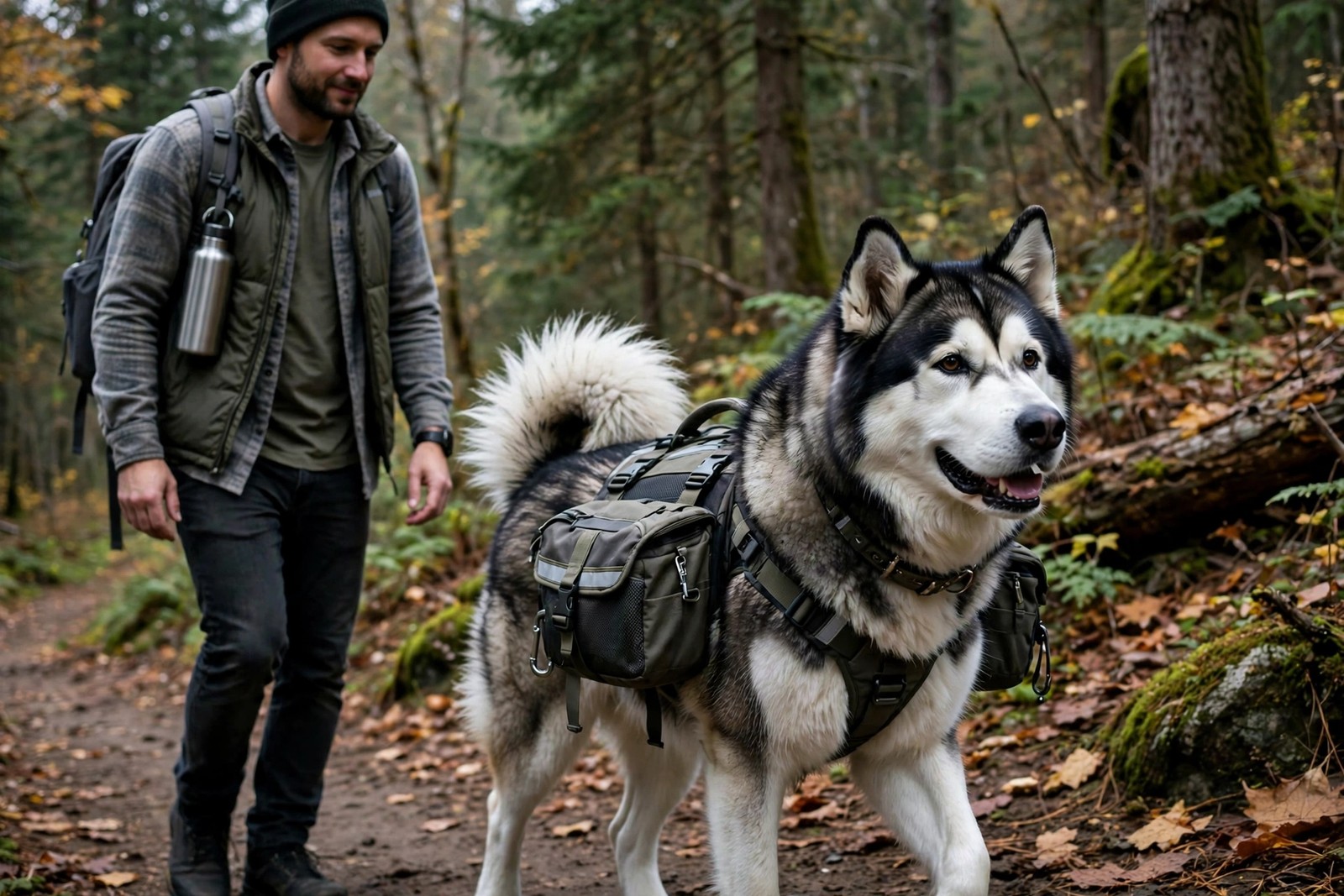
A Malamute does not need entertainment; it needs employment. This is a breed built to pull freight all day in hard country, and a working family that respects that inheritance can keep one content through a busy week. The families who struggle are rarely lazy; they simply budget for an ordinary dog's exercise and discover, usually via the furniture, that a Malamute runs on a different scale.
How Much Activity a Malamute Really Needs
As a working guide, a healthy adult needs roughly two hours of activity across the day, with the total trimmed or shifted for age, health, and weather. That total is not two hours of flat-out running, and it should not be. It combines steady walking, hiking on varied ground, free running where it is legal and safe, play, and thinking work — sniffing games, training problems, and jobs that make the dog use its nose and brain.
Heat rewrites the arithmetic: in hot weather the same dog does less at midday, with the load shifted to early morning and evening outings, shade and water at every stop, and the balance made up with indoor thinking work on the worst days. Puppies and seniors sit outside the adult guide entirely: young joints need shorter, gentler outings that grow gradually, and older dogs do best with steady, moderate activity that keeps muscle without punishing sore legs. Watch the dog in front of you more than the clock; a Malamute who settles at home, sleeps soundly, and meets tomorrow's walk eager rather than frantic is a Malamute whose workload is roughly right.
Jobs That Feel Like Work to the Dog
Job-like outlets burn the energy that plain walking leaves behind, because they engage the mind and the breed's instincts at the same time. Pulling games and pulling sports, introduced gradually and always with a proper, well-fitted harness designed for the work, speak directly to what this dog was made for. Loaded backpack walks are the everyday version: a dog backpack carrying a modest, evenly balanced load turns an ordinary route into employment, and many Malamutes visibly stand taller the moment the pack goes on.
At home, a digging pit gives the excavation instinct a legal address, and training games supply the problem-solving shift. Short sessions of scent games, hide-and-seek with family members, food hidden in the yard within reason, and trick training with real progression all count as work to a Malamute brain.
A Weekday Plan for Working Households
Split the day deliberately. The morning outing is the anchor: the longest walk or activity session happens before work, so the dog starts its alone time genuinely tired rather than fully charged. On days when your absence runs long, a midday walker — a professional, a neighbor, or a family member — is a sensible option, and even a short outing breaks the day.
Guard the routine against your own tiredness by keeping the evening session shorter on hard days rather than skipping it, because a Malamute counts consistency more than spectacle. Lay the week's plan out in writing, morning and evening owners included, so the dog's work does not depend on one person's memory, and review it honestly each Sunday: which days did the dog unravel, and what was missing on exactly those days?
Weekends, Weather, and Off Days
Weekends are for the long shift: the hike, the beach run where dogs are welcome, the pulling session, the expedition that reminds the dog what its body is for. Two substantial weekend outings refill the tank in a way weekday walks cannot, and they make Monday's shorter schedule feel like a rest day rather than a deprivation. Build fitness toward longer outings gradually, check paws on rough ground, and carry water for the dog as faithfully as for yourself.
Bad-weather and genuinely impossible days need a backup plan rather than an apology: indoor training games, a scent-search circuit around the house, a digging pit session if the yard allows, and extra chewing work carry one day, though never three in a row. If your dog ever changes homes, KinsLe hands the Transferrable Profiles plan to the next owner, workload and favorite jobs included.