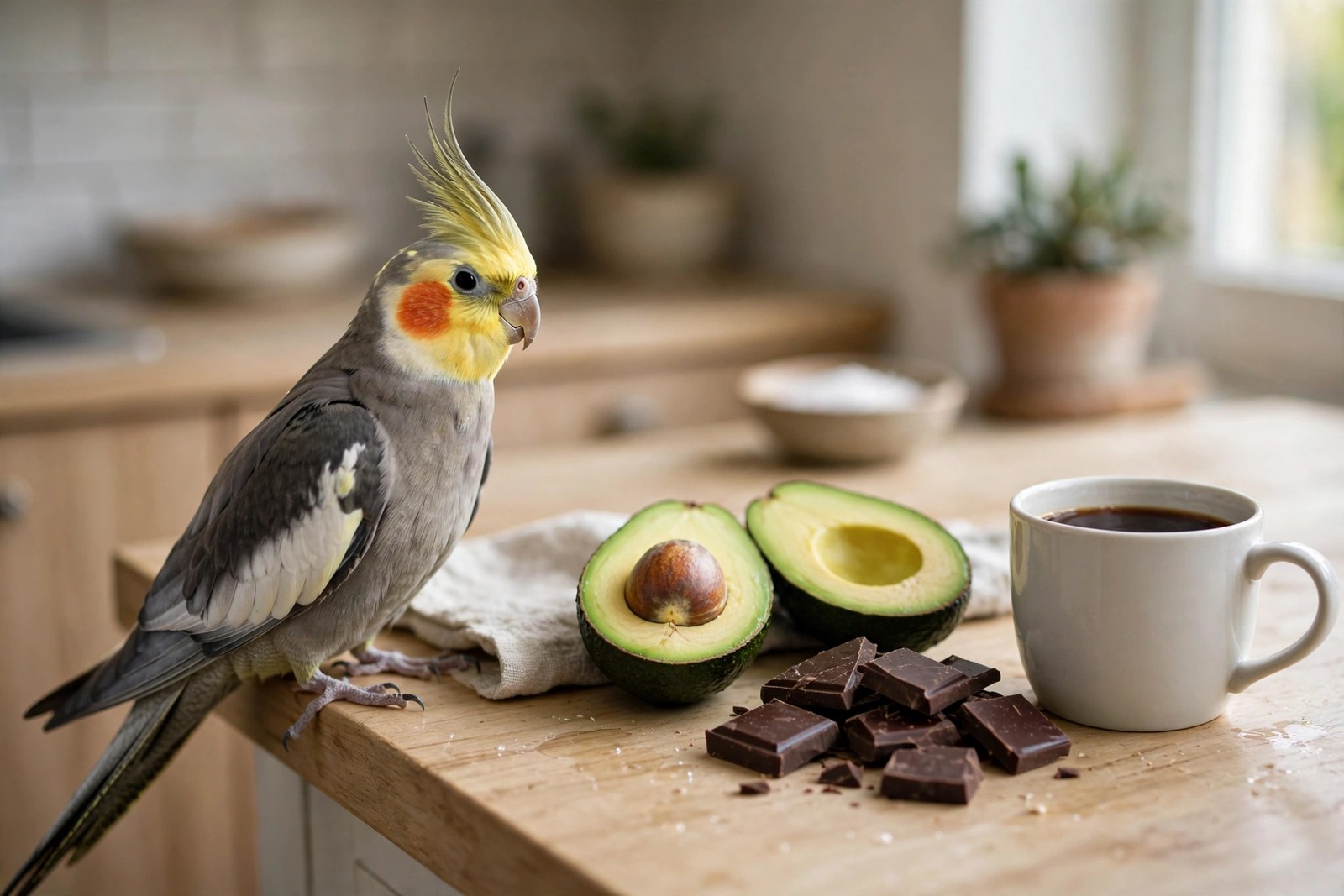
For cockatiels, the never-feed list deserves posting where food is prepared. The cockatiel never-feed list is short and absolute: avocado (all parts — it contains persin, which is toxic to birds and can kill), chocolate, caffeine (coffee, tea, cola, energy drinks), alcohol, onion and garlic in concentrated forms, salty foods and salt itself in quantity, the pits and seeds of apples and stone fruits (they contain cyanide compounds), rhubarb leaves, and anything mouldy. Add a household danger that is not a food at all: fumes from overheated non-stick cookware, which are lethal to birds within minutes. Human junk foods — crisps, biscuits, sugary cereals — are not acutely toxic but are genuinely harmful as habits and should also stay off the menu.
Building the Safe-Food Picture
A cockatiel's base diet should be a quality pellet with a measured seed component and daily vegetables (leafy greens, carrot, broccoli, sweetcorn, peppers are all safe staples), with small amounts of fruit as treats. When you are unsure about a specific new food, the rule that keeps birds alive is simple: do not offer it until you have checked it against a reliable avian source or your vet — a cockatiel weighs around 90 grams, so doses that are trivial to us are not trivial to them. Store bird food and human food preparation separately in your habits: no sharing from plates (human food carries salt, fats, and mouth bacteria), no leaving coffee cups or chocolate within reach of an out-of-cage bird, and brief everyone in the house, because most bird poisonings are a visitor's kind mistake. If your bird does eat something on the toxic list, call an avian vet immediately with what and how much — do not wait for symptoms.
Working With Your Vet
With a suspected poisoning, the order is different from a general health worry: note exactly what the cockatiel ate or breathed, how much, and when, then phone an avian vet before symptoms settle the question for you. A veterinarian makes any diagnosis and decides treatment; what you supply is the timeline — when the food was offered, when behaviour changed, and what else the bird could have reached.
Avocado, chocolate, caffeine, or alcohol ingestion, or any breathing difficulty in a cockatiel, is an emergency avian vet call — minutes matter with fumes and breathing signs.
Keep the never-feed list itself in the record: which foods are banned in this house, who has been briefed, and any past scare with the date and outcome. A cockatiel's small size means a dose that looks trivial on a human plate can matter, so the log should also note the bird's current weight, recent appetite and droppings, and any clear change from its usual pattern.
Keeping that banned-food list alongside the rest of the history inside KinsLe's Pet Passport means whoever answers an emergency call can see the cockatiel's weight, recent appetite, past scares, and vet notes gathered together in KinsLe straight away.