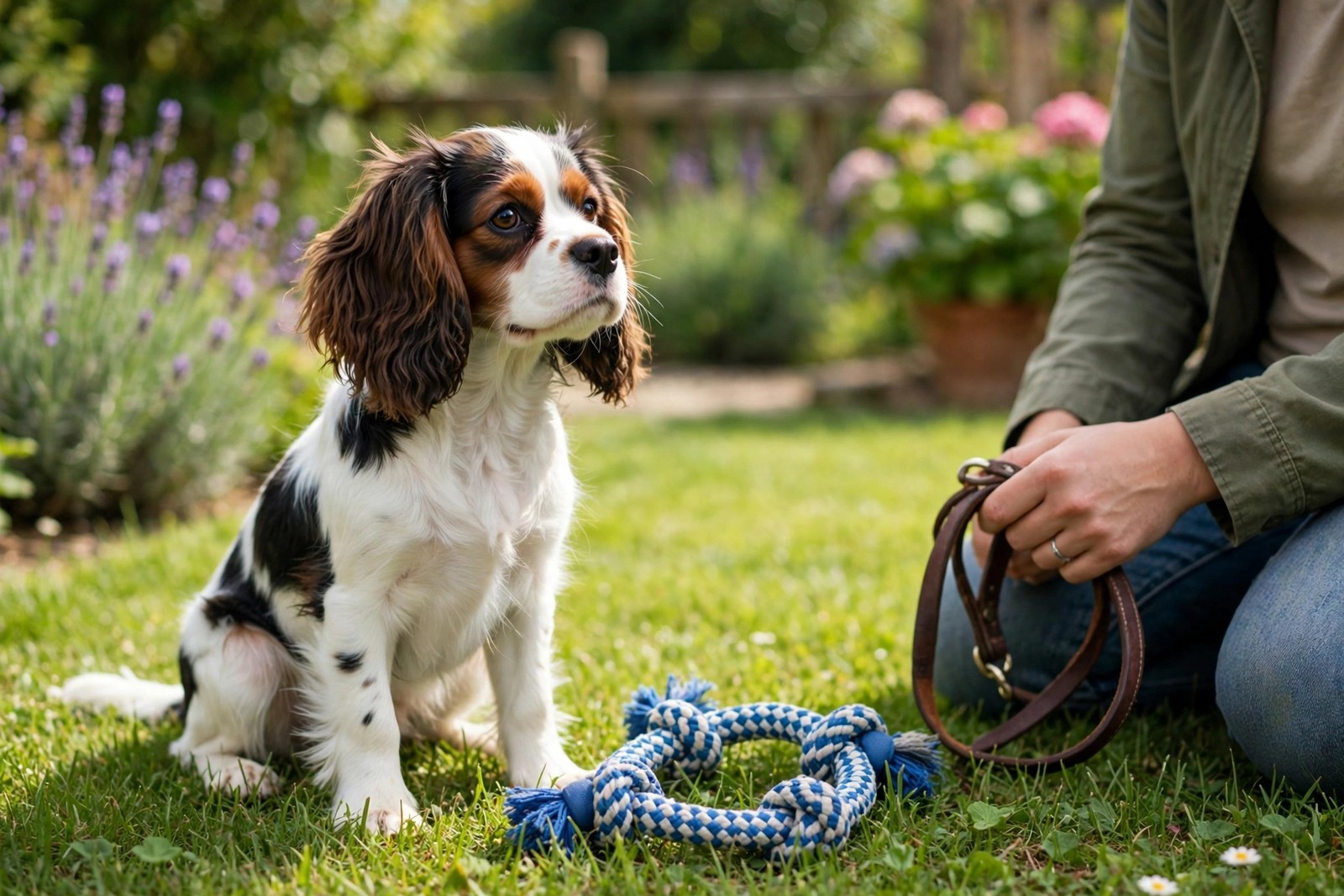
Self-control in a young dog is not a personality trait you wait for; it is a skill built out of tiny transactions in which excitement rises, the dog chooses to pause, and the pause makes good things happen. The games below share that structure on purpose: the fun is real, the fun stops when the dog boils over, and the fun restarts the moment the dog recovers. Run them in short rounds and your excitable youngster practises recovering dozens of times a week.
Tug With a Pause Built In
Tug is the ideal starting game because young dogs value it highly and it has a natural off-switch. Play for ten or twenty seconds, then stop moving, hold the toy still against your legs, and wait. Offer no cues and no scolding; a still toy is simply dull. When the dog lets go, sits, or even just pauses and looks at you, praise and restart the game immediately, so the dog learns that settling is the button that makes tug happen again. If teeth touch skin or clothing, the game ends entirely for a minute — calmly, without drama — and restarts only from a settled position. Within a few sessions, dogs begin offering the pause themselves, earlier and earlier, because it works.
The Flirt Pole That Freezes
A flirt pole — a lure on a line attached to a pole — lets an excitable dog chase at full stretch in a small garden, and the control lesson is woven in: the lure moves only while the dog is waiting, and freezes dead the instant the dog lunges before your release word. Start with the lure still on the ground and the dog holding a brief wait of a second or two, then release to chase. Build the wait gradually, reward recalls away from the lure with a second chase, and keep total play to a few minutes with rest breaks, because this is intense exercise as well as training. Stop while the dog can still respond to you; a dog worked past that point rehearses ignoring you at full arousal, which is the opposite lesson.
Food Games Where Backing Off Wins
Hold food in a closed fist and open the hand only when the dog backs away from it; progress to food under a cupped hand on the floor, then to a treat dropped nearby while the dog holds position on a lead. Treasure hunts teach the settled start: the dog waits behind a gate or with a handler while treats are hidden around a room, is released with a search cue, and works the room methodically with its nose. Searching is self-regulating work — a dog cannot sniff carefully and bounce at the same time — so a hunt after an exciting game brings arousal down while still feeling like play to the dog.
Reading Arousal and Ending Well
- Signs the dog is coping: loose body, soft eyes, able to take food gently and respond to its name between rounds.
- Signs the dog is over threshold: grabbing at hands or clothes, barking that escalates rather than settles, hard staring, and no interest in food it normally loves; end the game, scatter food on grass or a mat to encourage sniffing, and let the dog rest.
- The session rule: two or three short rounds with recovery between them teach more than one long session that unravels at the end.
Sleep is the unglamorous half of this programme. An overtired youngster looks exactly like an undertrained one — mouthy, frantic and unable to settle. Schedule games after naps rather than instead of them, and judge progress across a fortnight, not a single afternoon.
Because these games only work when every handler uses the same pause and restart rules, a shared plan matters more than any single session. Rostering the games in KinsLe Care Teams, with a note of how long your dog can currently wait before release, lets each person pick up the training at the right level instead of restarting it.