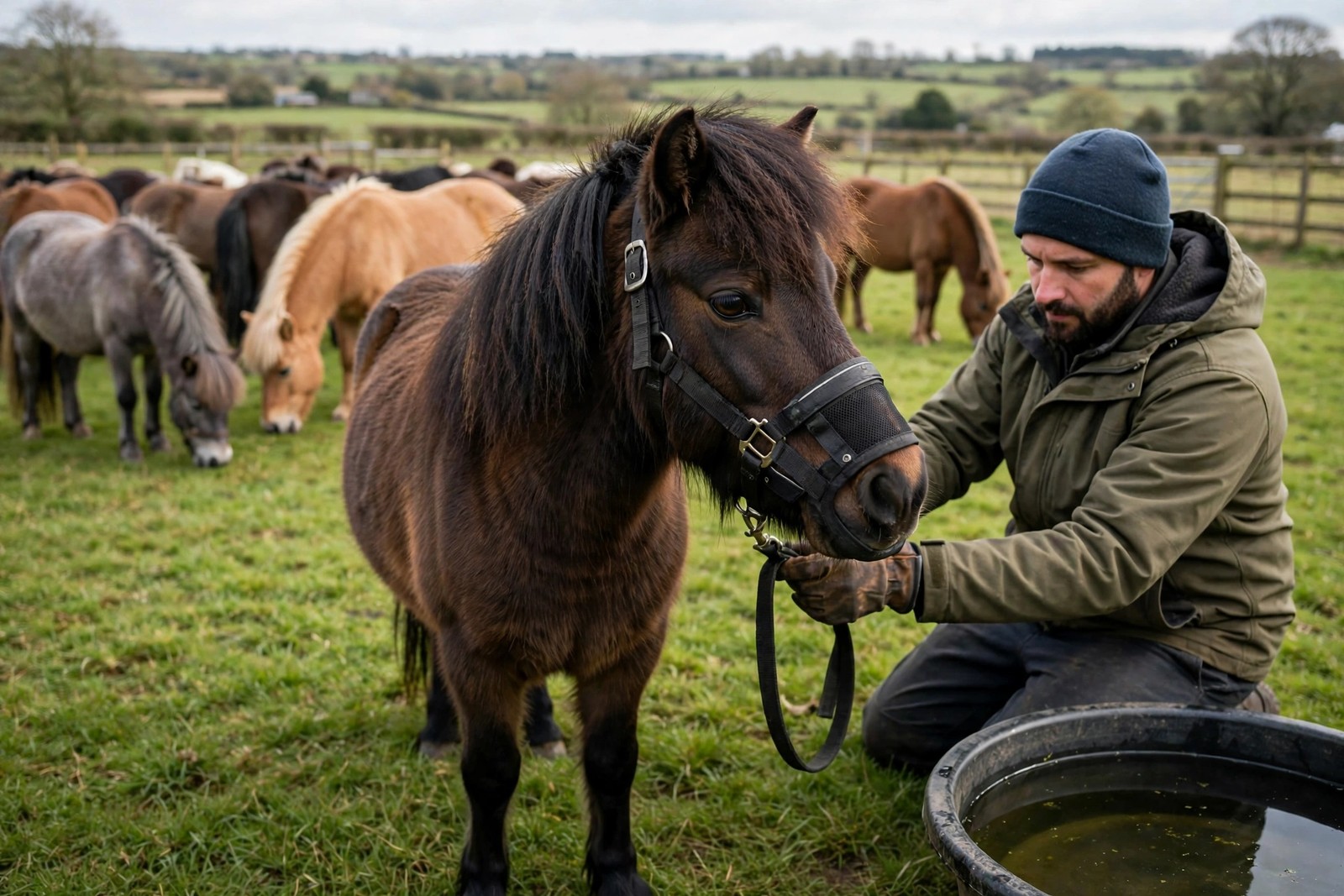
A grazing muzzle only works inside a routine. The equipment itself is simple — a basket over the pony's nose that slows each mouthful of grass to a trickle while the pony still grazes, moves, and socializes with the herd — but a muzzle worn badly, introduced suddenly, or left on without breaks creates rubs, frustration, and a pony that cannot drink properly. Muzzles earn their place most often on a veterinarian's advice, for ponies whose history makes laminitis a standing worry, and a consistent daily routine is what makes that advice practical in a real yard.
Fit First, Checked by Hand
Fit the muzzle before the pony ever grazes in it. The basket should sit clear of the nostrils so breathing is easy and unrestricted, hang without dragging on the ground, and leave the pony able to open its mouth and drink. Run your hands over every strap: snug enough that the muzzle cannot be rubbed off over an ear or caught and twisted, never tight enough to pinch skin or press into the face, with no strap crossing the eyes as the head lowers to graze.
Introduce It Over Days, Not Minutes
A pony that meets its muzzle gradually accepts it as clothing; a pony strapped straight into a full day may spend that day trying to remove it and learn only resentment. Begin in a small, familiar space: muzzle on for a short supervised period, a few easy mouthfuls, then off again while the pony is still calm. Repeat across several days, lengthening each period and moving from the yard to short spells on grass. Check early sessions closely — can the pony actually get grass through the basket, is it drinking, is it grazing or only standing? By the time the muzzle is worn for real grazing hours, wearing it should look unremarkable to everyone, including the pony.
The Daily Rhythm: On for Grazing, Off Every Day
Once established, the muzzle is worn for grazing hours and comes off daily. That off time is not optional: the pony spends it on a bare patch, a surfaced pen, or in the stable with hay, eating unimpeded, drinking deeply, and resting its face. A muzzle left on around the clock becomes a welfare problem, not a management tool. While the herd is out, verify the drinking arrangement with your own eyes at least in the early weeks: the trough must let a muzzled pony submerge its muzzle and drink — water level high enough, trough rim low enough, and no herd competition at the water that leaves the muzzled pony waiting while others drink.
Skin Checks and Small Daily Care
Look at the pony's face every day when the muzzle comes off. Skin under the straps and around the muzzle is checked by eye and by hand for rubs, hair loss, heat, or broken skin, and the muzzle itself is rinsed of mud and grit that would otherwise grind quietly all day tomorrow. Small rubs caught early are managed by adjusting fit, adding a break, or resting the pony from the muzzle while skin recovers; broken skin, swelling, or a pony that stops eating, drinking, or grazing happily deserves veterinary advice promptly.
A Yard Plan With Names on It
Muzzle routines fail at the handovers — the morning person assumes the evening person checked the skin, and nobody did. Care Teams gives the routine named owners on the yard's written plan: the person who turns out fits the muzzle and checks the straps by hand, the person who brings in removes it, checks the skin, and rinses the basket, and the daily off-time period is a scheduled duty rather than a favor someone remembers. Put those duties into the Care Teams plan on KinsLe, and the pony's muzzle routine holds steady even when staff holidays shuffle the yard.