
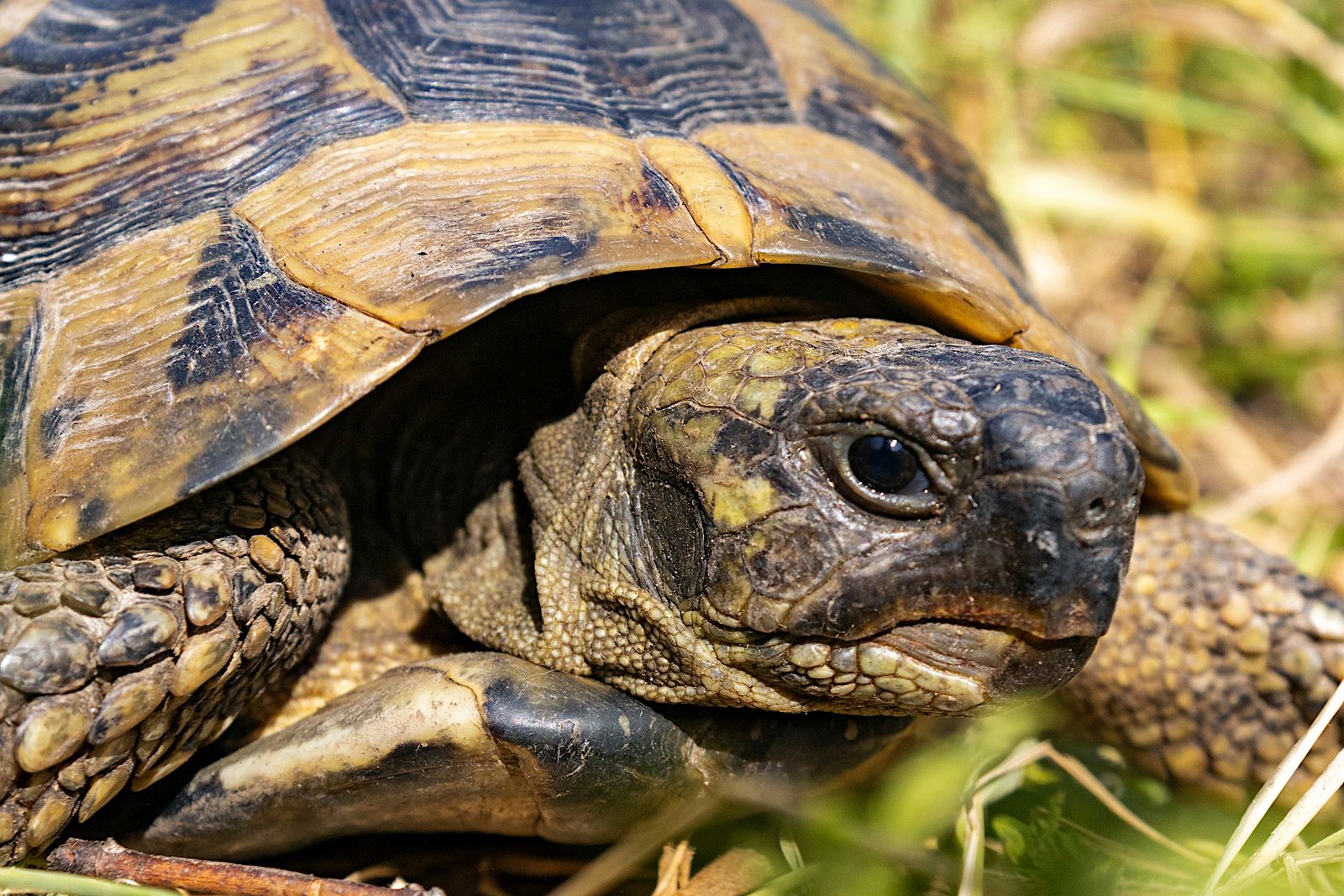
Grassland tortoises thrive on variety from the weed patch, not the salad bag: dandelion greens and flowers, plantain weed, clover, hibiscus leaves and flowers, and endive are all excellent staples, served in rotation alongside grasses and hay.
Think Like a Grazing Tortoise
A Mediterranean or sulcata tortoise in the wild walks and nibbles all day, taking a bite here and a bite there from dozens of plants, most of them fibrous, some of them tough. Reproducing that pattern matters more than any single superfood. Aim for a rotating mix of leafy weeds and greens making up the bulk of the diet, with grass and hay always available for grassland species, and fruit kept as a rare treat — or skipped entirely for species not built for it. Forest species such as red-footed tortoises handle a broader menu, including some fruit and protein, so match the list below to your species before shopping.
The Staple List Worth Rotating
- Dandelion: leaves and flowers, one of the best all-round tortoise foods
- Plantain weed (broadleaf and ribwort): fibrous, calcium-friendly, and usually abundant in untreated lawns
- Clover: leaves and flowers, popular and nutritious in moderation within a mix
- Hibiscus: leaves and blossoms, a favourite of many species
- Endive and escarole: the most useful supermarket greens, far better staples than romaine alone
- Extras to rotate in: mulberry leaves, grape leaves, sow thistle, mallow, and prickly pear pads for desert species
Picking Wild Weeds Safely
Wild-picked food is free, varied, and enriching — provided the source is clean. Only gather from areas you know are free of pesticides, herbicides, and fertilisers, away from roadsides where runoff and exhaust settle, and never from parks or neighbours' lawns where spraying schedules are unknown. Learn to identify each plant confidently before feeding it; if you are not certain what a weed is, leave it. Wash everything well, wild or shop-bought, and introduce any new item in a small amount alongside familiar foods.
What to Limit or Leave Out
Iceberg lettuce offers water and crunch but little nutrition. Spinach, chard, and beet greens are fine occasionally but should not dominate, and brassicas such as kale and cabbage belong in rotation rather than as daily staples. Avoid feeding dog or cat food, bread, and the trimmings of houseplants or garden ornamentals whose safety you have not confirmed — several common ornamentals are genuinely toxic to tortoises. When in doubt about a plant, check a tortoise-specific edible plant database or ask a reptile veterinarian before it goes on the slate.
Keeping the Rotation Going With KinsLe
Variety collapses easily into feeding whatever is left in the fridge. When a question comes up while you are picking or serving — whether an unfamiliar weed is safe to feed, how often clover should appear in the mix, or whether a new green needs introducing slowly — you can bring it to Kimmy in KinsLe and get a clear answer on the spot. Kimmy can take follow-up questions about tortoise greens and weeds on KinsLe, with replies taken from KinsLe Answers entries.