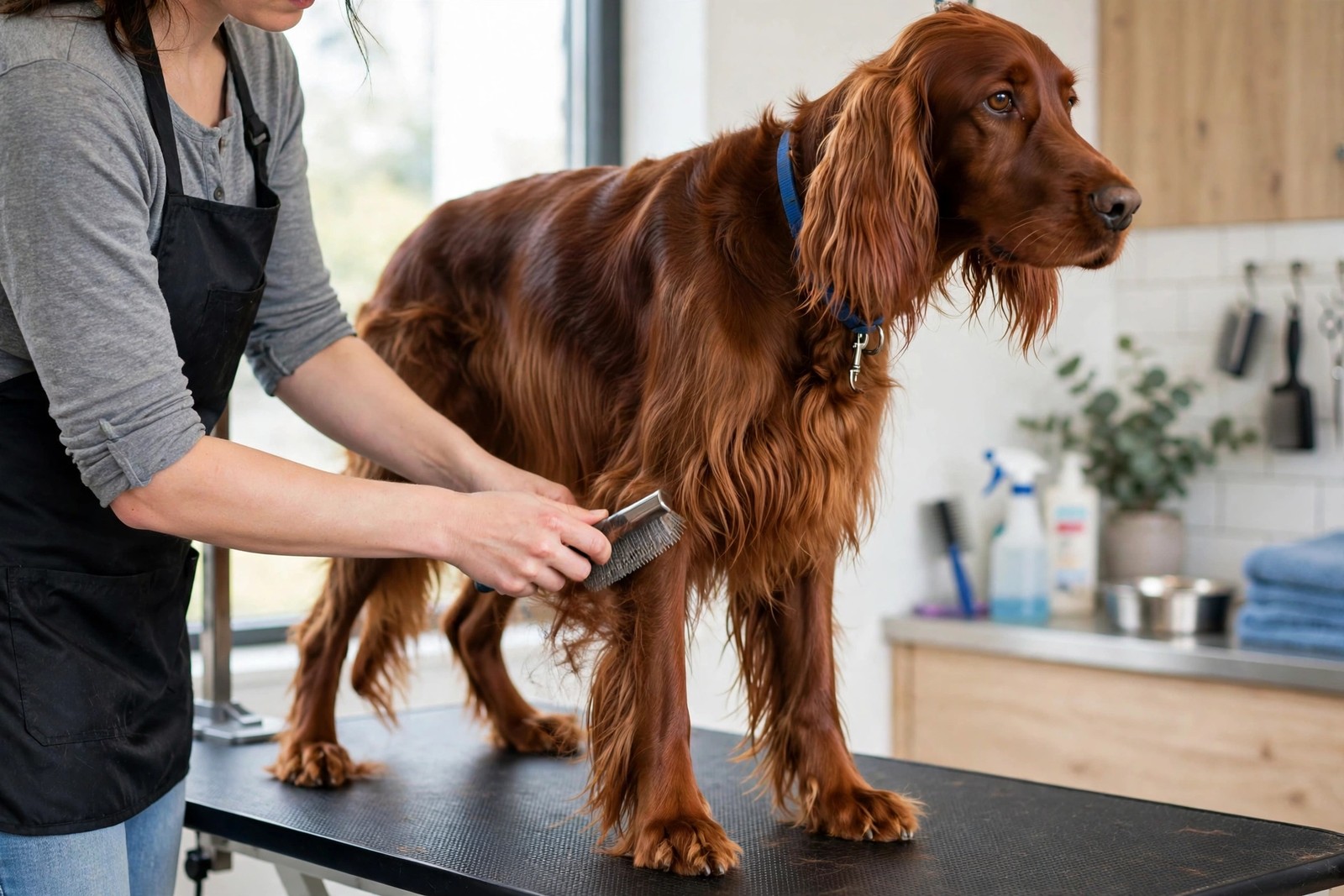
An Irish Setter's coat stays glorious or becomes felted on a schedule, and the schedule is three to four brushing sessions a week with a professional trim every 6 to 8 weeks. The long red coat is not difficult, but it is unforgiving of gaps: fine hair behind the ears and long feathering on the legs tangle quickly, and a mat left for a fortnight tightens against the skin until it pulls, harbours moisture, and has to be clipped out rather than brushed out.
The sites that mat first, in order
Behind the ears comes first, because the coat there is the finest on the dog and is rubbed by collars, play, and ear movement itself. The armpits follow, where front legs moving against the chest create friction exactly where owners forget to look. Feathering on the backs of the front legs, the chest, the belly skirt, and the tail collects burrs, grass seeds, and mud, and each inclusion becomes the core of a mat if it is left in place. The trousers on the hind legs finish the list, thick and close to the ground on wet walks. A grooming session that visits those seven sites in that order will keep those sites mat-free, even when the rest of the coat gets a quicker pass.
Method: down to the skin, in layers
Brush in layers rather than skimming the surface. Lift a section of coat, start at the skin, and brush outward in short strokes with a slicker brush, working through the whole dog section by section, then repeat the route with a steel comb. The comb is the audit: if it glides to the skin, the section is clear, and if it snags, there is a forming mat to tease apart with fingers and brush before it tightens. Never bathe a matted dog first, because water tightens felt and sets it, so the full brush-out belongs before the bath, every time. Keep sessions short and frequent for puppies, with food rewards placed in the puppy's mouth one at a time for stillness, so the adult dog treats the grooming table or mat as a familiar place.
Walks, weather, and coat consequences
Country walking is this breed's joy and its coat's enemy. After wet or muddy outings, rinse the feathering clean, pat it dry, and give the drying coat a light brush once it is fully dry, because feathering left to dry in clumps felts as it dries.
The professional trim, every 6 to 8 weeks
Book a groomer every 6 to 8 weeks to tidy the feet, trim the feathering to a length your lifestyle can maintain, thin the coat under the ears where air needs to reach, and check the skin your home sessions may have missed. Between appointments, your three to four weekly sessions hold the line, and skipping them because a trim is coming simply hands the groomer a mat-removal job that is uncomfortable for the dog and may end in clipped patches in the showpiece coat.
Fitting the commitment into a real week
Anchor sessions to fixed points, such as after the evening walk on set days, and keep the brush, comb, and treats where the sessions happen so starting costs nothing. Two people sharing the rota can alternate sessions, provided both use the same site order and the same comb audit, so standards do not drift between groomers. A Setter that is brushed little and often arrives at each session relaxed, and the coat becomes a pleasure to keep rather than a fortnightly battle. Dividing the three to four weekly brushing sessions and the trim bookings every 6 to 8 weeks between household members through KinsLe's Care Teams keeps the coat mat-free without one person carrying the whole routine.