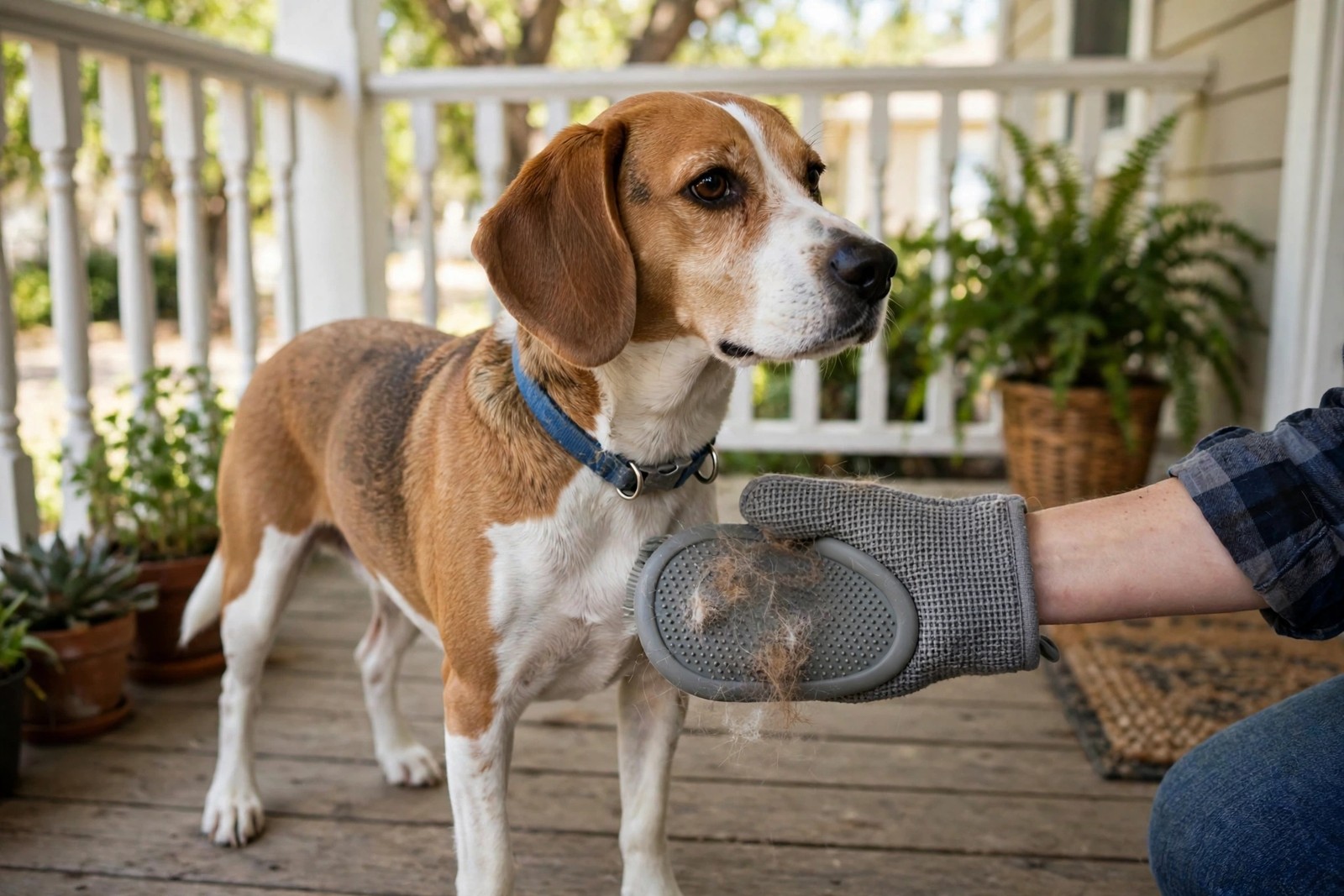
Short-haired dogs shed, grow nails, collect ear wax, and develop skin trouble exactly like long-haired dogs; they simply do it under a coat that hides the evidence until it is further along. A short weekly routine, done in minutes, is what keeps a smooth coat genuinely low-maintenance instead of merely low-visibility.
The Weekly Brush and Hands-On Check
Once a week, brush the coat with a bristle brush or go over the dog firmly with a grooming mitt, working in the direction of growth and then lightly against it to lift loose hair. Short coats shed steadily, and the hair you remove on the mitt is hair that does not land on the sofa, while the handling spreads natural oils that keep the coat glossy. Use the same minutes for a hands-on check: run your palms over ribs, belly, legs, and tail, feeling for ticks, lumps, scabs, hot spots, and patches of dry, flaky skin a short coat should let you spot early.
Watch the skin itself, not just the coat. Redness in the armpits and groin, darkened flaky patches, a sour or yeasty odor, and scratching that is new for your dog are all worth noting with a date, and a spreading rash, oozing sore, or a dog who cannot settle for itching belongs with a vet rather than another week of watching. Note what changed around the same time, such as a new food or a muddy swimming spot, because that context helps a vet sort possible causes.
Nails and Ears, Every Week
Check nails weekly even if you only trim some weeks. A short coat does nothing to slow nail growth, and nails that click loudly on hard floors, catch on bedding, or start to curve need the tips taken off, the quick avoided, and the job split across two short sittings for a dog who dislikes it. Dewclaws, where present, grow fastest in a circle because they never touch the ground, so look at them first rather than last.
Look inside the ears weekly too. A healthy ear is pale, fairly dry, and nearly odor-free, so learn your dog's normal, then act on change: redness, dark discharge, heavy wax, head shaking, or scratching at one ear means a vet should look, and home cleaning should follow your vet's guidance rather than deep probing with swabs, which can pack debris further in. Dogs who swim or have floppy ears earn a closer look after water, because trapped moisture and sore ears keep company.
Baths Only as Needed, and a Shared Weekly Split
Bathe a short-haired dog when the dog needs it: rolled in something foul, genuinely muddy, or carrying a smell a brush-down cannot shift. For many short coats that is every few weeks or less, and bathing on a fixed weekly schedule whether the dog is dirty or not strips oils and creates the dry, dull coat owners then try to fix with more bathing. Use lukewarm water and a dog shampoo, rinse longer than feels necessary, because residue left in a short coat itches, and dry the dog thoroughly in cold weather.
Split the week into named jobs so the routine survives good intentions: one person brushes and does the hands-on check, another takes nails, another the ear look, rotating weekly. A written split also records findings, like a new lump marked with its size and date for the vet. Set down in KinsLe, the Care Teams rotation assigns the ear check to a different person each week, keeping fresh eyes on the job.