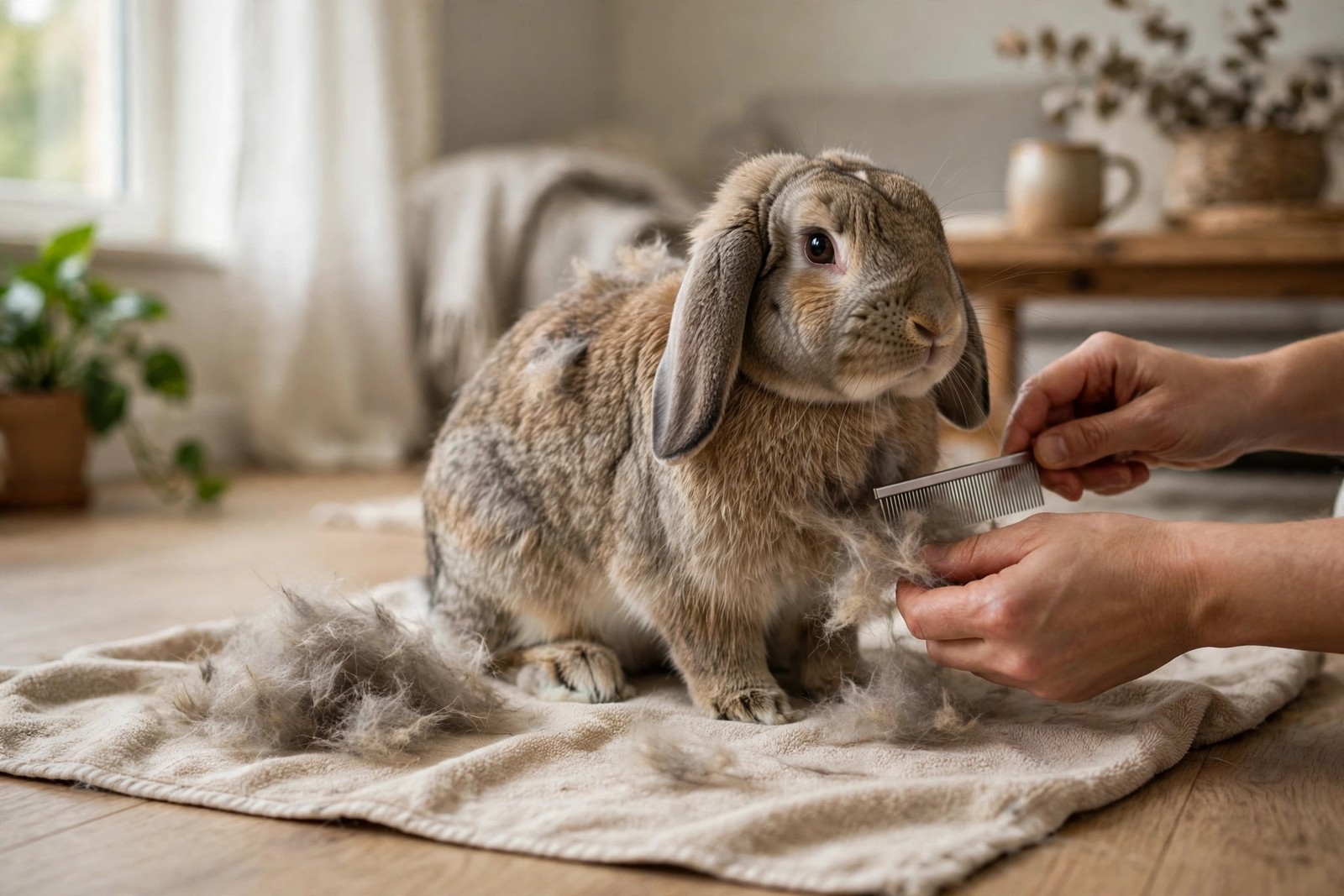
A heavy molt can look dramatic in a rabbit: loose fur lifts away in tufts, the coat feels uneven for a while, and shed hair turns up everywhere. Molting is normal — rabbits replace the coat in waves rather than all at once — but a heavy shed is real work for the rabbit and for you.
Reading the Shed Itself
Loose fur is ready to come out; attached fur is not. During a heavy molt you will often see a visible line across the coat, with shorter new growth on one side and longer old fur on the other, and the old side may lift away in soft sheets once it is combed. Fur that resists, skin that looks red or flaky underneath, or a bald patch that keeps widening is not part of a routine shed. Pulling at reluctant fur hurts, and rabbit skin tears easily, so resistance is always your signal to stop.
Brushing Without a Fight
Keep sessions short, calm, and daily while the molt is heavy, on a towel on the floor or low in your lap. A soft brush, a fine comb, or your fingertips all work: stroke in the direction the fur lies, tease loose tufts free, and lightly dampen your hands now and then, because damp palms collect clouds of floating hair surprisingly well. Long-haired rabbits need the coat parted in small sections, with extra attention around the hindquarters, where shed fur felts into mats fastest. Never roll a rabbit onto the back to reach the belly; a rabbit held upside down is stressed, not relaxed, however still the body goes.
Protecting the Gut While Fur Is Flying
The reason a heavy molt deserves daily attention is digestive. A rabbit grooms constantly and cannot vomit, so swallowed fur has only one way out, and it travels safely only while the gut keeps moving. Unlimited grass hay is the engine of that movement, which is why the hay rack should never run empty during a molt and why fresh water matters just as much. Then read the droppings every day: a healthy output is plentiful, round, and fairly uniform. Smaller, drier droppings, droppings strung together with fur, or a clear drop in quantity all say the system is slowing. A rabbit eating notably less during a molt needs an urgent call to a veterinarian, and a rabbit who stops eating or stops passing droppings altogether is a same-day emergency, because a stalled rabbit gut deteriorates quickly.
Skin Checks and the Vet Line
Grooming hands are diagnostic hands. As you comb, feel for scabs, lumps, sore spots, and flaky skin, and part the fur to look at what lies underneath, especially around the ears, shoulders, and rear. Baldness that follows the molt line and fills in with new growth is ordinary. Bald patches with broken skin, heavy flaking, relentless scratching, or a rabbit who seems sore or subdued points to something a veterinarian should investigate, since parasites and skin conditions are possibilities only an examination can sort out.
Sharing the Molt Workload
Daily combing, hay checks, and dropping checks are a lot to rest on one person, and a missed week during a heavy molt is exactly when mats form and gut slowdowns go unnoticed. This is where KinsLe's Care Teams earns its keep in a multi-person household: the molt routine becomes named assignments instead of good intentions, with one person combing in the morning, another refreshing hay and reading the droppings in the evening, and a slower skin check shared across the weekend. Each finished job is marked done, so the next person can see at a glance what has already happened today. A shared record of who combed, fed, and checked droppings today turns a heavy molt into teamwork, and keeping that schedule inside the Care Teams plan on KinsLe means the next helper picks up exactly where the last one stopped.