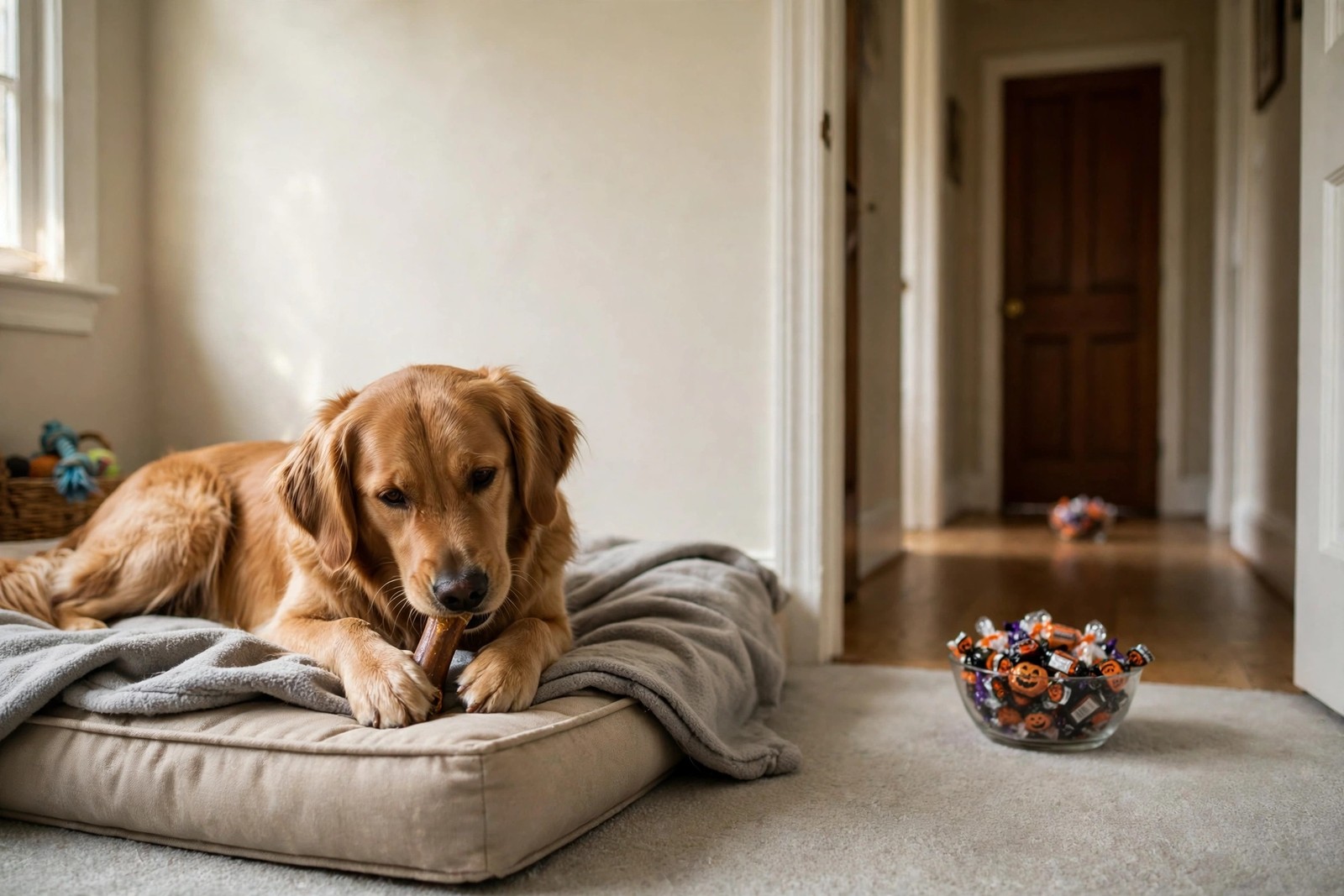
Halloween concentrates several ordinary dog hazards into one loud evening: a bowl of poison by the door, open flames at nose height, strangers in masks arriving every few minutes, and the front door opening more times in three hours than in the rest of the month. Working through each one in advance makes the night manageable.
The candy bowl is the main event
Chocolate is toxic to dogs, and darker, more concentrated chocolate is more dangerous in smaller amounts; baking chocolate and cocoa are the riskiest forms in the house. Sugar-free sweets and gum bring a second, faster-moving poison: xylitol, which can cause a dangerous drop in a dog's blood sugar and, in larger amounts, liver damage. Raisins and chocolate-covered raisins, sometimes handed out as the "healthy" option, are also dangerous, because grapes and raisins can cause kidney failure in some dogs.
The packaging hurts dogs too. Foil and plastic wrappers, lollipop sticks, and glow sticks are swallowed along with the sweets and can irritate or block the gut, and glow-stick liquid tastes foul and causes drooling and distress. Keep all collected and handed-out candy in a closed container, up high and behind a door your dog cannot open — not in a bowl on a low table, and not in a child's bedroom bag on the floor, which is where many dogs actually find it. If you think she has eaten chocolate, sugar-free candy, or raisins, contact a veterinarian promptly and keep the packaging; what she ate and roughly how much are the first things they will ask.
Fire, decorations, and costumes
A candle inside a pumpkin sits exactly at wagging-tail and curious-nose height. Use battery lights in any pumpkin a dog can reach, and keep real candles in rooms she is shut out of. Hanging decorations, fake webs, and electrical cords for lights invite chewing and pulling; a dog who eats stretchy web decoration or chews a live cord is an emergency, not a funny photo. Keep decorations above dog height or in the front garden, out of her territory.
Costumes deserve a sceptical eye. A dog costume should never restrict breathing, vision, barking, or movement, should have no dangling parts she can chew off and swallow, and should come off at the first sign of freezing, pawing at it, or trying to roll out of it. Many dogs are happier in a festive collar. The same applies in reverse: visitors and children in masks look genuinely frightening to a dog, so do not force greetings with costumed strangers for the sake of a photograph.
The door, the doorbell, and the escape plan
For most dogs the evening's real stress is the door. Repeated knocking and ringing, shouting children, and a hallway full of strangers can push even a steady dog into barking, hiding, or bolting. The simplest fix is to settle her before the first callers in a quiet back room with water, bedding, something to chew, and background sound to soften the doorbell — and to answer the door yourself, with her door shut, all evening. Walk and feed her before dark so she is exercised, fed, and ready to rest while the street is at its busiest and strangest.
Keep her collar and ID on even indoors that night, because Halloween is a peak evening for escapes through a door held open a second too long. Check her ID details are current before the night, not after.
If she does slip past a caller into the dark, KinsLe's Lost Pet Alert System lets you send an alert to nearby Circle of Love members straight away, and a finder who spots her can message you directly through KinsLe while you search.