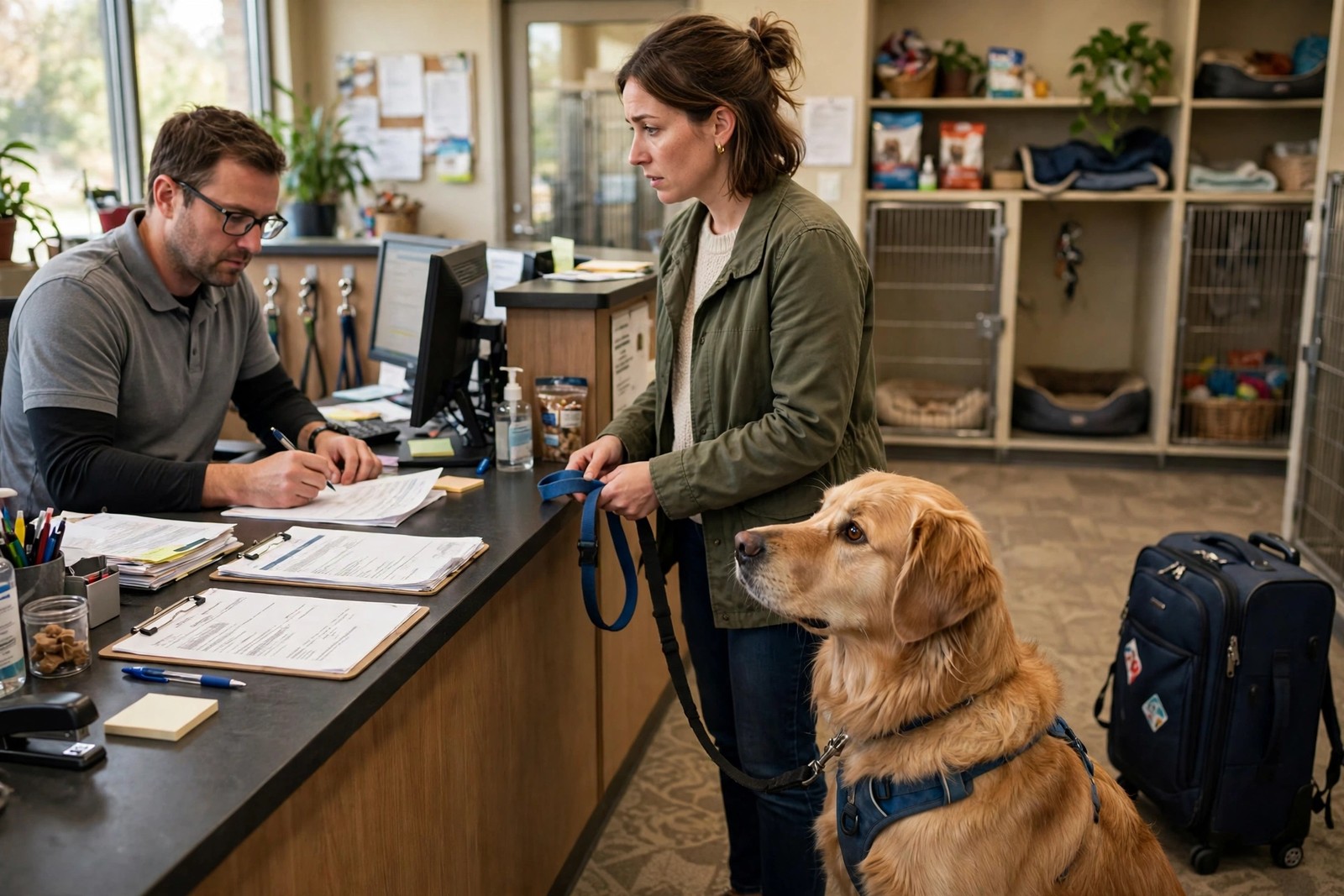
Arriving at boarding without proof of vaccination rarely means a shrug and a signature. It usually means your dog cannot be checked in until the facility has records it can verify — and whether that takes ten minutes or ends your booking depends on the time of day, your veterinarian's opening hours, and whether his vaccinations are actually current or merely assumed to be.
The first thing staff will try
Most facilities will start by calling your veterinarian and asking for the records to be emailed or otherwise sent directly to them. A clear photograph of a vaccination certificate or an invoice showing the vaccine and its date may be accepted by some facilities as a starting point, but many want the record from the clinic itself, because a boarding kennel is responsible for every other dog in the building. Rabies proof is typically the strictest item of all and is legally required in many places, so an unverifiable rabies history is the one most likely to stop admission outright, whatever the rest of the record looks like.
This rescue attempt has a clock on it. If you arrive on a weekday morning, your clinic is open and the fix may cost you half an hour in the car park. Arrive in the evening, on a weekend, or on a holiday — which is exactly when most boarding drop-offs happen — and the clinic may be shut until after your travel plans have already broken.
If the proof cannot be produced
Be ready for three possible outcomes, and understand that the facility, not you, chooses between them. The dog may simply be refused admission, with your deposit and your travel plans taking the hit; facilities are entitled to do this and many will, because one unverified dog risks their licence and every other booking. Some facilities with a veterinarian attached or nearby can arrange for the dog to be examined and vaccinated, at your cost, but that only helps if the vaccine can be given in time to satisfy their policy — some require vaccinations to have been given a set period before boarding, so a same-day vaccine does not always unlock the door. A minority offer isolation or quarantine-style housing, separated from other dogs, usually at a higher rate and only if space allows.
What no reputable facility should do is mix an unverified dog into the general population on your assurance that he is "definitely up to date." If a facility waves him through without any records at all, that tells you something important about how it treats everyone else's proof too.
How to never have this morning
Call the facility well before the stay and ask for its exact list: which vaccines it requires, how recently each must have been given, and what forms of proof it accepts. Requirements differ — one kennel's list is not another's — and a vaccine your veterinarian considers optional may be mandatory for group boarding. Then ask your clinic for a clean, dated vaccination summary and check the dates yourself, because the commonest disaster is not a forgotten folder but a vaccine that lapsed two months ago without anyone noticing.
Photograph the certificate as a backup, keep a copy with whoever is dropping him off, and arrive knowing that a second adult may need to stay with the dog while records are chased.
Storing his vaccination summary, clinic details, and expiry dates in KinsLe's Pet Passport keeps the whole record in one portable packet you can show at the boarding desk, instead of relying on a clinic answering the phone at the moment you need it.