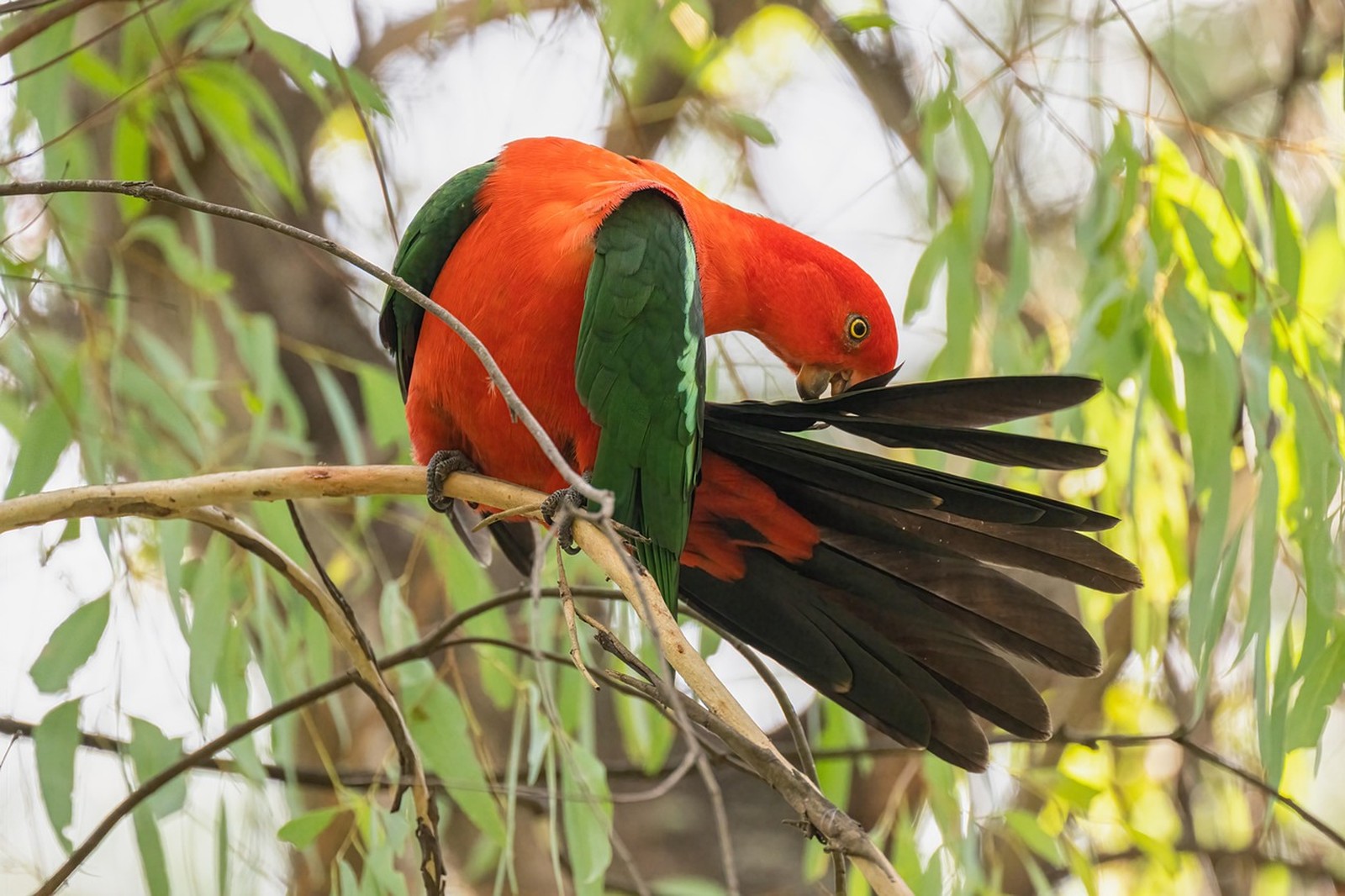
A molt is your bird replacing her wardrobe one feather at a time. Worn feathers drop out gradually — a healthy molt is never a sudden bald event — and new feathers push through the skin in tight, waxy sheaths called pin feathers. Growing feathers takes energy and raw materials, so a molting bird is often quieter, sleepier, itchier, and shorter-tempered than usual for several weeks.
What you will actually see
Loose feathers collect under favourite perches and in cage corners, usually a few a day rather than a blizzard. Pins appear first on the head and neck, looking like pale spikes or tiny brushes; because a bird cannot reach the top of her own head with her beak, head pins are the ones she may rub against perches, cage bars, or — if she trusts you — your fingers. As each sheath flakes away, the new feather unfurls from inside it.
Behaviour shifts with the discomfort. Pins are tender while the feather inside is still growing and supplied with blood, so a bird who normally loves a head scratch may duck, nip, or move away, then ask for a scratch again ten minutes later. Appetite often rises, vocalising often falls, and many birds nap more in the middle of the day. None of that is defiance or illness by itself; molting is genuinely hard, itchy work.
How to help, day to day
Offer bathing chances frequently. A shallow dish of water, a gentle misting, or time in a steamy bathroom after a shower softens the waxy sheaths, eases the itch, and encourages normal preening. Let her choose — a bird who backs away from the mist today may bathe eagerly tomorrow, and soaking a reluctant bird only adds stress to soreness.
Feed the molt from the inside. Feather growth is protein-hungry, so make sure her normal balanced diet is being eaten properly, and offer suitable protein-rich foods in small amounts as part of that diet, such as a little cooked egg or cooked legumes alongside her usual vegetables. Fresh water daily and good sleep matter as much as food: give her a long, dark, undisturbed night, because growth and repair happen around the clock and a tired bird molts badly and behaves worse.
Handle with consent. Help with head pins only if she leans in for it, roll only the flaky tip of a ripe sheath gently between your fingers, and stop the moment she flinches — a pin that is still dark and full is not ready, and squeezing it hurts. Never pull feathers or cut pins.
What is not a normal molt
See a veterinarian if feather loss leaves bald, reddened, or scabbed skin, if she is plucking or chewing feathers out rather than shedding them, if droppings, weight, or breathing change, or if a molt drags on with no new growth. A broken blood feather — a growing feather that snaps and bleeds — needs prompt veterinary advice rather than home experimentation, especially if the bleeding does not stop quickly.
Most molts end the way they began, gradually: fewer loose feathers, pins opening into smooth new plumage, and your bird's usual noise and mischief returning.
During those weeks, KinsLe's Care Teams can assign the daily misting offer, fresh food and water, and the evening sleep cover to different household members, with each task timestamped so your molting bird gets her extra care consistently.