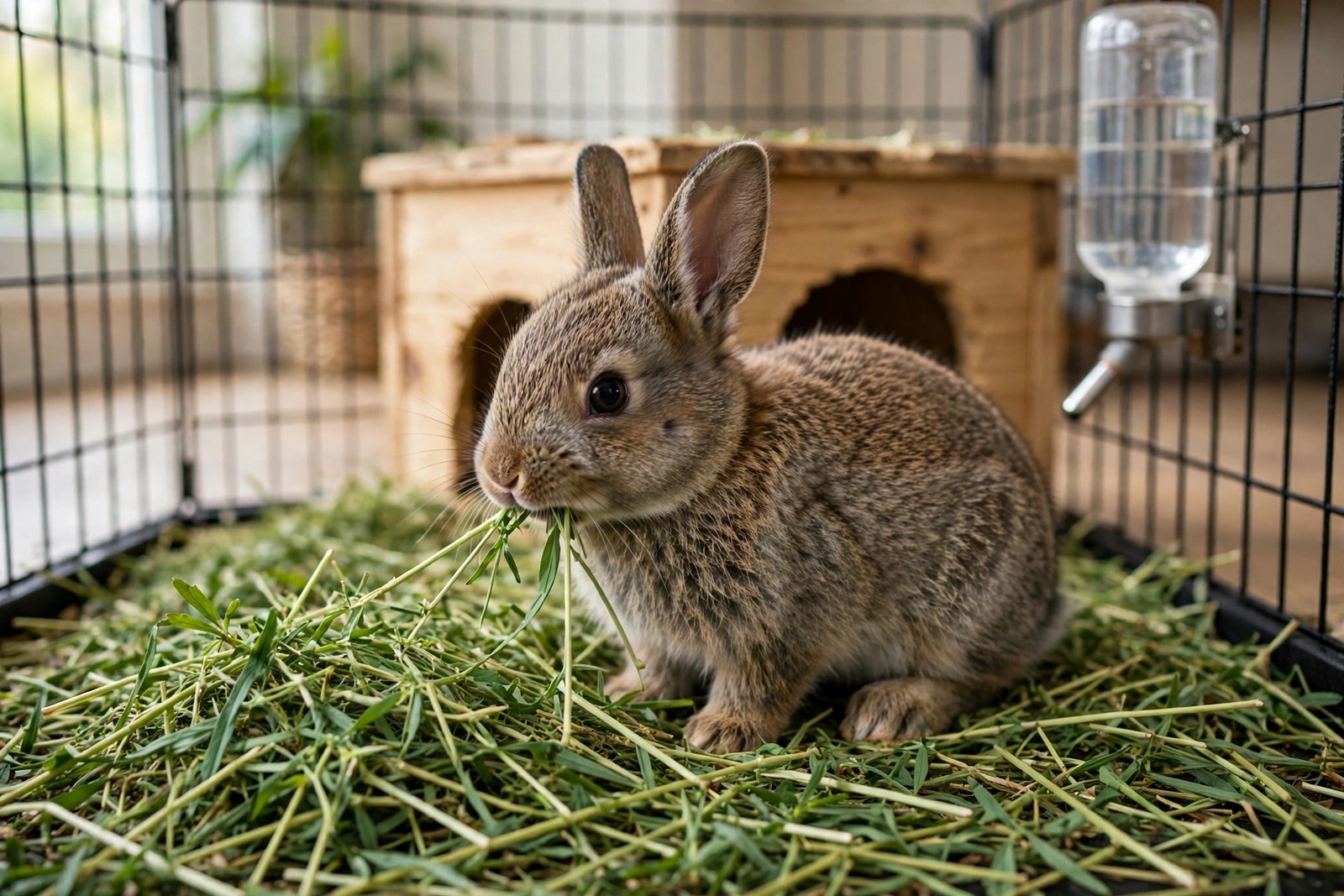
For a young rabbit, the answer is alfalfa hay — offered freely, all day, every day. Alfalfa is a legume hay rather than a grass hay, and it carries noticeably more calcium, protein, and energy than timothy or orchard grass. That richness is exactly what a growing rabbit needs while she is building bone, muscle, and adult size in her first months, and it is also why alfalfa suits pregnant and nursing does.
Hay is doing three jobs at once
Whichever hay she eats, the hay itself matters more than almost anything else in her bowl. Long strands keep her gut moving, and a rabbit's digestion depends on constant fibre passing through; a youngster who fills up on pellets and skimps on hay is heading for soft droppings and trouble. Chewing long hay for hours also wears her continuously growing teeth evenly, protecting against the overgrowth and spurs that cause so much pain later. And grazing on a generous pile is a young rabbit's main occupation — a hay rack that empties by midday leaves her bored and hungry, not thrifty.
So "unlimited" is literal. There should always be a pile at least the size of her own body, refreshed daily, with the stale, soiled remainder removed so she is not picking through yesterday's bedding for her dinner. Mix in some grass hay alongside the alfalfa if she enjoys it; early variety makes the later transition far easier, and some youngsters simply prefer the taste of one cut over another.
The transition at six to seven months
Alfalfa's benefit has an expiry date. Once growth slows at around six to seven months, a healthy adult rabbit fed a mainly alfalfa diet takes in more calcium than she needs, and rabbits excrete excess calcium through their urine — a long-term alfalfa habit in an adult is linked with thick, sludgy urine and bladder problems. So the swap is planned, not sudden.
Over two to three weeks, change the proportions gradually: start by mixing a handful of timothy, orchard, or meadow grass hay into the alfalfa, then increase the grass share every few days while the alfalfa share shrinks, until grass hay is the whole pile. A gradual change protects her gut and her appetite — many rabbits adore alfalfa and will stage a small protest at the blander grass hay, and a slow blend wins where a cold-turkey swap produces a rabbit holding out for better. During the same period her pellet portion usually steps down toward the modest adult amount, so hay becomes the clear centre of the diet.
Watch droppings through the change: they should stay round, dry, and plentiful. A young rabbit who stops eating hay, produces far fewer droppings, or seems quiet and hunched needs a veterinarian promptly, because rabbits deteriorate quickly when the gut slows.
Buying and storing it well
Good hay of either type smells sweet and fresh, feels dry, and is mostly green with long strands, not dusty, brown, or musty. Dust matters for young airways, so shake a serving out away from her face. Store the bale somewhere dry and airy, off the floor, and never feed hay that has got damp or mouldy, however much of the bag is left.
Setting a daily refill and a dated note for the start of the grass-hay transition in KinsLe's Care Teams means everyone feeding your young rabbit tops up the same hay, in the same proportions, until the changeover is complete.