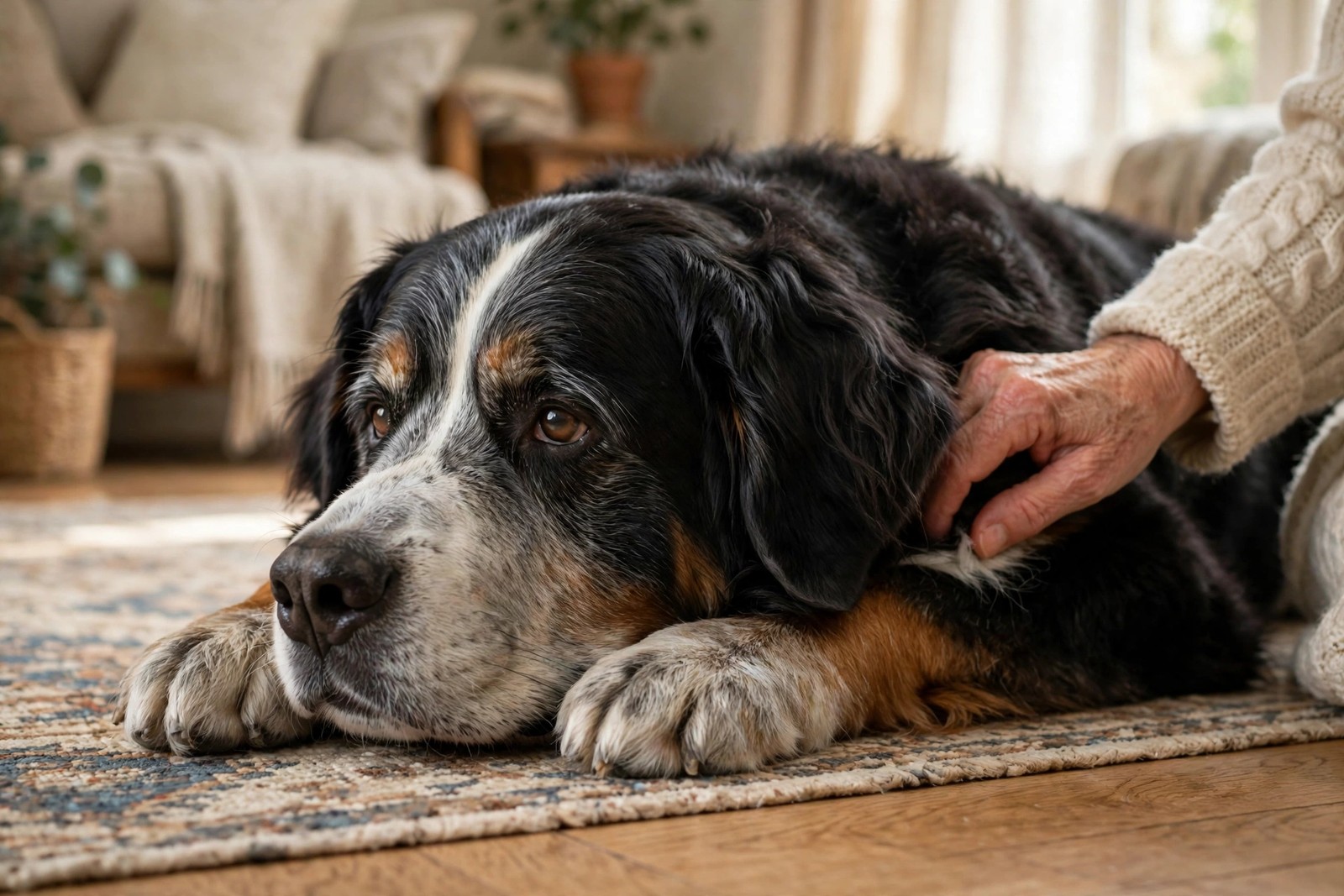
A Bernese Mountain Dog ages on a giant breed's timetable, with a typical lifespan of 7 to 10 years, so senior care begins around age seven rather than in double figures. The checks that matter most follow the breed's known vulnerabilities: joints that have carried a heavy body for years, a recognised risk of cancers, and the quiet changes in appetite, weight, and energy that signal trouble earlier than any single dramatic symptom. The pattern that protects an older Bernese is simple to state: veterinary reviews every six months from around age seven, hands-on checks at home between visits, and prompt appointments for change rather than watchful delay.
Mobility and joints: the daily-use checks
Hips and elbows are the breed's working weak points, and age exposes them. Watch how your dog rises from rest, manages stairs, and settles after walks, and note stiffness that eases with movement, reluctance to jump or climb, a bunny-hopping run, or one leg consistently spared. Keep the dog lean, because every extra kilogram is load multiplied across worn joints at every step, and ask your vet to assess body condition at each review rather than judging by eye at home. Non-slip rugs on hard floors, a ramp for the car, and shorter, more frequent walks in place of one long outing are practical supports you can add without waiting for a diagnosis, and raised bowls can make eating more comfortable for a stiff neck and shoulders.
Lumps, weight, and appetite: the cancer vigilance checks
Cancers, including histiocytic sarcoma, are a recognised and serious risk in Bernese, which makes owner vigilance a genuine screening tool rather than anxiety. Run your hands over the whole dog weekly during grooming, feeling for new lumps in the skin, under the jaw, in front of the shoulders, and in the groin and armpits, and book a vet appointment for any new lump, any lump that grows or changes, and any lump that the dog resents you touching. Pair that with two quieter checks: weigh the dog regularly, because unexplained weight loss in an older Bernese always deserves investigation, and notice appetite, thirst, and energy against the dog's own normal pattern.
What the six-monthly veterinary review should cover
Ask for a full hands-on examination with particular attention to joint movement, muscle loss over the hips and shoulders, heart and chest sounds, mouth and teeth, eyes, and any lumps you have found and noted with dates. Blood and urine tests give your vet trends in organ function that a single examination cannot, and they matter more as the dog ages because Bernese can mask early illness behind a stoic temperament. Discuss pain relief, diet, and exercise levels openly at each review, and follow any medication guidance exactly as your vet directs and as shown on its label. Bring a written list of the changes you have noticed, however small, because the pattern across six months is often the finding.
Comfort, senses, and daily life adjustments
Ageing brings smaller needs that owners can meet well. Expect vision and hearing to fade gradually, and keep furniture layouts, verbal cues, and routines steady so the dog can navigate by memory and smell. Keep exercise daily but scaled: sniffing walks at the dog's pace maintain muscle, digestion, and interest in the world long after hill walks are retired, and mental games indoors exercise a mind that still wants a job.
Planning ahead with your vet
Talk early with your vet about what decline may look like for your individual dog, which signs would mean urgent care, and how you will judge quality of life when the time comes, because those conversations are kinder held before a crisis. An older Bernese, checked steadily and kept comfortable, gives its people its characteristic devotion to the end of a short but full life. Keeping lump notes, weight records, blood results, and review dates together in KinsLe's Pet Passport ensures nothing you have noticed is lost between visits.