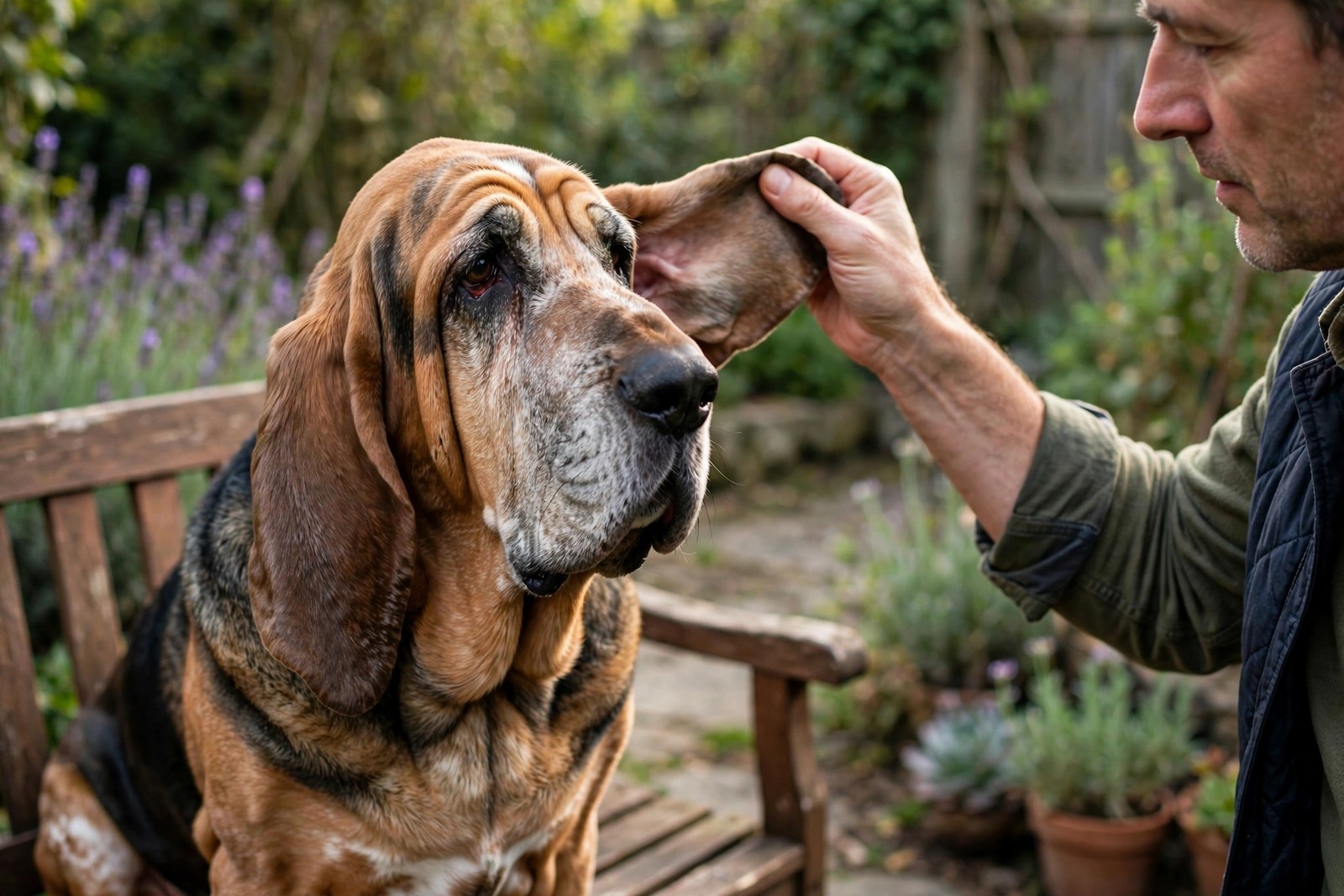
An ageing Bloodhound rarely declines all at once; small changes gather in predictable places: wax builds up under those ears, the droopy lower lids collect discharge, the hips and elbows stiffen, and weight creeps on behind a coat that hides it. The checks that matter are the ones aimed at those places, done on a rhythm at home and tied together at twice-yearly senior vet visits. What follows is what to watch, what to write down, and which changes make a vet visit urgent rather than routine.
Ears: A Weekly Lift, Look and Sniff
A Bloodhound's ears hang long and heavy over the ear canal, so air moves poorly and wax and moisture sit against the skin. Once a week, lift each ear flap and look inside: healthy skin is pale and clean, while redness, dark wax, a sour or yeasty smell, head shaking, scratching at one ear, or a new head tilt all belong in your notes, and in a call to the vet if they persist. Wipe the outer ear with a damp cloth, and clean deeper only as your vet has shown you, using any product exactly as shown on its label. Dated notes of which ear was affected, and what else changed, such as swimming or humid weather, help your vet judge a one-off irritation against a recurring problem.
Eyes Under Those Heavy Lids
The loose lower lids that give the breed its mournful look can roll outward, exposing the inner lid to dust and dryness, so check the eyes in the same weekly session as the ears. Look for watery or coloured discharge, redness of the inner lid, pawing at the face, squinting, or a cloudy or bluish change to the surface of the eye. Wipe away ordinary sleep with a clean, damp cloth, using a fresh cloth for the second eye. Any cloudiness, a suddenly painful-looking eye, or discharge that keeps returning needs a vet conversation rather than a wait-and-see approach: eyes can worsen quickly, and a dog bumping into furniture or hesitating at steps may be reporting vision, not stubbornness.
Joints, Back and the Weight Behind Both
Hips, elbows and the long back carry a heavy dog, and arthritis in any of them shows first as behaviour: slower rising after rest, reluctance on stairs, a shorter stride, lagging toward the end of a walk, or licking at one joint. Run your hands over your dog weekly — you should be able to feel the ribs under a thin layer of fat without pressing hard. Weight is the lever you control: extra pounds load sore joints and make any anaesthetic riskier, so measure meals rather than filling the bowl by eye. Keep exercise daily but moderate — steady, sniff-rich walks on soft ground suit an old scent hound better than weekend bursts — and mention stiffness patterns to the vet rather than starting supplements or leftover medicine yourself.
The Deep Chest: Bloat Signs to Rehearse
In a deep-chested giant breed, stomach awareness matters. Bloat signs include restlessness and pacing after eating, drooling, repeated retching that produces nothing, and a belly that feels tight and swollen. That combination is an emergency: phone the vet or emergency clinic and travel straight there, because minutes matter. Feeding two smaller meals a day rather than one large one, and keeping the hour after meals calm, are sensible habits to discuss with your vet.
Twice-Yearly Senior Vet Visits
A visit every six months lets your vet weigh your dog, examine ears and eyes, listen to the heart and lungs, check teeth and gums, feel the abdomen and joints, and discuss whether blood or urine testing would help. Bring your notes — ear flare-ups, stiffness patterns, appetite, thirst and water intake, toilet habits, and sleep changes — because trends across six months are exactly what a single examination cannot show. KinsLe's Pet Passport brings those six-monthly results, weight readings and treatment notes together in one portable record, so whoever examines your Bloodhound next sees the whole trend and not just that day's snapshot.