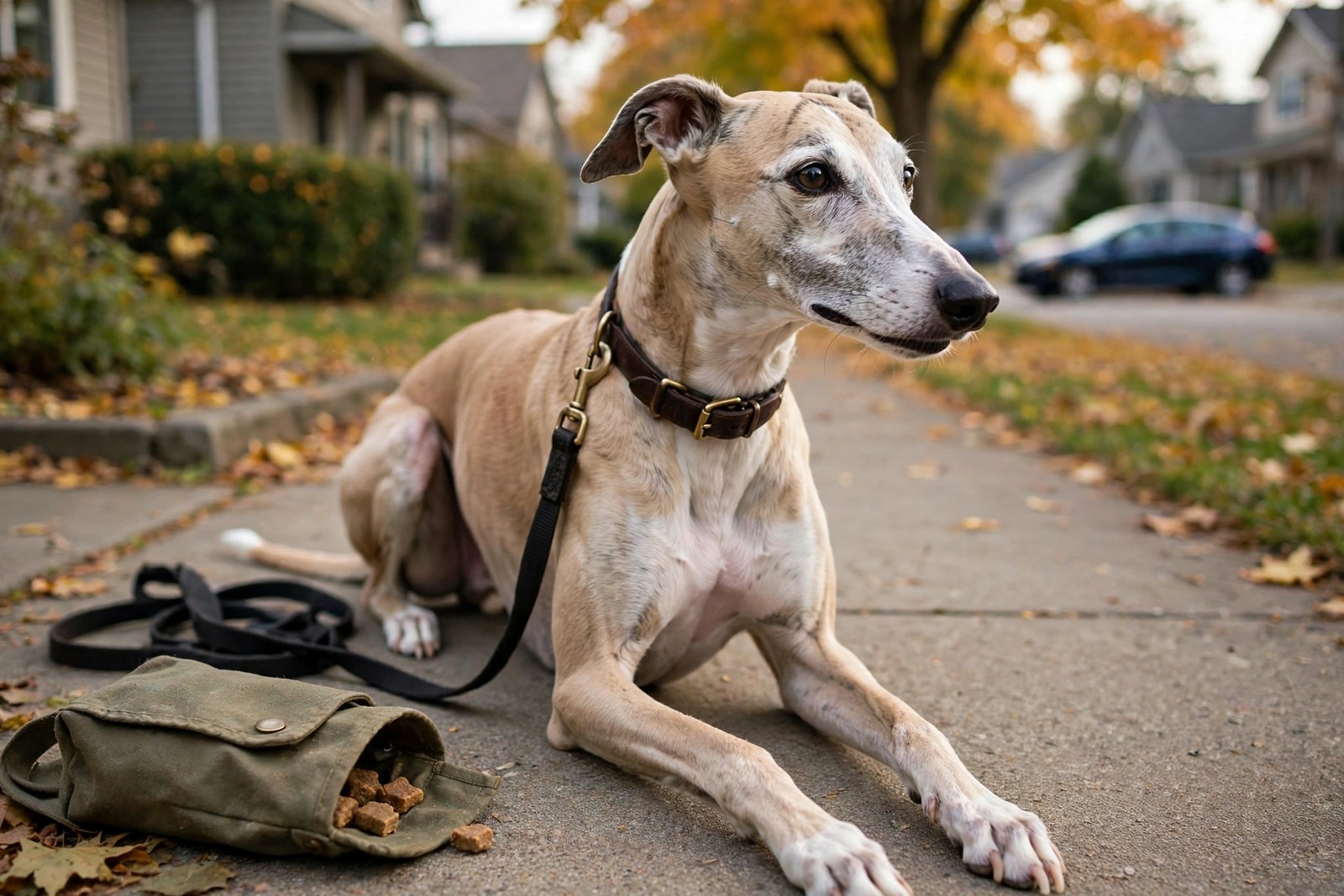
There is precious little fat over those ribs, the skin is fine enough to tear on a bramble, and weight, lumps, and stiffness all show early to an owner who looks. Senior checks for this sighthound should centre on the heart, the eyes, and the teeth, with skin surveillance and honest weight tracking woven through every visit. Agree with your veterinarian which additional screening, such as blood testing, suits your dog's findings and history.
A careful listen to the sighthound heart
Ask for the heart at the top of each senior appointment: rhythm, sounds, pulse quality, and resting breathing, examined calmly in a dog who may arrive trembling from the journey rather than from illness. At home, learn your Whippet's normal resting breathing while asleep on the sofa, and report a new cough, breathing that stays fast at rest, tiring on walks handled easily last season, or reluctance to settle at night.
Eyes in a dog who hunts by sight
A Whippet reads the world visually, so eye checks carry extra weight here. Include an eye examination in each senior review and describe functional changes, not just appearance: missing a moving lure or a tossed toy, hesitating at steps in low light, startling at a hand arriving from one side, or holding back at a doorway that was once crossed without pause. Cloudiness, redness, discharge, squinting, or a paw raised to the face between visits should prompt a call rather than patience. Your veterinarian can examine the internal structures, explain which age-related changes they are watching for in your dog, and advise whether added assessment would alter anything.
Teeth in a narrow jaw
Dental health earns its headline place in this breed's senior plan. A long, narrow jaw crowds teeth, and a dog who swallows daintily may hide mouth pain behind tidy eating. Ask for a full dental review at each visit, including the back teeth owners rarely see, and discuss cleaning or treatment alongside your dog's overall health and the anaesthetic planning the practice recommends for a lean sighthound. At home, lift the lips weekly, looking for tartar, red gum edges, broken teeth, or growths, and report bad breath, dropping food, chewing on one side, or a new preference for soft food. Tooth pain that goes unmentioned becomes weight loss, and in a Whippet there is little spare weight to lose before a small problem becomes a visible decline in condition.
Skin, lumps, and the weekly hands-on pass
Thin skin makes the Whippet an easy dog to examine by touch, so use that gift. Once a week, run flat palms over the neck, chest, flanks, and legs, feeling for new lumps, thickened patches, scabs that have not healed, or cuts picked up in rough ground that this breed seems to find on every interesting walk. Record each finding with its date, size in plain terms such as pea or coin, and position, then show the list at the next visit so your veterinarian can judge change over time rather than meeting each lump as a surprise. Protect fragile skin with a well-fitting coat in cold weather and on bramble-heavy routes, check pressure points over hips and elbows where a bony dog rests on hard floors, and provide deep, soft bedding as standard rather than as a senior luxury.
Weight, warmth, and the shape of a senior day
Weigh your Whippet monthly and write the number down. In a frame this lean, a drift that would vanish under a heavier coat changes the outline visibly and alters how the whole screening picture reads, so bring the trend to appointments alongside appetite, thirst, and sleep notes. Keep senior Whippets warm with coats outdoors and draught-free beds indoors, since thin skin and low body fat shed heat quickly, and watch that an elderly dog still chooses to move, toilet, and eat with the old routine intact. Those notes wait inside KinsLe as part of Transferrable Profiles, prepared to accompany your Whippet with cardiac findings, mouth-care history, and weight trend all preserved if life requires a new home.