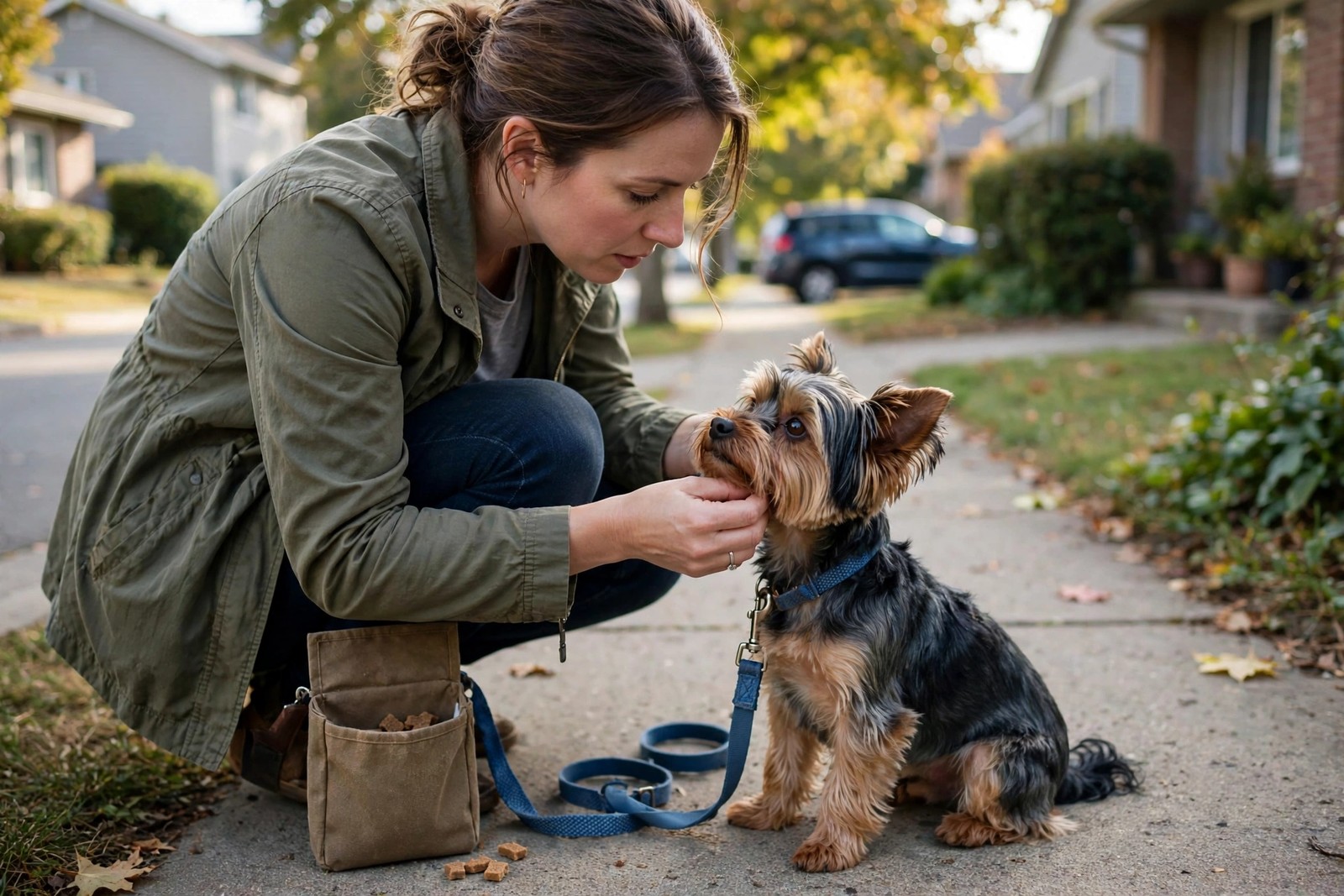
Senior care for a Yorkshire Terrier is a study in scale. Teeth packed into a tiny jaw, kneecaps no bigger than a fingernail, and a windpipe that tolerates no rough handling can each turn a minor finding into a major discomfort for a dog who weighs very little to begin with. Build veterinary visits around the mouth, the knees, and breathing, then add weight precision and general screening, such as blood testing, at intervals you agree with your practice.
Teeth first in a crowded little mouth
Put the mouth at the head of every appointment. Ask your veterinarian to examine every tooth, including the small ones at the front and the molars hidden at the back, and to discuss cleaning or treatment in the context of your dog's heart, breathing, and general fitness for any procedure. At home, lift the lips gently once a week and look for tartar, redness, loose teeth, or a smell that has changed. Report dropped kibble, pawing at the mouth, food pocketed in the cheek, or a sudden preference for soaked food, because a Yorkie's pain signals arrive in miniature and are easily missed by an owner expecting drama.
Knees, steps, and a dog carried more than before
Ask for both kneecaps to be felt at every senior visit, and watch the gait with a toy dog's scale in mind. A skipping step, a hind leg kicked backwards mid-walk, bunny-hopping up garden steps, or a new reluctance to jump onto a lap can each point toward kneecap movement worth examining. Owners of senior Yorkies often respond to stiffness by carrying the dog everywhere, and the kindness backfires: muscles thin, weight rises, and the joints lose the support that regular gentle movement provided. Weigh precisely at each visit and at home if your scales allow, because a gain that would be trivial in a large breed is a meaningful load across these knees, and ration changes for a tiny dog are measured in grams rather than handfuls.
Cough, windpipe, and the harness rule
Breathing deserves its own conversation at every senior review for this breed. Yorkies can develop a sensitive, weakened windpipe, and an ageing dog may cough with excitement, after drinking, when pulling on a lead, or when picked up under the chest. Keep a cough log with dates, triggers, duration, and whether the episode ended in retching, then play any phone recording you captured to the practice, because the sound of a cough carries diagnostic clues an owner description cannot reproduce. Switch lead walks to a well-fitting harness if you have not already, so pressure leaves the throat entirely, and lift your dog supporting the chest and hindquarters rather than under the front legs alone. Report coughing that grows more frequent, breathing effort at rest, blue-tinged gums, or collapse as urgent findings, and discuss smoke, strong sprays, and dusty bedding at home, since irritants in the air tax a delicate airway daily.
Screening, weight, and small-dog baselines
General senior screening matters in a Yorkie precisely because changes are small in absolute terms. A blood panel, urine check, and other tests your veterinarian recommends build baselines against which later thirst, appetite, energy, or weight shifts can be judged in a dog whose total blood volume and body mass leave little margin for guesswork. Grooming sessions double as hands-on checks in a long-coated toy breed: part the coat to feel ribs, skin, and any lump, check ears and the skin under the collar or harness, and keep facial hair trimmed away from the eyes so discharge or redness shows early.
A record as exact as the dog is small
Keep one running record for your Yorkie that a stranger could act on: current weight and its trend, dental findings and procedure dates, the cough log, kneecap findings, medicines, the harness size that fits, and the handling approach that keeps examinations calm. That record travels inside KinsLe through Transferrable Profiles, delivering the dental dates, cough triggers, and gram-level ration to whoever cares for your Yorkie next.