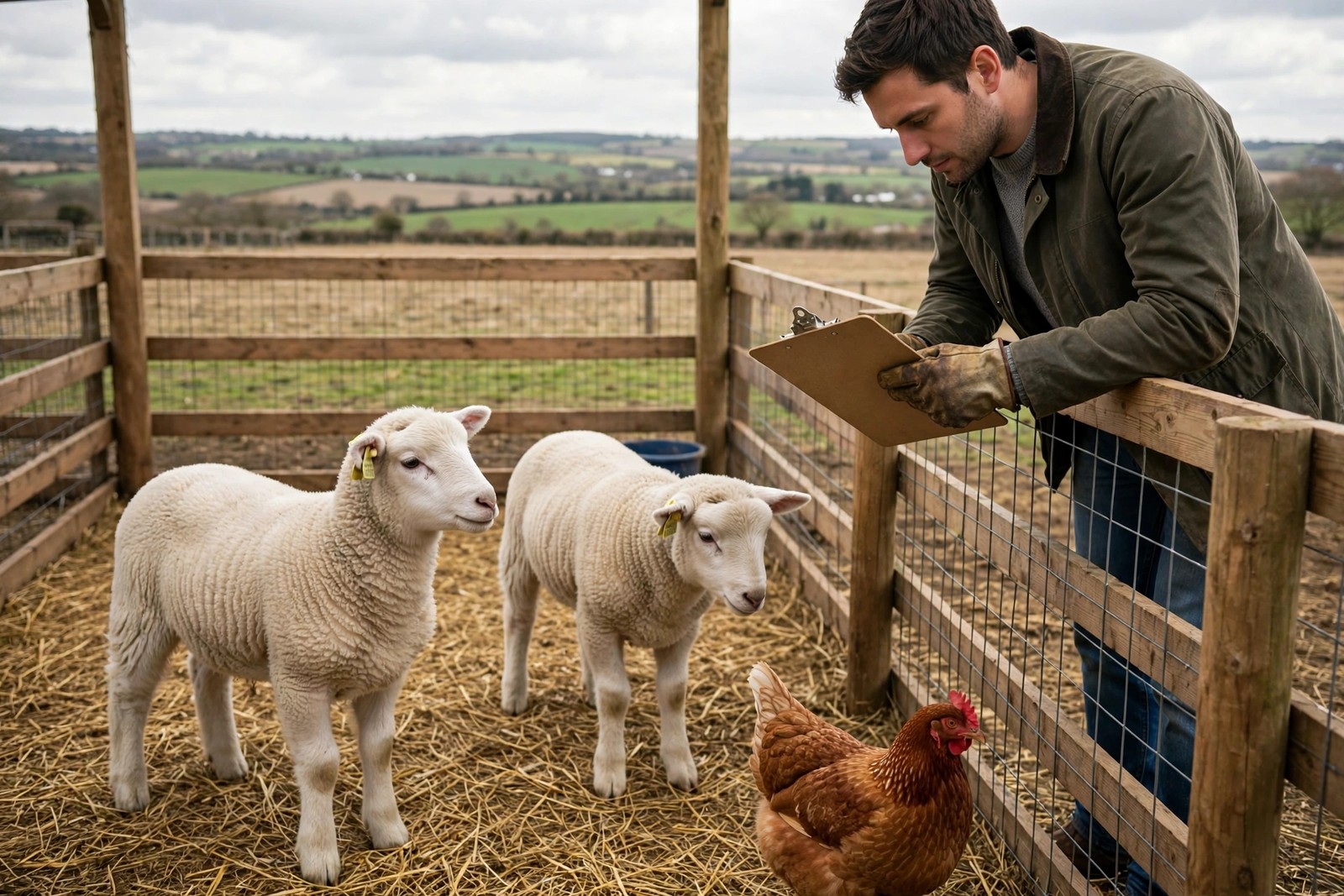
A young sheep purchase goes wrong on paper long before it goes wrong in the pen, usually because the guarantee lived in a friendly conversation instead of a signed agreement. Settle the terms in writing before money moves: what the seller declares about health, what history comes with each animal, how long you have to return one that shows a stated problem, and what happens in the first weeks at your farm regardless of how healthy everything looks.
The seller's health declarations
Ask for written declarations covering the animals you are buying and the flock they come from. The seller should state the young sheep's ages, breed, sex, and identification, declare them sound and thriving at sale, and describe the health status of the home flock, including any significant disease problems the flock has dealt with and how they were handled. The point is a baseline both sides sign: if an animal arrives already carrying a problem the declaration said was absent, the return terms below have something solid to stand on.
Histories as recorded, not as remembered
Each animal's worming and vaccination history should come as a record, with dates and what was given as the seller recorded them, rather than as a summary offered at the gate. What a young sheep should have received depends on region, season, and the flock's veterinary plan, so the record, not a universal checklist, is what you are buying. The same applies to any treatments, foot care, and shearing or crutching the lambs have had. Check that identification on the record matches the animals being loaded, because a flawless history for the wrong lamb is worth nothing.
The return window, and what the guarantee covers and excludes
Define the window in plain terms: the number of days after arrival during which a young sheep showing a stated problem can be returned, and what those stated problems are. Cover at minimum an animal that arrives ill, one that shows signs of a condition present before sale, and one whose identification or description does not match the agreement. Then draw the exclusions just as plainly: injuries after arrival, problems arising from mixing with your existing flock before quarantine ends, and ordinary settling setbacks are typically the buyer's side of the line, and a fair agreement says so. Settle who arranges and pays for return transport, whether the remedy is a refund or a replacement animal, and how quickly you must notify the seller, in person or in writing, when a problem appears. Prompt notice protects you; a seller told on day two can act, while a seller told on day thirty will reasonably argue about causes.
Quarantine on arrival, whatever the papers say
Guarantees and good records reduce risk without removing it, so new arrivals go into a quarantine pen on arrival regardless of the seller's reputation. Keep them apart from your existing flock for a defined opening period agreed with your veterinarian, use separate equipment where you can, handle the home flock first and the newcomers last, and watch appetites, droppings, breathing, and feet daily while they settle. This separation is also what keeps your guarantee meaningful: a problem that appears in an isolated group points clearly at where it came from, while a problem in a mixed flock starts an argument nobody can settle.
The records that travel with the sheep
At loading, the flock records themselves should transfer with the purchase, animal by animal. On KinsLe, the Transferrable Profiles record for each young sheep holds its declarations, its recorded worming and vaccination history, and the agreed guarantee terms together, and the seller hands that record over so your farm starts with the full file. Keep adding to it through quarantine: arrival condition, daily observations, and any veterinary findings belong in the same place. When the trailer leaves, Transferrable Profiles through KinsLe has already moved the young sheep's papers into your keeping, so nothing about the flock's history stays behind with the seller.