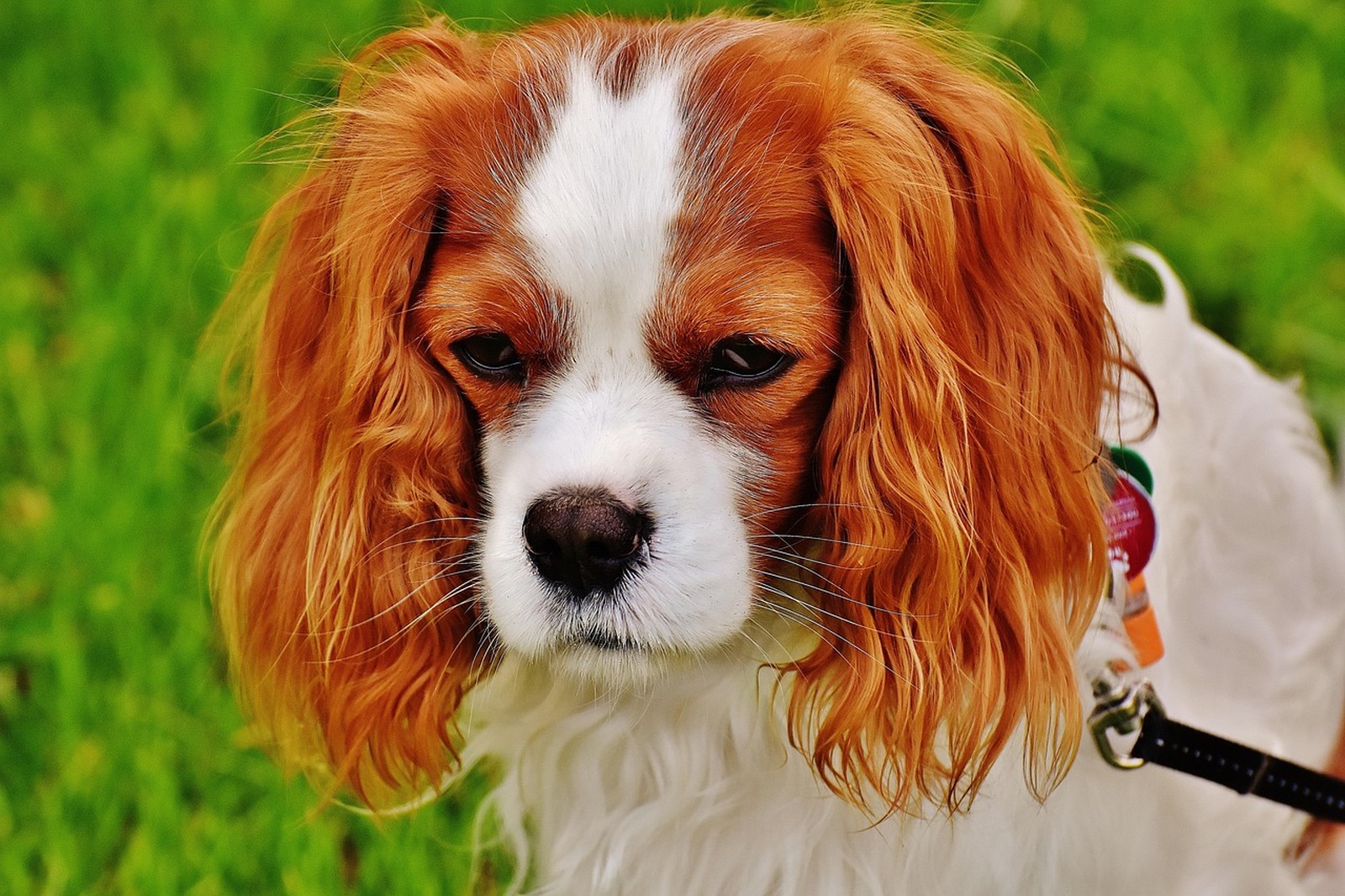
Two conditions shape life with a Cavalier King Charles Spaniel more than any others. Mitral valve disease comes first: the valve degenerates with age, a murmur develops, and heart failure is where the breed so often ends. Syringomyelia follows, as fluid-filled cavities form within the spinal cord close to the skull and produce pain signs such as yelping, phantom scratching at the neck and flinching from touch around the head. Slipping kneecaps, hip dysplasia, cataracts and dry eye complete the picture.
Heart Checks Are the Cavalier Routine
Every Cavalier should have their heart listened to at least yearly — many owners and vets choose twice-yearly checks from middle age — because a murmur found early starts monitoring and, at the right stage, treatment that measurably extends good life. Learn your dog's resting breathing rate at home; a sustained rise is one of the earliest signs the heart is struggling and earns a prompt vet call. Head-shyness, unexplained yelping, air-scratching, or a dog who stops wanting their collar or harness touched should be raised specifically as possible syringomyelia signs, not filed under 'quirky'. Keep Cavaliers lean: extra weight loads a compromised heart directly.
Working With Your Vet
For a Cavalier, the calendar itself is a health tool: heart listening belongs at least once a year, and twice yearly from middle age suits this breed well, because a murmur caught early begins monitoring at the stage where it helps. At home, learn your dog's resting breathing rate while asleep and write the numbers down; a sustained climb is an early warning your veterinarian will want promptly. Raise head-shyness, air-scratching or unexplained yelping by name, so possible syringomyelia is considered directly.
A new cough, faster resting breathing, reduced exercise tolerance, fainting, or neck pain signs in a Cavalier should be seen by a vet promptly — days, not months.
The Cavalier file worth keeping is a heart file: murmur grades with their dates, resting breathing counts across the months, and notes on cough, stamina and sleep comfort as they change. Add any neck-pain episodes with what triggered them. Presented together at a checkup, that sequence shows your vet whether things are stable or shifting — a judgement that rests on comparison over time, not on how bright the dog seems that morning.
Keep murmur dates and home breathing notes in the Pet Passport on KinsLe, and your Cavalier's vet can judge change across visits rather than from a single listen.